


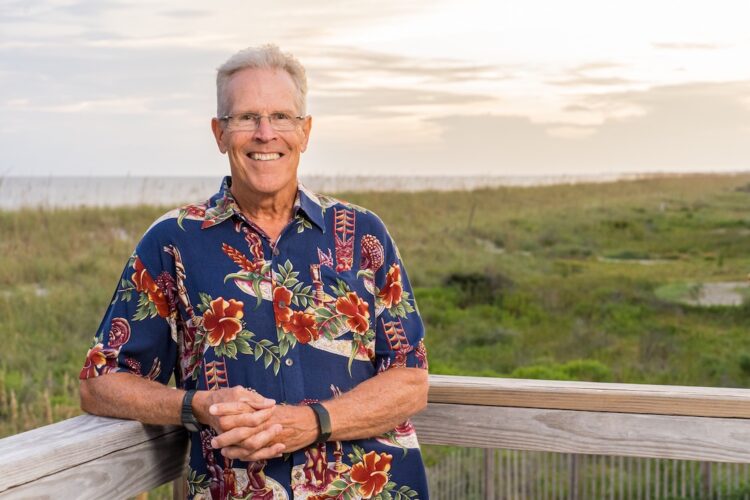
OAK ISLAND — Chip Frazier, a retired United States Air Force officer, is running a campaign to secure one of two seats open on Oak Island’s town council.
Though the council race is nonpartisan, Frazier is affiliated with the Republican Party. He will face off against Chasey Bynum (R), Tommy Brown (U), Reece Simmons (R), Scott Stephenson (U), and Kerri McCullough (R).
Frazier said he is running because the council is losing two experienced members in John Bach and Mark Martin.
“To maintain stability and continuity in policy development, it is important that the people who replace them have unique skills and abilities,” Frazier said. “I have both and I have the personal values of balance, harmony, and common sense gained in over 40 years of public service that are necessary to govern our family-friendly community.
A few things to consider this election season:
- A valid ID is required to cast ballot in North Carolina
- Election Day is Nov. 4, 2025, with voters required to go to their assigned precinct locations
- Early voting opens Oct. 16 and closes Nov. 1, and voters can cast a ballot at the Cooperative Extension Training Room, 25 Referendum Drive, Building N, Bolivia. See the hours here.
Anyone who wants to register to vote can do so here through Oct. 10 or register and vote in one stop during early voting.
Port City Daily asked all candidates a slate of questions about topics that are tracking high with voters and residents of Southport currently. Frazier’s answers have been edited below for clarity; candidate opinions and statements are not a reflection of Port City Daily. The paywall has been dropped on candidate profiles to help voters make informed decisions ahead of the election.
Port City Daily: What makes you qualified for a seat and sets you apart from other candidates?
Chip Frazier: I graduated from the US Air Force Academy in 1973 and served 24 years as a B-52 pilot and Air Force staff officer. After my military career, I served in elected positions on the South Sarpy Board of Education and the Hanson’s Lake 3 Improvement Association in Nebraska. I was also elected as a trustee for Sanitation Improvement District (SID) 101 for almost 20 years.
As a trustee for SID 101, I was responsible for constructing and maintaining infrastructure such as roads, sewers, and dikes for my community. As the chairman of that SID in March of 2019, I was responsible for responding to and recovering from a 100-year flood that inundated my community.
In addition to specific technical knowledge about roads and sewers, I have a proven ability to work effectively with diverse interests in both large and small groups to accomplish complex tasks. My knowledge and set of skills will benefit Oak Island’s need for guidance in maintaining its roads and sewers and during emergencies.
PCD: Oak Island is navigating a balance between growth and maintaining its character. What is your vision for the town’s future, and what specific steps would you take to ensure that new development aligns with the community’s values and does not strain existing public services?
CF: My primary focus is Oak Island’s family-friendly character. Growth is inevitable, but the pace of that growth can be managed to accommodate our family values. The Comprehensive Land Use Plan (CLUP) just adopted by the town council is a good 20-year vision for Oak Island that must be implemented as resources allow over the life of that plan.
In the short term, the town’s strategic plan, embodied in the FY 2025-2026 budget, must be followed. Additionally, the town is revising its Unified Development Ordinances. That update will directly impact the nature of development in Oak Island. Based on data in the CLUP, growth allowed by those projects is well within the capacity of our existing infrastructure.
If there is a challenge to the town’s services, it will come from uncontrolled development outside of the town’s jurisdiction in Brunswick County. Therefore, we must plan carefully now for an influx of people visiting our town in the future.
PCD: Given the significant costs associated with long-term projects like beach nourishment, what is your philosophy on fiscal responsibility, and how will you ensure the town’s financial sustainability without placing an undue burden on taxpayers?
CF: Oak Island has a recent history of relatively stable tax levies that must be maintained to protect our retired population and facilitate an increase in young families. At this point, the town has three options to ensure financial sustainability. It can control spending that may require cutting costs and potentially jeopardize town services and amenities. It can also raise taxes to increase revenue to operate, but that should be a last resort. A more lucrative alternative is to identify new sources of revenue and to broaden the tax base. For example, the town implemented paid parking two years ago that generated one million dollars of additional revenue each year. Those additional funds allowed the town to accelerate its road resurfacing project, offset a portion of the town’s operating expenses, and improve amenities at our beach accesses.
Another opportunity is at the Cape Fear Regional Jetport. Oak Island is the only coastal community in Brunswick County with a regional jetport. The jetport has already begun an extensive ramp expansion project that has the potential to significantly improve Oak Island’s tax base.
Additionally, the town has two projects that promise to improve profitability in the town’s business community. The Code Repair project will reduce the administrative burden on our business community. And the Streetscape plan in development will improve the appeal and overall function of small businesses in Oak Island. As our business district thrives, the town’s tax base expands without impacting residents’ property tax.
PCD: The town is working on projects to address stormwater management and street flooding. What is your top infrastructure priority for the town, and what is your plan to fund and manage these improvements?
CF: For a significant period each year, Oak Island is a tourist destination, and the beach becomes an economic engine in our community. As such, the beach is Oak Island’s most valuable infrastructure and must be maintained with aggressive beach nourishment projects. I support the town’s cooperation in projects sponsored by the US Army Corps of Engineers (USACE) and the town’s large cooperatively funded beach nourishment project this Winter.
Additionally, I support the USACE study of hard structures, such as groins, to mitigate sand erosion. The town already receives some federal funding to protect our sea turtle habitat and dedicates a small portion of its tax revenue to beach nourishment. But, in the long term, the town must work with federal and state agencies to keep our beach viable and to qualify for state and federal funding assistance.
Dunes also provide protection to more traditional infrastructure, such as our water, sewer, and electric utilities that are buried next to Beach Drive. In essence, our dunes are the first line of defense for our buried utilities.
PCD: The town council recently passed an ordinance to address a safety issue related to holes being dug on the beach. What is your position on this ordinance, and how will you balance public safety with residents’ and visitors’ ability to enjoy the beach?
CF: As someone who spends a significant amount of time running on Oak Island’s 10 miles of beach, I support the beach ordinance that was amended late in this year’s tourist season to include specific guidance on holes dug in our beach.
That said, this guidance may need to be revised in the future to improve our ability to enforce this ordinance. The ordinance is only one step in the process of balancing public safety with visitors’ enjoyment. The town also needs an aggressive public education program based on the assumption that members of the public will voluntarily comply with the ordinance if the town clearly communicates the various hazards presented by holes in the beach.
PCD: What is one other issue not discussed above that you have a plan to address if elected and how would you do so?
CF: Public safety is the greatest responsibility of government. Although Oak Island is blessed with well supported and efficiently managed police and fire departments, and a volunteer water rescue unit that is above reproach, the town has significant public safety issues that must be considered. Much of the town is within 5 miles of Duke Energy’s Brunswick Nuclear Plant. The evacuation planning for that facility indicates that evacuation from Oak Island in Summer is estimated to take nine hours and in winter to take six hours. This estimate assumes no impediments to evacuation. However, after Potential Tropical Cyclone 8 (PTC8) in September 2024, all of the bridges and many of the roads on our evacuation routes were compromised by rain runoff.
The town must work with county, state, and federal agencies to ensure the integrity of our evacuation routes. The military has portable bridge resources that must be prepositioned between Oak Island and known weaknesses in the evacuation routes. Two weeks after PTC8, Hurricane Helene passed Oak Island to the north without major local impact. However, if that weather event had caused significant damage on Oak Island, our evacuation routes would not have been available and a large portion of our population on the island and the mainland would not have been able to evacuate. Oak Island must include shelter-in-place options on the island and on the mainland to address this shortcoming.
Want to read more from PCD? Subscribe now and then sign up for our morning newsletter, Wilmington Wire, and get the headlines delivered to your inbox every morning.
