


NEW HANOVER COUNTY — The New Hanover Community Endowment has released more background information on its decision to withdraw funding for the Northside Food Co-op’s grocery store after recently revealing funding the store would constitute an IRS violation.
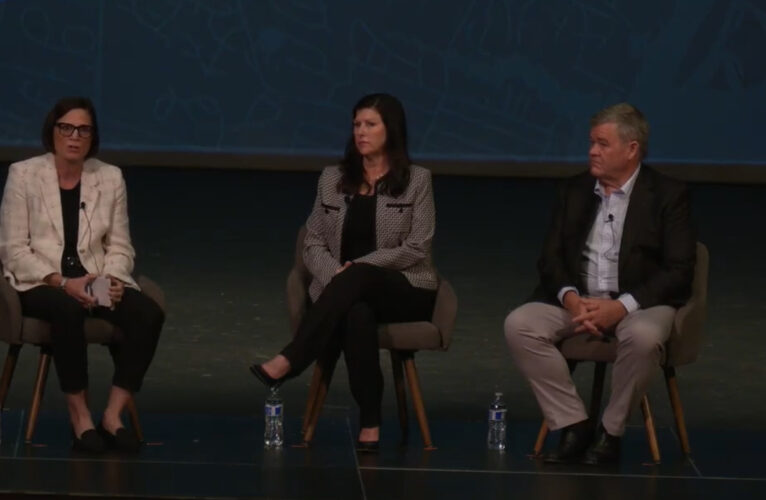
At The Endowment’s public listening session on June 3, its CEO and President Sophie Dagenais, said the organization — created in 2021 with more than $1 billion from the sale of New Hanover Regional Medical Center — cannot grant money to the food co-op’s grocery store because it wouldn’t constitute a “charitable purpose” under IRS regulations.
The Endowment’s by-laws prohibit awarding grants to commercial, for-profit entities, and though the $6.7 million-grant was given to New Hanover County, the Northside Food Co-op’s store would be a for-profit venture.
Dagenais revealed this information after a question from Cierra Washington, the Northside Food Co-op’s project manager and executive director of the associate nonprofit Growing Resilience.
Washington asked: “Given that other communities have used charitable dollars to support cooperative grocery stores as clearly documented responses to food deserts, what specifically makes it impossible or too risky for this endowment to use similar charitable dollars as tools for the Northside? And will you share that reasoning in writing with the community?”
Dagenais claimed the limitations of tax law had been discussed with Washington in private, though this was the first time The Endowment disclosed the IRS complication to the public.
As previously reported by Port City Daily, The Endowment’s withdrawal was part of a domino effect in the wake of the potential emergence of another grocery store downtown.
In December 2024, news broke of the City of Wilmington’s deal to sell three Chestnut Street properties to be used as a major grocery chain. The following month, the co-op told the county and The Endowment it was pausing work on its grocery store so the food co-op, though the public wouldn’t be notified until county commissioner Bill Rivenbark let slip about the pause in a March 2025 meeting.
The Northside Food Co-op needed time to evaluate other business models to better compete with a nearby grocery chain; options included relocating the store or the addition of a hot bar to attract more customers.
Then in a county budget session in June, Commissioner LeAnn Pierce announced The Endowment’s, and subsequently the county’s, withdrawal from funding the co-op.
The Endowment’s withdrawal prompted New Hanover County to also reallocate its $2.5 million in funding dedicated to the effort. The status of the 10th and Post street land, which the City of Wilmington donated to the county for the grocery store, remains unknown; a clause in the donation contract states the county should pay the city for the land should it fail to be used for a grocery store.
New Hanover County spokesperson Alex Riley told Port City Daily Monday the county remains engaged with the food co-op and is expected to discuss plans in coming weeks.
At the time of withdrawal, The Endowment said the situation was “dynamic” and its interest in supporting food insecurity efforts remains “unchanged.” The organization said it will continue to work with the nonprofit arm of the co-op, Growing Resilience, and granted it $320,000 in July 2025 for its operations.
Port City Daily asked Dagenais at the listening session when The Endowment made the determination on IRS ineligibility, why that information was not shared with the public nor media. Dagenais responded it was through legal research after she came to The Endowment that materialized the IRS determination.
“I know it was after I arrived because it was my own curiosity, including as part of eventually wanting to think about a mission-related investment portfolio,” Dagenais said.
After the meeting, Port City Daily sent an email to The Endowment asking for its legal reasoning and when this reasoning was shared with Washington. The Endowment responded by releasing a narrative — “Navigating Support and Constraints in Pursuit of Food Access” — to the public.
According to the narrative, The Endowment’s original grant for the grocery store skirted IRS regulations because the grant was made to New Hanover County, which would own the property at 10th and Post streets and the grocery store building; the building would be leased to the Northside Food Co-op. In that case, the grant would be funding a public asset, not directly a for-profit venture.
Additionally, The Endowment says the grant was made with the understanding that the Northside Food Co-op planned to merge operations with the nonprofit Growing Resilience. Both entities are overseen by Washington.
Port City Daily reached out to Washington for additional information about the merger and why it didn’t happen. She didn’t respond by press.
The Endowment’s narrative states the IRS restriction was triggered when The Endowment learned the merger was a no-go and the Northside Food Co-op was exploring an alternate location for the store — one that the county would not own.
The narrative states The Endowment first learned of the food co-op’s merger with Growing Resilience in 2023, after it granted $249,000 to the Blue Ribbon Commission on the Prevention of Youth Violence. The money was used for Growing Resilience’s weekly community market and bi-monthly community dinners.
Additionally, when The Endowment made its grant for the grocery store in February 2024, the project materials stated the Northside Food Co-op “would transition into nonprofit Growing Resilience.”
The first installment of The Endowment’s grant in the amount of $2.03 million was disbursed to the county in April 2024, with the second and third installments planned for March 2025 and March 2026 after the co-op filed required reports.
Following the news of the city’s deal for a Chestnut Street grocery chain, the Northside Food Co-op filed its March 15 report to The Endowment. Aside from citing untenable operational challenges resulting from the Chestnut Street grocery, The Endowment says the report also learned Growing Resilience and the Northside Food Co-op had “abandoned efforts to merge.”
Dagenais became involved in the conversation with the food co-op after being hired as vice president of programs and grants in January 2025. The following April, she and Endowment officials met with county representatives, along with the Northside Food Co-op and Growing Resilience board members and staff, including Washington.
The meeting discussed the co-op’s findings in its March 15 report and on the co-op’s exploration of other business models, including the grocery store’s relocation.
The Endowment reports the county was open to reallocating its $1.5-million operating backstop — set aside to provide financial cushion, in addition to the county’s initial funding — to the costs of relocating to a site that could attract more foot traffic.
According to The Endowment’s narrative, Growing Resilience and the Northside Food Co-op then asked The Endowment to increase its grant amount to fill in the gap. The Endowment responded it needed more information about the revised plans first.
The county also agreed to cover due diligence costs needed for exploring the viability of other business models. The group agreed to reconvene after this process was completed in two to four months.
In the meantime, Dagenais sought permission to involve outside legal counsel in evaluating the charitable purpose of the food co-op grant.
From that analysis, The Endowment was allegedly informed that commercial operation of a grocery store — on property owned solely by the Northside Food Co-op instead of the county — was unlikely to constitute a charitable purpose under Code Section 501(c)(3).
The narrative states: “The IRS has ruled on more than one occasion that operating a community grocery store, even by a non-profit or in an economically depressed neighborhood or in a food desert, is not a charitable activity, when the activity is conducted in a commercial manner.”
In her question at the listening session, Washington claimed there were examples of philanthropically supported food cooperatives. In The Endowment’s narrative, it says the examples Washington shared with them have different funding structures using federal programs, community development financing institutions, member equity, or a combination thereof. The Endowment says none of those examples are bound by The Endowment’s requirement to support a charitable purpose under IRS Code Section 501(c)(3).
After the legal analysis came back and The Endowment learned of the project’s change in scope, The Endowment’s board terminated the grant on May 22, 2025.
The Endowment’s narrative claims it still tried to support the grocery store through a separate grant workaround.
Essentially, the unspent portion of the first tranche of the grocery store grant — $2.03 million — would have been granted to the county to support, more broadly, efforts to find a viable food access and delivery solution in and for the Northside community. The county could’ve chosen to spend the money on the original grocery store location, exploring a new location or a different venture.
Growing Resilience and the Northside Food Co-op planned to apply to the county for the money, according to The Endowment.
However, that substitute grant was never made.
In a June 2025 budget session, commissioners decided to cut $36 million from its current spending levels; also on the chopping block was the county’s $2.5 million in funding (separate from The Endowment) for the grocery store. Commissioners cited The Endowment’s funding withdrawal as reason enough not to continue its funding.
With that decision, any funding route for Growing Resilience and the Northside Food Co-op’s grocery store ceased to exist.
To make matters worse, the city’s deal for the Chestnut Street grocery store also fell through in November 2025; downtown Wilmington, in particular the Northside, still remains a food desert and there are now no significant plans to change that status. Washington has previously told Port City Daily the co-op still plans to move forward with the grocery store, but there has not been funding identified at this point.
The Endowment’s narrative attempts to make clear it tried to salvage the project, and when that became unfeasible, connect Growing Resilience with other resources to support its work and the development of a grocery store. This includes arranging a meeting with Locus10 in October 2025 to expand the nonprofit’s access to capital, resources, partners and developers with experience in community-driven solutions to address food deserts.
“While the steps taken by The Endowment have certainly been upsetting to [the Northside Food Co-op] and Growing Resilience, The Endowment took other significant steps to continue to support the goal of addressing food security in the Northside,” it adds.
At Port City Daily, we aim to keep locals informed on top-of-mind news facing the tri-county region. To support our work and help us reach more people in 2026, please, consider helping one of two ways: Subscribe here or make a one-time contribution here.
We appreciate your ongoing support.
