


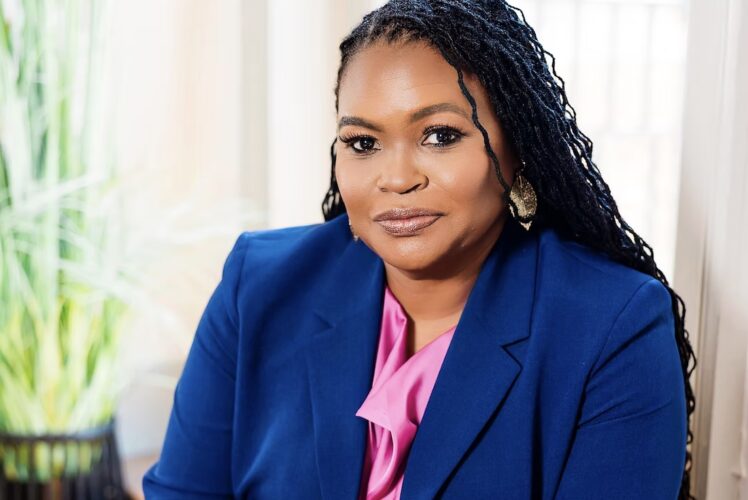
WILMINGTON — Chakema Clinton-Quintana, director of Live Oak Bank’s small business center Channel, is running a campaign for one of three Wilmington City Council seats in the 2025 municipal election.
It’s Clinton-Quintana’s first time seeking public office, however, she has served on Wilmington Chamber of Commerce, Commission for African American History, and other organizations, “actively engaged in community leadership and policy development.”
“I’m running for Wilmington City Council because our city is at a pivotal moment,” she said. “As the ninth fastest-growing metro area in America, we face unprecedented challenges that require proven leadership and collaborative problem-solving skills. I have not held elected office before, but I have extensive experience in the kind of work that makes government effective — bringing people together to solve real problems and deliver results for working families.”
The city council is a nonpartisan race, though Clinton-Quintana is affiliated with the Democratic party. She’s up against incumbents Luke Waddell (R) and Clifford Barnett Sr. (D), and newcomers Richard Collier (R), JC Lyle (D), Kelly Roberts (R), Chakema Clinton-Quintana (D) and Cassidy Santaguida (D). Sean Guerrero (R) will also appear on the 2025 municipal ballot, though he dropped out of the race earlier this month.
Port City Daily asked all candidates a slate of questions about topics that are tracking high with voters and residents of Wilmington currently. Clinton-Quintana’s answers have been edited below for clarity.
- A few things to consider this election season: A valid ID is required to cast ballot in North Carolina
- Election Day is Nov. 4, 2025, with voters required to go to their assigned precinct locations
- Early voting opens Oct. 16 and closes Nov. 1, and voters can cast a ballot at any of these four sites: Northeast Library (1241 Military Cutoff Road), Carolina Beach Town Hall’s Police Training Room (1121 N. Lake Park Blvd.), Cape Fear Community College’s McLeod Building, (411 N. Front St.), and New Hanover County Senior Resource Center’s Multipurpose Room, (2222 S. College Road). See all hours of operation here where you can also track the wait times at each early voting location.
Anyone who wants to register to vote can do so here through Oct. 10 or register and vote in one stop during early voting
The paywall has been dropped on candidate profiles to help voters make informed decisions ahead of the election. Candidate opinions and statements are not a reflection of Port City Daily.
Port City Daily: What makes you qualified for a seat on council and sets you apart from other candidates?
Chakema Clinton-Quintana: I deliver results, not just promises. My track record includes helping minority and small business entrepreneurs create jobs and wealth in Wilmington, which directly translates to understanding economic development and fiscal management. I’ve been recognized as a WilmingtonBiz Top 100 Connector four years running because I know how to build the partnerships necessary to solve complex problems. My experience managing budgets, understanding regulatory compliance, and creating strategic partnerships between banks, nonprofits, and small businesses gives me the practical skills city governance requires. I’m not interested in politics as usual — I’m focused on practical solutions that improve daily life for working families.
PCD: Homelessness continues to be debated among area leaders; what isn’t being discussed about it, in your opinion, that you think could help better steer its direction? Do you support implementing the former joint strategy that the city and county devised in September 2024? If not, why and what strategies do you think should be implemented? How much money would you support the city dedicating to the effort?
CCQ: What’s missing from the conversation is a comprehensive understanding of the successful partnerships already in place and the need for sustained coordination rather than reactive measures. We have proven service providers like Good Shepherd Center, which operates permanent supportive housing and has new projects underway, and Cape Fear Collective, which has successfully acquired properties from exploitative investors. The city has invested $1.6 million in programs pairing social workers with law enforcement, but we need to evaluate effectiveness and scale what works.
The Housing First approach, supported by evidence, isn’t being fully embraced by some council members who hold outdated views that homelessness stems solely from drug use and criminal behavior. We need to move past ideological opposition and focus on what actually reduces homelessness: providing housing first, then wrapping services around individuals.
I support building on existing successful strategies while strengthening coordination between city, county, and service providers. The city should continue its partnership approach with organizations like Good Shepherd Center, Family Promise, and the Cape Fear COG’s Continuum of Care program. I’d support maintaining current funding levels around $2-3 million annually while focusing on measurable outcomes and preventing the kind of punitive “camping ordinance” approaches that criminalize homelessness without solving it.
PCD: In development conversations, the supply of housing and affordability are often at odds with residents’ desire to keep density low. How would you propose tackling these issues respectively? Do you think it’s possible for the city to satisfy both desires? Why or why not?
CCQ: With median home prices hitting $400,000 — double what they were five years ago — we can’t afford to prioritize low density over housing our essential workers like teachers, nurses, and first responders. However, we can grow smartly through strategic infill development that protects neighborhood character while meeting housing needs.
I’d champion mixed-income communities through inclusionary zoning that requires affordable units in new developments. We should prioritize development near transit corridors and employment centers, reducing car dependency while preserving single-family neighborhoods. My experience at Channel has shown me how public-private partnerships can create innovative solutions — we need similar creativity in housing development.
It is possible to satisfy both desires through thoughtful planning: higher density near downtown and commercial areas, while maintaining lower density in established residential neighborhoods. The key is ensuring that increased density comes with infrastructure improvements and community benefits, not just developer profits.
PCD What does balancing green space with development needs look like in your view, such as when it comes to protecting wetlands or rebuilding the tree canopy? Do you have examples of cities or developments that have done this successfully?
CCQ: Protecting our tree canopy and natural environment isn’t optional — it’s essential for maintaining Wilmington’s livability and managing stormwater in our flood-prone region. I support development standards that require meaningful tree preservation, not just token plantings, and green infrastructure that works with our natural systems.
Successful examples include cities like Portland, Oregon, which requires tree preservation in development, and Charleston, South Carolina, which integrates historic preservation with modern density. Locally, we should learn from projects that successfully balance growth with environmental protection, requiring developers to contribute to tree canopy funds when preservation on-site isn’t feasible.
We need policies that treat our natural infrastructure — wetlands, tree canopy, flood plain — as seriously as we treat roads and utilities, because they provide essential services for stormwater management and quality of life
PCD: With the Cape Fear Memorial Bridge price tag escalating to more than $1 billion, how to fund it also remains debated. Both a toll has been floated and a transit sales tax, which would need voter approval potentially in a tri-county referendum that could include multiple projects in New Hanover, Pender and Brunswick counties. Do you support either and/or is there another option you think should be considered to fund the bridge replacement?
CCQ: The state should fulfill its responsibility to replace this critical infrastructure without forcing local communities to bear the cost through tolls or local taxes. The bridge serves the entire state’s economy through the Port of Wilmington, and replacement costs should be planned for and funded through appropriate state and federal sources.
I oppose tolls that would disproportionately burden working families who depend on this bridge for their daily commutes. If regional funding solutions are necessary, they must be structured fairly and not create additional financial hardship for residents already struggling with housing affordability.
The City Council’s role should be to advocate effectively at the state and federal level while ensuring any funding mechanism doesn’t worsen our affordability crisis or limit economic mobility for working families
PCD: Traffic is a main complaint for Wilmington residents — how do you envision the city’s role in addressing it? Do you think the city should promote public transportation or the expansion of it? How so? Do you think the city’s current plan to maintain and improve the roads it owns is/will be effective?
CCQ: Traffic congestion affects everyone’s daily life and safety, and we need comprehensive planning that works for people who walk, bike, drive, or take the bus. The city should fix dangerous intersections, expand safe bike lanes and pedestrian paths, and strengthen public transit to offer more reliable choices.
I absolutely support expanding public transportation — reliable transit reduces car dependency and provides economic mobility for residents who can’t afford car ownership. We need better connections between residential areas and major employment centers, plus increased frequency on existing routes.
The city’s road maintenance plan needs to be evaluated based on outcomes, not just spending. We should prioritize improvements that enhance safety and mobility for all users, not just cars. This means complete streets design that incorporates pedestrians, cyclists, and transit users in all road projects.
PCD: With a new police chief starting his post for the WPD this fall, what areas would you like to see him focus on to strengthen public safety and create a sustainable workforce? Explain.
CCQ: The new police chief should focus on community partnership approaches that address root causes of crime while building trust. This means strengthening the existing $1.6-million mental health and substance abuse initiative that pairs social workers with law enforcement and expanding prevention programs that keep young people engaged in positive activities.
For workforce sustainability, we need competitive compensation that allows officers to afford living in the community they serve, given our housing affordability crisis. We also need ongoing training in de-escalation, community policing, and cultural competency.
Public safety comes from thriving communities with economic opportunity, not just enforcement. The chief should work closely with community organizations, schools, and service providers to create comprehensive approaches to gun violence and substance abuse.
PCD: As the city continues to see an influx of residents, how do you think city council should ensure Wilmington’s economy keeps pace and opportunities remain varied across all ages and types of households? What can the city do to ensure all its residents have a high enough wage to afford life in Wilmington?
CCQ: Looking at Wilmington as the ninth fastest-growing metro area in America, city council must connect economic opportunity directly to affordability.
We need to diversify beyond tourism to attract higher-wage industries. The city’s $300-million budget should strategically invest in infrastructure that brings diverse employers to our region.
Through Channel, I’ve seen how local businesses create sustainable jobs and keep wealth circulating locally. The city should help entrepreneurs become “loan-ready,” streamline permitting, and prioritize local hiring. We must expand support for minority-owned businesses beyond the current $200K DEI budget.
With median home prices at $400,000 — double from five years ago — we must address the wage-housing disconnect through living wage requirements on city contracts and partnerships that close wage gaps.
Building on the city’s $2-million investment in housing services, we need partnerships between nonprofits, developers, and public agencies. Teachers, nurses, and first responders need down-payment assistance and affordable housing near employment centers.
Infrastructure matters because people can’t work if they can’t get there. We must strengthen public transit, fix dangerous intersections, and partner with Cape Fear Community College on career pathways.
The city can use procurement power to ensure contracts support fair wages and remove entrepreneurial barriers. Economic growth means nothing if working families can’t afford to live here.
PCD: Some residents have accused the city council of only representing a select few in the community, rather than the needs of all. Do you agree with this sentiment? Explain. What would you do in a leadership position to represent more equitably?
CCQ: There’s validity to this concern when we look at whose voices are heard in development decisions and budget priorities. Too often, policy benefits developers and investors, while working families struggle with housing costs and transportation challenges.
As a council member, I’d prioritize community input through forums in different neighborhoods, not just downtown meetings. I’d use my experience building diverse coalitions to ensure that decisions consider impacts on teachers, service workers, seniors, and families across all zip codes.
My approach would be to use data to track whether policies actually improve outcomes for working families and to maintain regular communication with community organizations that represent different constituencies. Real representation means ensuring that growth and investment benefit everyone, not just those with political connections.
PCD: What is one other issue not discussed above that you have a plan to address if elected and how would you do so?
CCQ: Veterans services represent a growing need in Wilmington. New Hanover County has experienced 5% to 8% growth in veteran population from 2020-2024, outpacing the state’s overall veteran population growth rate. Despite this growth, the city’s relationship with veteran issues has been informal and ad hoc.
I would establish formal mechanisms, including a liaison relationship with the VA Healthcare Center and quarterly forums with VA administrators and Veteran Service Organizations (VSOs). The city should explore creating a dedicated position to help veterans navigate VA eligibility and enrollment processes.
This connects to our broader challenges — many veterans face housing affordability and employment issues that city policies can address through targeted support and partnership with existing service organizations. It’s about recognizing that supporting veterans is both a moral imperative and a practical necessity for building strong communities
Want to read more from PCD? Subscribe now and then sign up for our morning newsletter, Wilmington Wire, and get the headlines delivered to your inbox every morning.
