


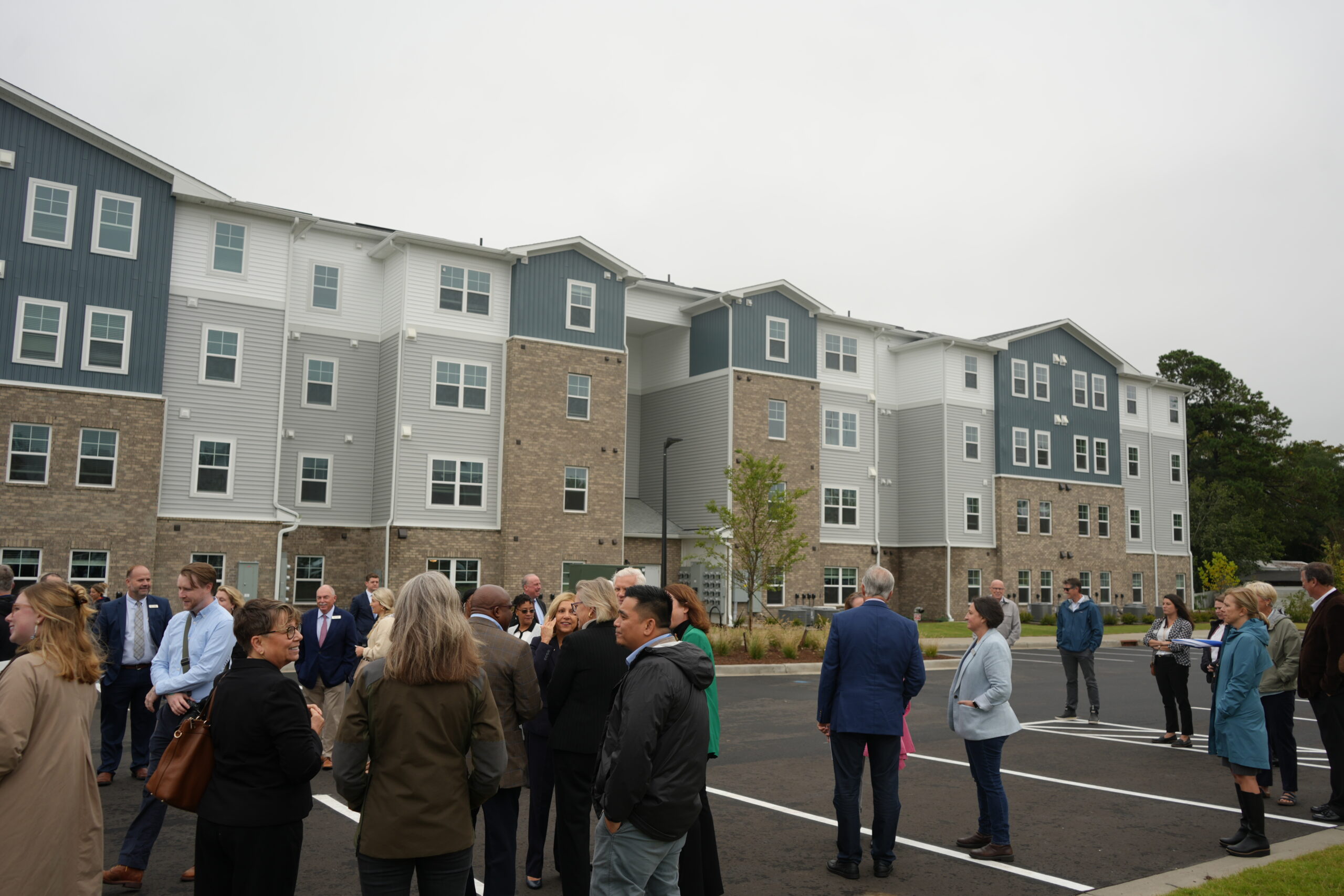
WILMINGTON — Starway Village, the largest affordable housing complex in North Carolina according to its developers, officially opened on Monday. Several local leaders called for the 278-unit project to become a model for others across the state.
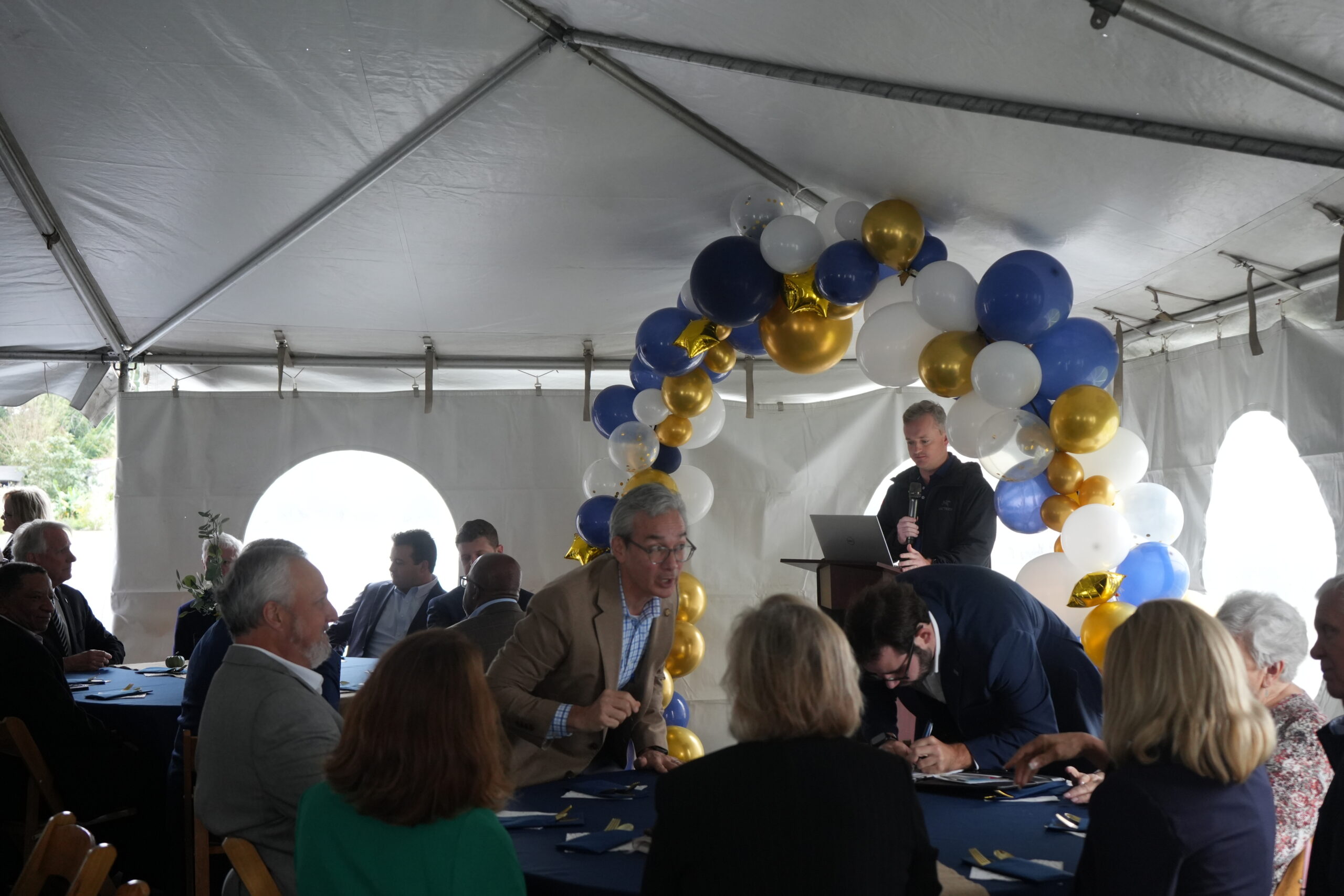
“We know that the demand for this has already eclipsed what has been built, so let us commit today … to use this as a template moving forward, and let’s replicate it as often as we can,” Rep. Deb Butler said at a ribbon-cutting event for Starway.
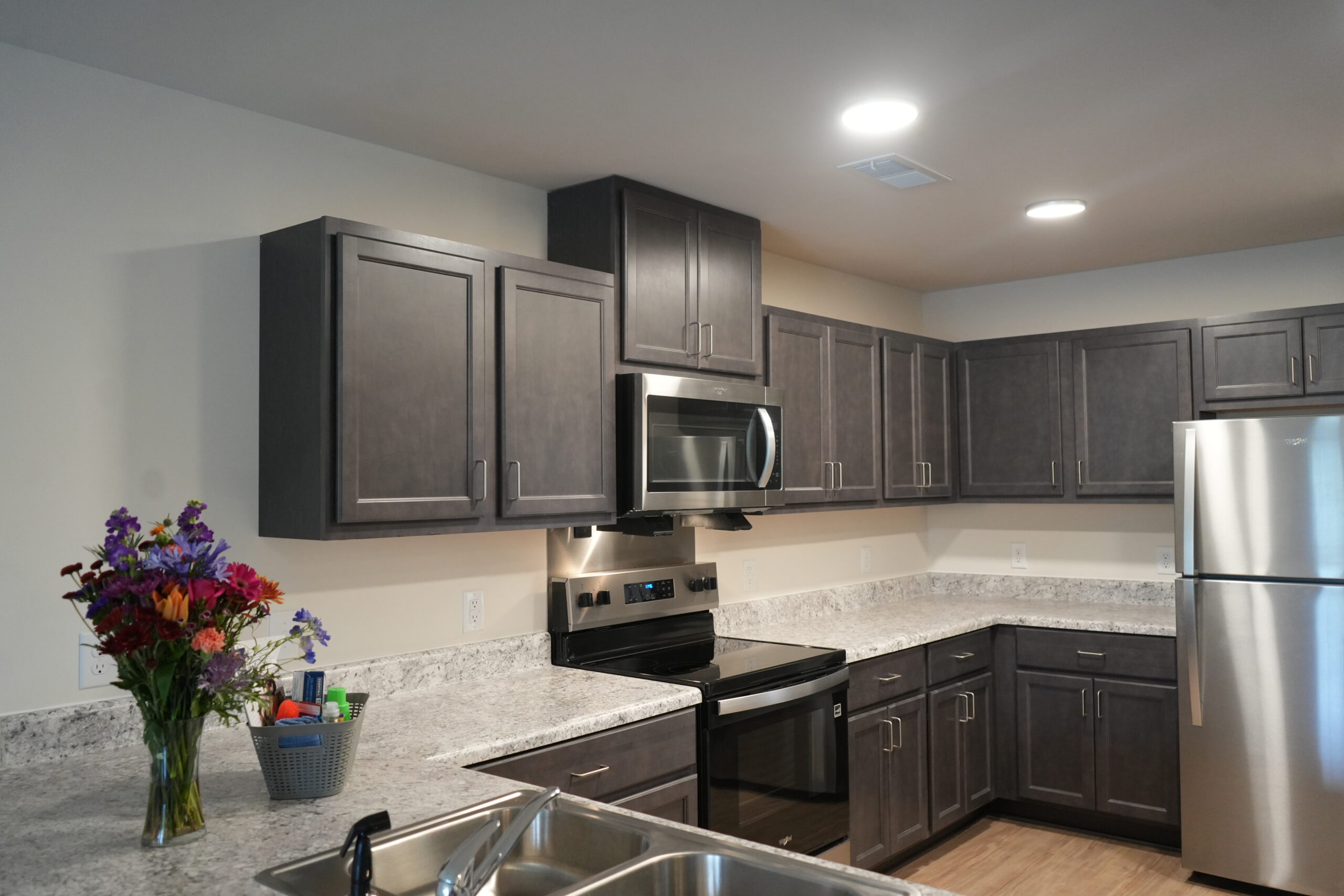
Located on Carolina Beach Road, Starway Village was built on land formerly occupied by the Starway Flea Market. It offers one- to three-bedroom units that make up to 60% of the area median income, or up to $45,540 for one person. A one-bedroom apartment, inclusive of water, sewer and trash, is listed at $1,047 per month; the median one-bedroom price in Wilmington is more than $1,400 per month, often without utilities included.
The property has already leased 102 units after opening applications in June; however, applications outpace the remaining units, with a total of 452 received. Applications also remain open. Units are broken into categories of availability based on how much of the area median income a renter makes and then processed on a first-come, first-serve basis.
Mary de Jesus, a medical assistant who didn’t have stable housing for more than two years before securing a spot at Starway Village, was at the official Monday opening.
“It’s more than just a roof over our heads; it’s peace, it’s comfort, it’s hope,” de Jesus said.
Other attendees included fellow North Carolina General Assembly member Sen. Michael Lee, along with local leaders Mayor Bill Saffo, Mayor Pro Tem Clifford Barnett, council members Salette Andrews, Kevin Spears and David Joyner, and county commissioners Rob Zapple and Bill Rivenbark.
Starway Village is a culmination of gap financing from the local, state and federal government, totaling $14.4 million. The North Carolina Office of Recovery and Resilience granted $9 million, while the City of Wilmington and New Hanover County respectively granted $4 million and $1.9 million from American Rescue Plan funds.
The majority of the project, whose private developers included Kelley Development Co. and Bradley Housing Developers, was funded through $37.1 million in tax-exempt bonds issued by the Wilmington Housing Authority. The project also received a 4% Low‑Income Housing Tax Credit award from the federal government.
“This is how we build smarter: by using public funds to unlock private investment, aligning local priorities with state and federal programs, and never losing sight of whose projects are these here for the people who make our city stronger,” Mayor Saffo said.
After the city and county approved initial funding for Starway in 2021, the project faced rising interest rates due to inflation as it moved through its tax credit and planning stages. The state agreed to provide its funding through its Community Development Block Grant Disaster Recovery program in 2022. Developers eventually returned to both bodies in 2023 asking for an additional $750,000 from the city and $500,000 from the county, both granted.
“I’m hopeful that the next project doesn’t take this long or has as many challenges and I look forward to working with everyone in trying to make that happen,” Sen. Lee said.
At the time of approval, Starway Village was the first affordable housing project the city and county co-funded. Despite the county commissioners deciding to forge a different path when it comes to joint homelessness and housing initiatives with the city earlier this year, the two bodies did both agree to help fund the 184-unit Avenue Flats that was approved at S. Kerr Avenue.
The complex will be for renters who meet the 30% to 80% area median income, with rents ranging from $486 to $1,800 a month. Like Starway, Avenue Flats received federal tax credits and gap financing, including $4 million from the city and $1.5 million from the county. Developer Blue Ridge Atlantic is seeking $4.5 million from other grant sources as well.
The two government bodies have also financed other affordable housing projects on their own, including Canopy Pointe and Pierson Pointe by the county, along with Sterling Reserve and Apex on Market by the city.
Council member Salette Andrews, who recently filed to run for New Hanover County Commissioner in the 2026 election, told Port City Daily Monday she wanted to bring the city and county back together to solve community issues, particularly housing.
Andrews said she would love for Starway to be the template, even if done on smaller scales due to the lack of large vacant parcels remaining in the city.
Her colleague, Mayor Pro Tem Clifford Barnett Sr. who is seeking re-election this year, agreed, calling the Starway Village concept “durable.”
“I really believe it is the only way we’re going to be able to get things done,” Barnett said to Port City Daily. “No one can do anything by themselves.”
He said the Starway Village project succeeded because all the government officials, regardless of political leaning, had one common goal: get more people in housing.
According to a May 2025 housing needs assessment, New Hanover County has a projected need for 21,864 housing units — 12,864 for ownership and 8,317 for rental — to keep pace with projected population growth over the next decade. The gap represents an increase from 2023’s projections of 16,875 units over the next 10 years.
Commissioner Rob Zapple told Port City Daily the community would need to utilize the partnerships that formed during Starway to ensure the working class — emergency responders, teachers, city and county employees — would continue to be able to live in the community they serve.
“Starway doesn’t solve the problem, but it certainly makes a dent in it,” Zapple said.
Reach journalist Brenna Flanagan at [email protected].
Want to read more from PCD? Subscribe now and then sign up for our morning newsletter, Wilmington Wire, and get the headlines delivered to your inbox every morning.
