



WILMINGTON – Half of World War II veterans returned home and started their own businesses. Seventy years later, the percentage of veterans who become entrepreneurs has dropped from 49 percent to 4.5 percent.
What happened? And what can be done?
Dean Bundschu, an Army veteran who served as a company commander in Iraq in the early 2000s, has some answers and some solutions that he wants to bring to the Wilmington area.
“Vets haven’t changed so much, we’re talking about focused, motivated people. They have the drive to lead, that’s part of why about a quarter of vets want to start their own business. That drive hasn’t changed,” Bundschu said. “But the business world — that has changed.”
Building a network
Bundschu is the executive director for the Raleigh office of Bunker Labs, a non-profit founded to help military veterans through the process of starting their own business. Bundschu pointed out that, at the close of World War II, more than ten percent of the United States population had served in the war.
“Coming back from the war, you almost definitely knew someone – that is, you had a network,” Bundschu said. “Today, that’s exactly the issue. That’s 100 percent of the issue vets face, is not having a network.”

Bundschu said that the modern business world depends on networks in a way that they didn’t in 1945.
“There was a time when you could go to the local building and loan, get your start-up capital, and open shop,” he said. “But that requires a much broader network now.”
This has less to do with the type of businesses, and more to do with the business world.
“A lot of people think of bio-tech or software when they think of start-ups, but we’re what we call ‘industry agnostic.’ I think of Pete Phipps, who started Arrow, or Karl Murphy, who started Spiffy. We’re talking about a barber shop and a car-wash idea. Obviously, they were done really well, but we’re talking about some real, physical, hands-on businesses. It’s mainstream tech, businesses that grow organically through hard work. But they were structured in a smart way, so they could be scaled and grown.”
Learning the skills to set-up a business for success in the 21st century requires a network of mentors, investors and other partners – what Bundschu calls the “entrepreneurial ecosystem.” But before Bunker Labs can introduce a veteran to that system, there is another issue that has to be tackled – one that doesn’t get talked about as much. That issue is the isolation veterans sometimes face when they return home.

“It’s an issue a lot of us have faced,” Bundschu said. “And there are ways to get help, to get out of your house and all that, but absolutely the first phase of Bunker Labs is connecting vets to each other. When you get out, there’s a feeling of loss, you’ve lost that deep connection to your tribe. Other vets are the people you feel comfortable with, so that’s where we start. You know, we fix our own problems.”
Bunker Labs offers a variety of levels of engagement – from online packages (called “Bunker in a box”), to 14-week college-credit courses and advanced one-on-one mentoring – but the end goal is getting veterans connected, first with each other, and then with the broader business community. For veterans, Bunker Labs covers much of the cost these programs.
A jobs program
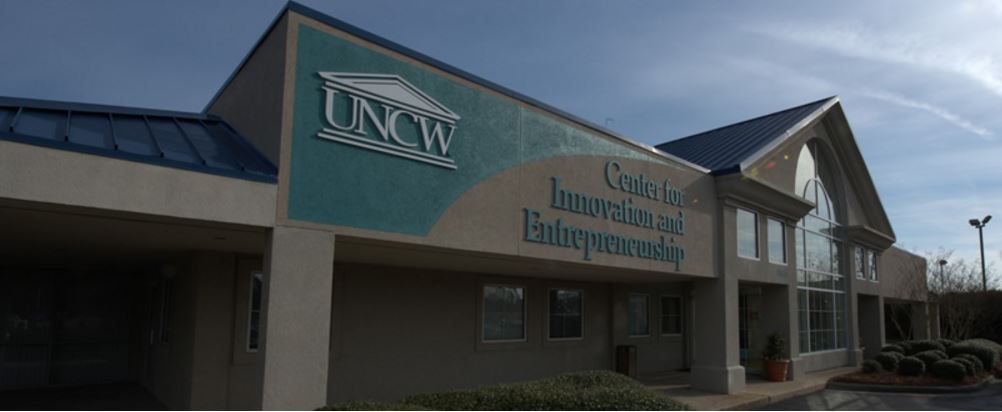
While the Raleigh chapter has had success over the last couple of years, the Wilmington area has been under-served, according to Bundschu. For that reason he turned to Jim Roberts, who founded the Center for Innovation and Entrepreneurship (CIE) at University of North Carolina Wilmington in 2013 before leaving to run Wilmington Angels for Local Entrepreneurs and the Network for Entrepreneurs in Wilmington.
Roberts helped secure the investment to open a Wilmington chapter of Bunker Labs, covering the space for classes at UNCW, the time of instructors and organizers and events like the “Bunker Brews” gathering that have successfully brought together the veteran entrepreneur community in Raleigh. (The CIE hosts the college-credit Bunker classes, while Roberts’ current organization, NEW, has been hosting monthly “Bunker Brews” style events).
Part of what attracted Roberts to the program was that Bunker Labs is not about patronizing or pitying veterans, but about helping them become job creators.
“In a way, I look at this as a jobs program,” Roberts said. “These are people with the mental focus to work on their start-up, nights and weekends, while they work a day job. What they need is a little structure and connections. But if you give them benchmarks, they hit them. If I say, meet these three requirements, and I’ll know you’re serious, and then we’ll sit down with someone who can take you to the next level – they’ll meet those three requirements. They do the legwork. They’re going to go on, if they’re successful, to employ other veterans. And this program gives them, statistically, a serious advantage.”
Roberts cited a study by the Kauffman Foundation, a non-profit focused on entrepreneurship education; that study suggested those who go through a program like Bunker Labs are 70 percent more likely to have their business succeed.
Weeding out the ‘ugly babies’
Still, not every start-up dream will be successful, something Bunker Labs tries to deal with head on rather than deny. After acclimating to the world of start-ups, the 14-week course is designed to take a veteran on what Bundschu calls “the journey from ideation to feasibility.” It’s designed to get successful ideas to the point where they can become a real pitch – and a real business. It’s also designed to weed out so-called “ugly babies.”
As Bundschu said, “the problem isn’t usually that veterans don’t have good ideas, it’s that they don’t have the right connections. But, if they do have an idea that’s, well, a terrible idea, then we tell them. They’re tough, and hearing it from another vet, who’s been where they are, they get it. And we’ll get them on track with a better idea.”
Local veterans have already completed an abbreviated 10-week EPIC (“Entrepreneurial Program for Innovation and Collaboration” courses to begin soon at the CIE, with full-length courses expected to be announced soon. More information about existing programs is available at Bunker Labs.
