


BRUNSWICK COUNTY — Flooding is consistently being addressed in the coastal regions of North Carolina as of late, with Brunswick County commissioners now considering changes to a few of its ordinances in light of complaints and flooding events.
READ MORE: Leland tables flooding ordinance, for now, after pushback
ALSO: ‘No silver bullet’: Study pinpoints $5M to $50M in CB flood mitigation efforts
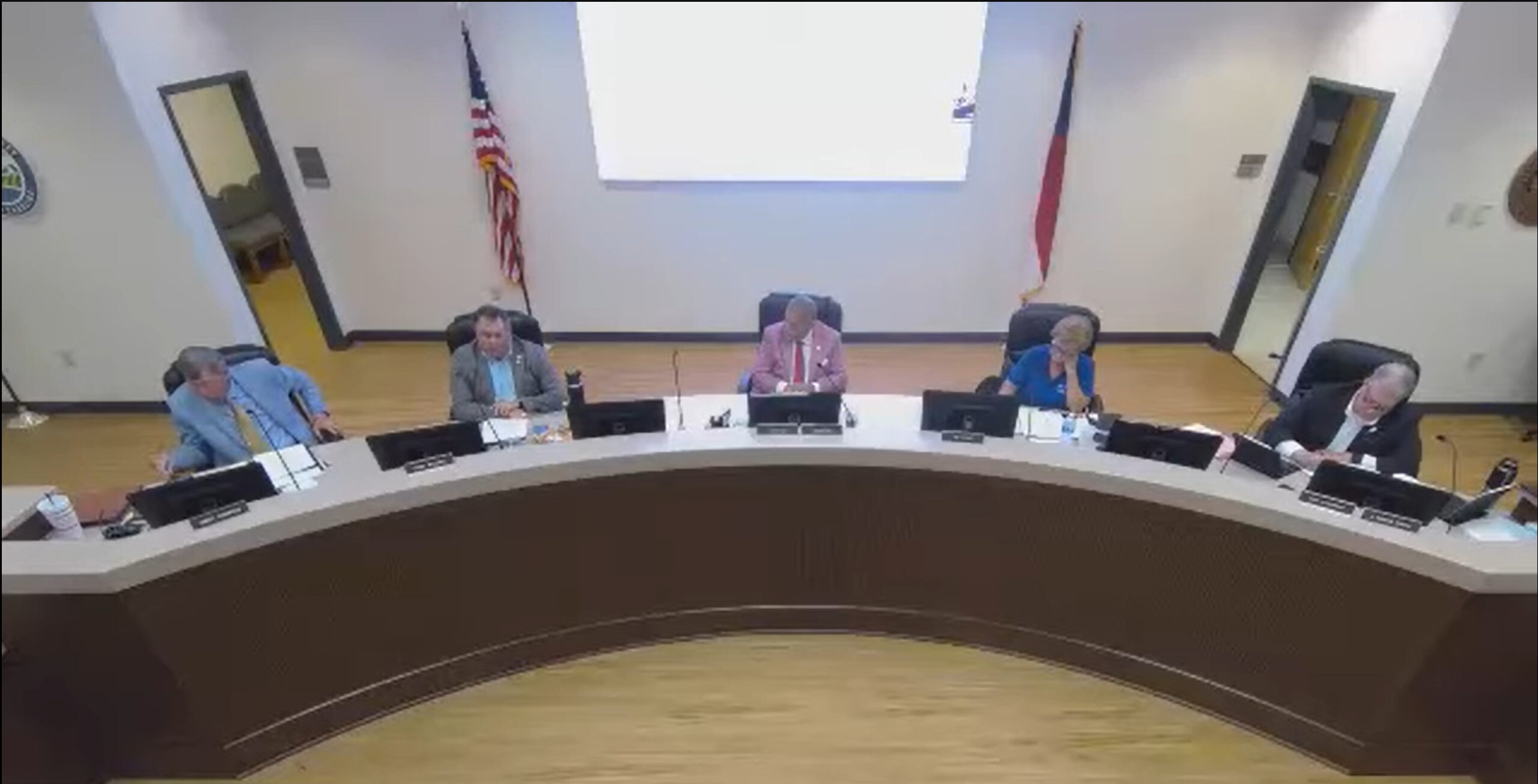
At their July 21 meeting, Brunswick County Commissioners began actively pursuing changes to their stormwater ordinance. They also want to strengthen their flood ordinance, however, are concerned about legal limitations posed by state law.
The goal is to address escalating flood concerns, intensified by recent events like Potential Tropical Cyclone #8 and the impact of development on existing infrastructure.
“I would like to see something done about stormwater. We get two and three a year, and I’m quite tired of it, same as everybody else,” Chairman Mike Forte said. “We need something comprehensive and dynamic, something that we could put our teeth into, that we can hold on to and say, ‘Yeah, that has potential.’”
Niel Brooks, deputy county manager, and Brigit Flora, deputy engineering services director, presented commissioners with potential stormwater ordinance changes:
- Increase riparian buffer zone width from 30 feet to 50 feet
- Require a minimum riparian buffer zone for wetlands
- Prohibit new stormwater retention ponds from being placed in 100-year flood zones or within riparian buffers
- Require new developments to manage stormwater for a 100-year storm (about 10 to 11 inches of rain in 24 hours), ensuring runoff doesn’t worsen flooding
Expanding the riparian buffer from 30 to 50 feet and requiring a minimum buffer for wetlands would allow better pollution filtering and runoff control while extending protection to wetlands which are natural water absorbers and filters. Additionally, by keeping new stormwater ponds out of 100-year flood zones and buffers, they would not overload natural flood systems like wetlands and rivers.
Upon commissioner’s request, these suggestions are set to be codified by county staff for commissioners to formally consider and vote on in August.
Brooks said the calls for updates came after hearing concerns from residents and commissioners about flooding, particularly in light of recent devastating floods in Texas and Central North Carolina.
Multiple people were in attendance at Monday’s meeting and requested some form of action. Four people spoke in favor — no one against — with one person concerned about overdeveloping wetlands and another about the quick pace at which the county is growing without proper infrastructure in place.
“Our forest and farmlands have been raped by greedy developers who throw out tacky track houses using cheap labor and even cheaper materials while they fill in wetlands that will cause flooding,” Ocean Isle Beach resident Judy Andersack said. “When these out-of-state developers build, they profit. We’re the ones giving up our peace of mind and our way of life.”
Andersack called for a moratorium on approving new developments, which commissioners previously considered at a meeting in October 2024. They decided against it, citing concerns a moratorium would leave the county vulnerable to extensive litigation.
County manager Steve Stone stated at the time he believed Brunswick’s issues fell short of the legal “imminent and substantial threat” required for a moratorium.
Stone said Monday he would be researching similar ordinances at other counties or cities with stormwater and flood-damage prevention to learn more about challenges and successes.
Similarly to Flora’s suggestion, neighboring New Hanover County’s stormwater management ordinance requires all development to be designed and reviewed with a focus on how it will handle the flooding expected from a 100-year storm — a rainfall event that has a 1% chance of occurring annually.
In North Carolina, there have been four hurricanes since 1999 that have been a 100-year storm event, with nine storms in the last 25 years that can be considered multi-hundred or thousand-year storm events.
However, Commissioner Frank Williams expressed Brunswick shouldn’t be compared to New Hanover.
“I’d be interested in counties that are not as densely populated as New Hanover because we’ve got a lot of areas where you’ll go a decent distance between homes and us, and New Hanover is not apples-to-apples,” Williams said.
Commissioners also reheard consideration for establishing a stormwater utility department to manage stormwater operations, capital improvements, and infrastructure maintenance. The board initially considered the idea last October in the wake of PTC8, but unanimously directed county staff to further explore the idea as they sought more information on the financial implications before proceeding with a vote.
Currently, stormwater is managed collaboratively within the county government’s engineering services department and public works. Engineering oversees permits, planning, inspections, and enforcement, while public works is responsible for maintaining existing stormwater infrastructure like ditches and culverts.
By establishing a stormwater utility, the county could create a dedicated funding source specifically for stormwater management efforts, allowing for proactive maintenance, necessary infrastructure improvements, and new projects to better control flooding.
Initially, commissioner Pat Sykes was against the stormwater utility department being a separate entity due to costs. But Stone suggested executing a feasibility study to see what it may look like, with which the full board agreed.
Separately, Brooks presented how the county would go about updating the flood damage prevention ordinance. Currently, the ordinance allows Brunswick residents to participate in the National Flood Insurance Program, which provides access to federally subsidized flood insurance and eligibility for federal disaster grants and loans.
Brunswick estimated its direct costs from PTC8 at more than $2.8 million, primarily for damages to county property.
Brooks said the county would have to consider the impact of Senate Bill 382 when updating the floodplain damage ordinance.
S.B. 382 became law last December after the General Assembly successfully overrode former Governor Roy Cooper’s veto. The bill was presented as disaster relief for Hurricane Helene-affected areas. However, its broad scope removed local governments’ prior ability to independently initiate downzoning amendments — which reduce development density or permitted uses for a property — without the written consent of all affected property owners.
In regards to amending Brunswick County’s flood damage prevention ordinance, Brooks explained proposed amendments, such as reducing housing density in flood zones, could be seen as downzoning, leaving the county vulnerable to litigation. Brooks emphasized that while the law has not yet been challenged, advice from the UNC School of Government and county legal staff urges caution, requiring any proposed ordinance changes to be legally sound.
“If Senate Bill 382 stays in place, we better come up with something creative,” Commissioner Randy Thompson stated. “We better come up with something, putting our heads together to figure out how to get around this, because I don’t think our county and our residents can stand what we have seen.”
The Town of Leland recently tabled its proposed flood damage prevention ordinance amendments specifically in response to developer pushback, which included legal concerns stemming from S.B. 382. Leland’s amendment included reducing density in flood zones to 2 units per acre, which developers decried as downzoning; they also said the ordinance potentially limited property improvements, undermined property values and property owners’ rights.
At Brunswick County commissioners’ request, Brooks will return in August to present specific, codified ordinance updates, as well as a feasibility study into establishing a stormwater utility.
Have tips or suggestions for Charlie Fossen? Email [email protected]
Want to read more from PCD? Subscribe now and then sign up for our morning newsletter, Wilmington Wire, and get the headlines delivered to your inbox every morning.
