


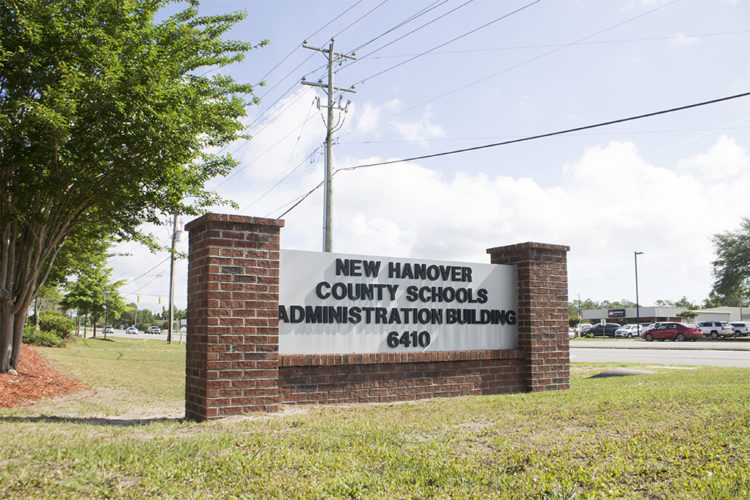
NEW HANOVER COUNTY — Republican leaders in the state legislature have announced an end to their 10-month budget impasse after reaching an agreement on tax cuts and state employee raises — including a 3% increase for all employees and an 8% average for teachers.
House Speaker Destin Hall and Senate President Pro Tempore Phil Berger said Tuesday their delegations have reached an agreement on the framework of a state budget. For nearly a year, the budget has been stalled due to conflict largely over tax cuts and state employee pay.
READ MORE: County budget to be recommended with no tax increase, no Revenue Stabilization Fund
On both fronts, the House seems to have won out with its push for the state to slow down planned income tax rate reductions; the Senate’s proposal also includes teacher raises around 3%, while the House pushed for 8.7% on average. Aside from the 8% settled on, the agreement also includes a $1,000 bonus for educators with more than 16 years of experience and $500 for others.
Though the additional pay for teachers is welcome, the sudden announcement prompts school districts to reexamine what they budgeted for in fiscal year 2026-2027. New Hanover County Schools’ budget, submitted to county commissioners last month, only included a 3% raise for employees.
“Every employee in our district works hard on every dollar they earn and they deserve more of it and everything else,” NHCS Superintendent Chris Barnes told Port City Daily Wednesday. “But it’s a balance, right? It’s always a concern to make sure we’re being fiscally responsible.”
At surface level, it appears that school districts could just adjust their budget to accommodate a higher raise, and therefore more funding from the state.
However, NHCS and many other districts pay for some of their teachers out of the funding they get from their local government because the state allotment formula doesn’t cover all the positions a district says it needs.
For example, the state only pays for elective teachers — art, music, P.E. etc. — at one per 191 students; for a school like Wrightsville Beach Elementary, which has less than 300 students, NHCS would have to fund two positions from its local funding bucket if it wanted all three elective teachers full-time at the school.
Even though they aren’t state-covered positions, NHCS would offer them the same raise to be fair; it’s also simpler accounting.
This year, New Hanover County Schools has more than 600 positions uncovered by the state, roughly a third of them being teachers. Barnes explained the district is always trying to ensure its most expensive positions are on the state’s roster, because the state pays out based on number of positions instead of a set dollar amount. Staff area also continuously shifting people onto the state’s roster when there’s openings to keep the locally covered positions as minimal as possible.
Per the school district’s budget request, the New Hanover County manager’s recommended budget includes a 3% increase in operating expenses, which costs a little more than $3 million. NHCS has been clear it is operating at “subsistence level,” with the district pulling from different revenue sources to close a $2.5-million shortfall in this year’s budget talks.
The shortfall — and additional funding from the county for the last several years — has occurred despite the district’s declining enrollment, prompting the school board to commission a facility plan identifying ways to reduce its overhead and building footprint.
Barnes told Port City Daily it’s too early to determine if the district will need to go back to the county commissioners with another budget request.
“I’m not going to punch above my weight class; I’m going to wait till some of this stuff actually comes down in writing that I can verify and back up,” Barnes said. “So I will tell you that if I feel like I can’t manage with the funding we have, then the only place I have to go would be to ask the county government to readjust it. But I’m not to that point yet.”
The superintendent emphasized the state leaders’ announcement is just that — an announcement.
“I’ll trust a budget when I see it signed,” Barnes said.
A bill has not yet been put into play with details on how the raises will work, nor how the bonuses will stack up. Neither Hall nor Berger indicated when a budget bill will be drafted, though the new fiscal year for both the state and local governments starts on July 1.
A key point of the raises: 8% is an average and determining how much each employee will see depends on experience. Barnes said he still has concerns about the raises disproportionately benefiting beginning teachers, who have lower salaries and thus more room to grow, with a plateau in the salary schedule being exacerbated.
The framework has also been criticized for its lack of backpay for teachers. Because the General Assembly didn’t pass a budget last year, state employees have been paid using 2023 figures and lawmakers did not agree to prorate the raises to July 1, 2025, at the beginning of this fiscal year.
The North Carolina Association of Educators — which held a Raleigh rally May 1 to advocate for higher pay and drew in dozens of NHCS employees — called the state’s budget framework “smoke and mirrors.”
The association’s president, Tamika Walker Kelly, released in a statement Tuesday that 8% “may sound like a raise — until you pay Duke Energy’s skyrocketing electric bill, Aetna’s ballooning insurance premium, and more at the gas pump. Meanwhile, teachers are still spending more than $1,000 of their own money just to stock their classrooms.”
NCAE added North Carolina’s teacher pay is still 25% behind the national average. Encompassing total education funding compared to the state’s GDP, North Carolina continuously ranks last in the nation per the Education Law Center’s Making the Grade report.
Barnes said once staff receive guidance from the state on raises, the finance team will evaluate the best configuration of state-paid positions versus non-state positions to minimize the impact of the 8% increase. From there, the district will have a better look at any additional money it needs.
“We’re all constantly looking at: How are we making sure we’re reducing our overhead, reducing our central profits, making sure we’re being efficient?” Barnes said. “I’d be more likely to say I’m going to cut another 20% of my superintendent’s budget before I would go back and ask for more money.”
At Port City Daily, we aim to keep locals informed on top-of-mind news facing the tri-county region. To support our work and help us reach more people in 2026, please, consider helping one of two ways: Subscribe here or make a one-time contribution here.
We appreciate your ongoing support.
