


SOUTHEASTERN N.C. — Last week, the EPA announced it reached a $450-million settlement with Chemours, the company responsible for polluting the Cape Fear River with PFAS. However, local leaders and advocates have called out the EPA and Department of Justice for lack of transparency in the settlement agreement, dubbing it “misleading” particularly due to North Carolina’s absence in recovery efforts.
Though the settlement could contain hundreds of millions of dollars, only a portion — $22.5 million — will be sent to West Virginia and the federal government to cover penalty fees for violating the Clean Water Act, the Toxic Substances Control Act and the Resource Conservation and Recovery Act. The remainder combines three $90-million programs to mitigate chemical discharge across West Virginia, North Carolina and New Jersey, and a $60-million program for air emission control in West Virginia. However, these are the maximum costs; Chemours can choose to spend less.
Clean Cape Fear, Cape Fear River Watch and the Southern Environmental Law Center are concerned by language used in the agreement — that it purposefully lacks transparency and creates barriers for future accountability measures.
READ MORE: Chemours Agrees to $450M settlement agreement in West Virginia, North Carolina, and New Jersey
ALSO: ‘No limits, no accountability’: Area residents rebuke state’s proposed PFAS, 1,4 dioxane rules
CATCH UP: Vote coming on PFAS, 1,4 dioxane rules that critics say allow polluters to police themselves
“Right now, the polluter is fighting tooth and nail to not be held accountable, and you would think that every level of government would be rallying together to rein in this one irresponsible company,” Emily Donovan, co-founder of Clean Cape Fear, said. “And they are clearly not.”
The settlement was part of a lawsuit filed by the EPA on June 24, 2026, between Chemours, the EPA and West Virginia over water contamination in the Ohio River near Parkersburg. The lawsuit references PFAS testing from 2005 to 2022 and with contamination levels exceeding maximum allowance in January 2025. The other states were brought in, according to the lawsuit, because Chemours “transferred PFAS materials” between the three facilities in West Virginia, New Jersey and North Carolina.
For North Carolina, the settlement requires Chemours to operate a toxic waste and pollution prevention program over the next 15 years, which it is instructed to develop in coordination with a third-party firm’s recommendations. The EPA will continue to oversee compliance with the consent order.
Donovan noted the regulatory review by a third party contractor will be chosen by Chemours and approved by the EPA. Further, the external firm will be paid by Chemours, which Cape Fear River Watch Riverkeeper Kemp Burdette and Donovan worried was a conflict of interest and meant no real oversight would take place.
Donovan and Burdette also pointed to conflicts of interest otherwise in the EPA, which they believe may have played a role in the settlement’s outcome. In April 2026, two high-ranking officials were added to the EPA’s Science Advisory Board, whose chief roles are to provide objective analysis and evidence-based guidance to government agencies in order to inform policy-making decisions.
Shawn Gannon is the chief toxicologist at Chemours and was also appointed to the SAB Chemical Assessment Advisory Committee. The committee provides “independent scientific advice and recommendations to the EPA” about risk assessments and pollution prevention for chemicals like PFAS.
Sean Uhl was also appointed to the Science Advisory Board and works as senior director of sustainability at Chemours.
Port City Daily reached out to Chemours to ask various questions, including whether Gannon or Uhl had any discussion regarding the settlement agreement. The company didn’t answer and stated it was confidential business information.
“I think the EPA has made it pretty clear that they are very willing to do whatever they can to help industry, rather than protecting the environment,” Burdette said. “Whether that’s rolling back PFAS standards on drinking water, which they just did recently. Whether that’s appointing executives from Chemours to the EPA Science Advisory Board, which they also did this year.”
Burdette referred to an April 2024 rule passed by the EPA putting strict maximum contaminant levels to drinking water, as it related to PFAS chemicals like GenX. As of June 23, the EPA is proposing to rescind those maximum capacity regulations.
“And now this,” Burdette said. “I think it’s, most of all, a gift to Chemours because it is going to make future accountability more difficult.”
The settlement
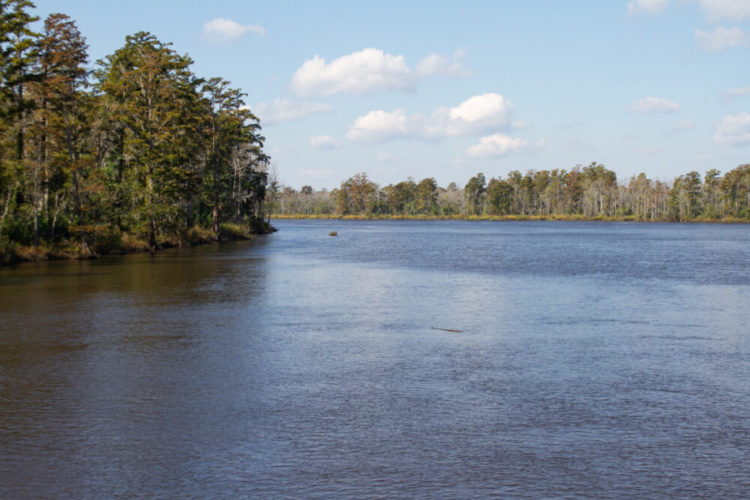
The Cape Fear is considered ground zero for PFAS contamination and the environmental battle with Chemours is decades old. In 2017, it was publicized the Chemours Fayetteville facility had been discharging PFAS and other chemicals into the Cape Fear River. In total, more than 47 chemical compounds have been found in the river by UNC-Chapel Hill scientists, largely linked to strains of PFAS, GenX and other “forever chemicals,” produced by Chemours. The chemicals have been associated with higher risks of cancer and liver damage.
However, what local groups and state officials have noted is the settlement does not request substantial commitment from the company. Basically, the consent order implies Chemours cannot afford to pay the full civil penalty it could be charged, based on information provided by Chemours about their financial situation and size.
Port City Daily asked about the company’s financial situation and why North Carolina has been excluded from water cleanup aid, but a spokesperson declined to comment, noting again confidential business information.
According to Chemours’ website, the company made $1.4 billion in the first quarter of 2026. Its enterprise value, or the theorized cost to buy the company, is over $7 billion according to Yahoo Finance. Chemours, along with its predecessor DuPont, opened a legal fee escrow account in 2021 to manage liabilities, remediation, and associated legal defense costs regarding PFAS. Chemours put in $100 million when it first opened and currently provides an annual contribution of $50 million, which will last until 2028.
North Carolina Attorney General Jeff Jackson and Governor Josh Stein both addressed the settlement this week, lambasting the fact Chemours is not expected to make any sort of commitment.
Clean Cape Fear co-founder Donovan said the announcement gave off a “false sense of justice.”
Most notably, West Virginia and New Jersey will have their contaminated water rectified; North Carolina will not. The settlement requires Chemours to test the water near the facilities in New Jersey and West Virginia and if an excess number of PFAS compounds are found in the water, Chemours will need to provide those areas with clean drinking water or treat their water using a filtration system that removes the contaminants.
Port City Daily reached out to the EPA and Department of Justice to understand why Chemours is not required to treat the already contaminated water in the Cape Fear River, as it is in New Jersey’s Delaware River and West Virginia’s Ohio River. A response was not received by press.
However in a statement to Reuters the agencies said: “The State of North Carolina was invited to participate in the settlement discussions but decided to act under their own authorities.”
Port City Daily reached out to state AG Jackson to confirm and inquire more, but did not receive a response by press.
Burdette said while remediation is happening elsewhere, it’s unfair to locals who have footed the bill otherwise for Chemours’ contamination: “Here in the Cape Fear, we spent hundreds of millions of dollars upgrading our own facilities, and that cost is being paid by ratepayers, by you and me, and everybody else.”
The Cape Fear Public Utility Authority has spent $91 million to date removing and addressing PFAS contamination, including installing a $43-million filtration system. However, the cost has been shouldered overwhelmingly by residents; the most recent evidence of this includes a 6% rate increase in water bills for the next year.
Chemours did install a $310-million mile-long barrier wall, completed in 2023; it runs underground and blocks contaminated groundwater from seeping into the Cape Fear River.
Donovan pointed out the EPA and DOG announcement — from the small list of benefits to the money and language in the document — presented transparency issues. What she pointed to first, though, was the name of a chemical compound listed in the consent order: carbooxohalide.
What are carbooxohalides?
Not considered PFAS under the Toxic Substances Control Act, “carbooxohalides” are mentioned in the settlement as a chemical compound Chemours will need to mitigate discharging. However, Donovan and Burdette said a chemical compound by that name does not exist.
Having spoken with experts on the matter, “carbooxohalide” was used as a “placeholder,” Donovan added.
“Mind-boggling that we’re supposed to, in 30 days, come up with comments on this hidden chemical,” she told Port City Daily Thursday, referring to the public comment period opening on the settlement here.
However, Donovan explained experts are theorizing it may actually be carbon oxohalide, a group of chemicals rather than its own compound. She noted one of the chemicals in the “carbooxohalides” group is called carbonyl fluoride, a forever chemical created in the incineration of fluoropolymers, a PFAS variant.
According to the settlement, “carbooxohalides” are used in manufacturing and created at Chemours’ Fayetteville facility. The company will be charged with developing a mitigation plan around the “carbooxohalide” with PFAS, which the settlement suggests is emitted as a gas. If Chemours wishes to use “carbooxohalides” for a “significant new use,” it will need to inform the EPA beforehand and receive approval.
Port City Daily reached out to experts with NC State University and UNC-Chapel Hill — both leading universities in PFAS-related research by tracking contaminant levels in the Cape Fear River and exposure in communities — to inquire if they had heard of “carbooxohalides.” None responded by press, but this will be updated upon response.
Burdette also said “carbooxohalides” likely contained fluorides that, when in contact with water, can essentially turn into GenX, one of the contaminants and forever chemicals found in the Cape Fear River. He explained once the alcoa fluorides make contact with water or moisture, they turn into carboxylic acids, which contain a strain of PFAS.
Ultimately, though, both Burdette and Donovan said the possible makeup of “carbooxohalide” are just theories from experts — the EPA and Chemours have considered the matter “confidential,” according to a company spokesperson.
The identifier for the chemical compound is also redacted in the settlement. The Department of Justice did not respond to further inquiries about it.
‘Backroom deal’ and accountability
North Carolina Attorney General Jackson and Governor Stein publicly denounced the settlement last week, in what they called a “backroom deal.” Jackson said it’s an “insult” to people who have been dealing with PFAS contamination in the Cape Fear River for years.
“But this deal does practically nothing to clean up our water,” he said. “Chemours made this mess and Chemours should clean it up. The EPA will be hearing from my office.”
Port City Daily reached out to Jackson’s office to inquire about next steps against Chemours but did not receive a response. Also asked: Whether the settlement agreement with the DOJ and EPA would affect ongoing in-state litigation against Chemours.
Jackson is overseeing the lawsuit, filed by now governor but former Attorney General Stein in October 2020 over the contamination of the water and its impact on fisheries and public health. Burdette worried the case would be impacted by the feds’ consent order; the Southern Environmental Law Center noted Chemours has already been calling into question Jackson’s “authority to bring the case” to court.
Chemours has contested the claims brought by the state, denying liability and pointing to compliance with state oversight. The company pointed to work it had already done to reduce GenX emissions — such as the implementation of air emissions control technology and a thermal oxidizer.
Local environmental groups worried the ongoing lawsuit in the state would be negatively impacted by the settlement. They indicated future accountability could become a much harder goal to accomplish because Chemours could use the consent order with the EPA to combat any future or ongoing litigation; they’ll point to it as certifying compliance.
The first example Burdette brought up was when new members come onto the EPA, with leaders creating more stringent policies under a different presidential administration, for example.
“Chemours is going to say: ‘Look, we signed this agreement with the EPA already. And that agreement said that our sins have been absolved, so to speak. We’re no longer responsible for these kinds of things,’” Burdette said. ”That’s what, most of all, this consent order is doing. It’s shielding Chemours, to the extent that it can, from future action to hold the company liable.”
Chemours could still be fined in the future if the EPA discovers they are out of compliance with the rules as stipulated in the consent order. However, the settlement does not address future accountability beyond what the decree requires.
“The EPA has abandoned North Carolina,” Burdette concluded. “That’s clear based on the consent order.”
Donovan explained Clean Cape Fear has plans to mobilize people to give feedback during the comment period and added the group’s primary goal is to inform the community about what the settlement actually consists of.
However, the settlement has not been signed by the court so it could change. Residents will have the ability to provide comments on the settlement in a 30-day period that ends July 29. The comment portal can be found here.
Have tips or suggestions for Emily Sawaked? Email [email protected]
At Port City Daily, we aim to keep locals informed on top-of-mind news facing the tri-county region. To support our work and help us reach more people in 2026, please, consider helping one of two ways: Subscribe here or make a one-time contribution here.
We appreciate your ongoing support.
