


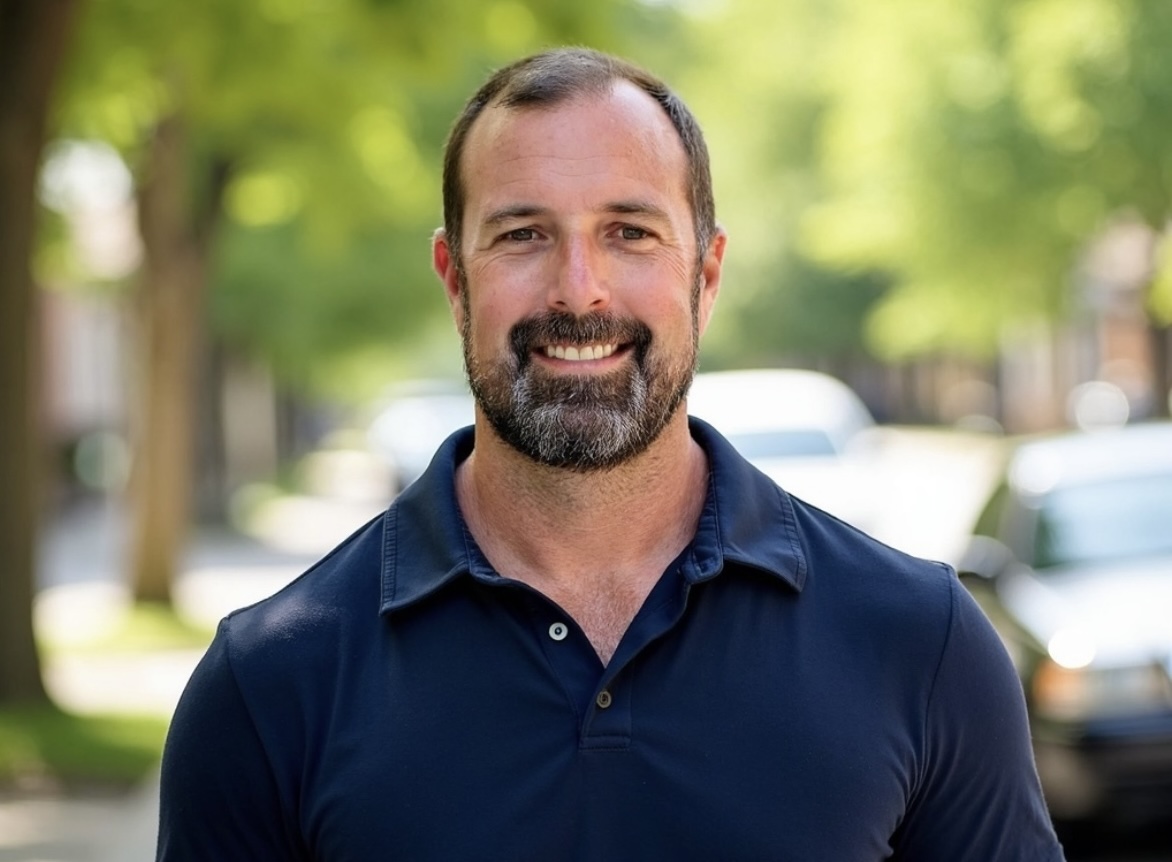
WRIGHTSVILLE BEACH — Todd Schoen, a small business owner of European Coatings, is hoping to secure a seat on the Wrightsville Beach Board of Aldermen.
A 30-year resident, Schoen is running to protect Wrightsville Beach’s unique way of life and also to help with “smart planning” in its future. He wants to be a representative for many voices he said can sometimes be overlooked.
“For years I’ve felt that my experience here on the beach — and the experiences of many long-time residents — isn’t truly represented at Town Hall,” Schoen said. “Life at the beach has changed: traffic is heavier, parking is tighter, and big projects like the bridge replacements are looming. These challenges affect daily life for the people who call Wrightsville Beach home, yet too often decisions seem to be made without our voices at the center. For too long, promises have been made, but little has changed. Instead of more studies and recycled ideas, we need action that puts the people who live here first. My focus is on protecting our neighborhoods, improving safety, and making sure locals have a stronger voice in shaping the town’s future. … The challenges we face demand attention today, not years down the road — our community deserves a strong, fresh voice at the table now.”
Though the alderman race is nonpartisan, Schoen is unaffiliated with a party. He will face off against Margaret Baggett (R), Hank Miller (R), Lee Williams (R), and David Wortman (R) for two open seats.
Port City Daily asked all candidates a slate of questions about topics that are tracking high with voters and residents currently. Shoen’s answers have been edited below for clarity.
- A few things to consider this election season: A valid ID is required to cast ballot in North Carolina
- Election Day is Nov. 4, 2025, with voters required to go to their assigned precinct locations
- Early voting opens Oct. 16 and closes Nov. 1, and voters can cast a ballot at any of these four sites: Northeast Library (1241 Military Cutoff Road), Carolina Beach Town Hall’s Police Training Room (1121 N. Lake Park Blvd.), Cape Fear Community College’s McLeod Building, (411 N. Front St.), and New Hanover County Senior Resource Center’s Multipurpose Room, (2222 S. College Road). See all hours of operation here where you can also track the wait times at each early voting location.
Anyone who wants to register to vote can do so here through Oct. 10 or register and vote in one stop during early voting,
The paywall has been dropped on candidate profiles to help voters make informed decisions ahead of the election. Candidate opinions and statements are not a reflection of Port City Daily.
Port City Daily: Is this your first time running for public office? What makes you qualified for a seat and sets you apart from other candidates?
Todd Schoen: Yes, this is my first time running. I have not sat on a town board — but I have sat with my neighbors for more than three decades, listening to their concerns and living the same challenges we all face as residents of Wrightsville Beach. What I bring isn’t political experience, but real-world experience. As a small business owner, I’ve managed budgets, solved problems, and made tough decisions. As a resident, I’ve built relationships, paid close attention to town issues, and studied the data to find solutions that work. I have worked from the ground up through grassroots initiatives to bring attention to restoring trash cans back onto our beach strand after being removed and eliminating unsafe parking spots by the crosswalk for our neighborhood. I believe this perspective is exactly what our town needs right now. Fresh energy and a resident-first approach are what will keep Wrightsville Beach strong for the future.
Just as important, I understand how Wrightsville Beach operates day-to-day and what it takes to be prepared for the seasonal pressures we face — traffic congestion, hurricanes, and the influx of thousands of visitors each summer.
I’ve built my life in Wrightsville Beach — I’ve raised a family here, spent countless hours on our beaches and waterways, and been directly involved in nearly everything this community has to offer. Every milestone of my life has taken place on this beach. That firsthand experience gives me a perspective others may not have: I know what it’s like to deal with summer traffic on the bridge heading to my home, to watch people circle endlessly for parking, to ride a bike with my kids on roads without safe lanes, and to balance the pressures of being a destination town with the needs of the people who live here year-round.
In addition, my experience as a small business owner sets me apart. I’ve been hands-on in every level of work it takes to succeed, from managing budgets and logistics, solving problems under pressure or negotiations with compromise. That breadth of experience has prepared me to approach the town’s challenges with both practicality and accountability.
What truly distinguishes me is that I don’t believe in settling for base-level results. Checking boxes and maintaining the status quo isn’t enough. Wrightsville Beach deserves representation that digs into the details, looks for smarter, modern solutions, and makes decisions with one clear test: Does this improve the quality of life for the people who live here? That’s the commitment I bring to the table.
PCD: Parking and congestion continue to plague tourists and residents during peak season, and with population growth continuing locally, what do you think Wrightsville Beach should do to help lessen the burden of tourist traffic on the town?
TS: Traffic and parking are the biggest pressures on quality of life here — and they’re also the most shared concern among residents. But these are two separate problems that need to be addressed differently. We can’t simply pave more lots and invite more cars; that only adds to congestion and is unrealistic. Instead, we need targeted, data-driven adjustments that reduce strain while protecting resident access.
On the parking side, one step is refining the program. Small changes — like eliminating deeply discounted all-day passes that tie up nearly one in five spaces, allowing residents better use of commercial zones, off-island updated signage, integrated apps and exploring variable pricing on slower weekdays — can improve turnover and reduce the endless circling for spots. The town already generates significant revenue from parking, so the priority should be using those funds more effectively: improving traffic flow, public works, enforcement, and addressing unsafe areas, rather than just focusing on rates. Efficiency can ease frustration and generate income.
Congestion also must be viewed through the lens of safety. Gridlock doesn’t just frustrate residents’ ability to move freely in their own neighborhoods — it slows emergency response, creates hazards for cyclists, and puts families at risk walking along our streets. Adding safer bike lanes and clearer signage would immediately improve conditions and reduce risks for everyone.
Finally, with bridge replacements on the horizon, Wrightsville Beach needs a strong seat at the table. If we don’t plan now, we risk years of disruptions that will only make these challenges worse. Residents deserve to know their concerns are being heard and incorporated into those plans.
Bottom line: smarter management of existing spaces, safer streets, reinvestment of parking revenue into resident priorities, and long-term planning before the bridges are replaced. That’s how we lessen the burden without sacrificing quality of life.
PCD: These issues will be compounded further when NCDOT begins to build the new bridges on Wrightsville Beach in 2028. What should the town be doing to prepare residents for this project’s impact?
TS: The bridge replacements are the single biggest project on Wrightsville Beach’s horizon. Maybe in its history. The town cannot afford to take a wait-and-see approach. Even with the best planning, construction will bring years of traffic disruptions, limited access, and safety concerns — all on top of the congestion we already face today.
The first step is communication. Residents should be kept informed with regular updates, clear timelines, and opportunities for feedback, so they know what to expect and how to plan. Too often, information about major projects arrives late or in fragments — that needs to change. At the same time, expectations should be realistic, because residents will be living with these disruptions for years.
The second step is planning. The town must work closely with NCDOT to make sure residents’ concerns are front and center. That means advocating for traffic management strategies, realistic timelines, detour routes that don’t overwhelm neighborhoods, and construction schedules that consider peak tourism and storm evacuation needs. Putting all options on the table. And timelines that do not cripple our business on the island. Finally, we need to treat safety as a top priority. Emergency vehicle access, bike and pedestrian safety, and the ability for residents to move around the island during construction, all have to be protected. Without that foresight, daily life could become unmanageable.
In short, preparing for the bridge’s means being proactive, transparent, and relentless in making sure residents’ voices are heard long before the first shovel hits the ground. If there are options to cut time off this project, all options need to be made available and taken advantage of.
PCD: Wrightsville Beach is perennially confronted with questions and concerns over beach access, particularly with escalating parking costs and no public transportation offered. What options would you recommend to improve beachgoers’ access to the shore?
TS: Beach access is important, but it cannot come at the expense of the people who live here year-round. Residents already shoulder the burden of traffic and limited parking, so any changes must put their quality of life first. The reality is, Wrightsville Beach has about 1,850 parking spaces — and there’s zero room to add more. In fact, some existing spaces are in unsafe areas and likely need to be removed. We can only provide what is realistic, and pretending otherwise misleads both residents and visitors.
The best path forward is smarter management of the spaces we already have. That means reducing the discounted all-day passes that tie up a large share of parking, adjusting weekday rates to improve turnover while encouraging visitors to explore the beach during off-peak hours, and giving residents better access to existing commercial zones. These targeted changes would free up more spaces without expanding asphalt or overburdening neighborhoods.
We should also recognize that not every car needs to park on the island. Encouraging the use of ride-share services like Uber and Lyft during peak times can reduce the number of vehicles circling for spaces. Pairing this with safer bike lanes and pedestrian routes makes access easier for those already close by, while reducing congestion for everyone. Large-scale public transit or shuttles aren’t realistic for Wrightsville Beach
Access to the beach must be managed in a way that is fair, practical, and sustainable. By prioritizing residents, addressing safety, and using parking revenue more effectively, Wrightsville Beach can remain welcoming to visitors without overwhelming the community that calls it home.
PCD: Last year’s parking revenue was nearly $6.7 million; it’s almost double what the town brings in from property taxes and yet parking expenses total less than $2 million. Do you think this financial setup is justified? Why or why not? Do you think the town should raise, lower or keep parking rates the same?
TS: Yes, it probably is justified. Visitors put a heavy demand on Wrightsville Beach’s services — from lifeguards and police to fire, sanitation, and even future beach renourishment. Those are essential services that residents rely on, too, but they are directly impacted by the volume of visitors who come here every year. Parking revenue ensures visitors contribute their fair share toward the costs of keeping the beach safe, clean, and well-maintained.
The larger question isn’t just whether the revenue is fair — it’s how that money is managed and communicated. Residents deserve clear accounting that shows where parking dollars go and how they strengthen the town. If the public sees that this revenue is directly supporting safety, infrastructure, and long-term beach health, then the program builds trust and avoids the perception that parking is simply a cash grab.
The key is transparency and balance. Rates may need to be fine-tuned over time, but the guiding principle should be to protect quality of life while ensuring visitors contribute to the resources they enjoy.
PCD: If you had to rate the status of the town’s infrastructure — streets, stormwater and water systems, sidewalks and bike paths — how would you do so? What projects do you think the town should prioritize?
TS: Wrightsville Beach has a solid foundation, but our infrastructure is showing its age and wasn’t built for the pressures we face today. Streets carry more cars than they were designed for, stormwater systems struggle with heavy rains, and sidewalks and bike paths are still too limited for a community that prides itself on being active and connected. Now that we are connected to Cape Fear Public Utility for water service, the reliability of our supply is stronger — but the underground pipes on the island have been in place for decades and need to be replaced to avoid costly failures in the future.
As a resident of more than three decades, I experience the same challenges my neighbors do — from flooded roads to weekend traffic jams to the lack of safe walking and biking routes. What’s needed now is long-term planning, not short-term fixes. Preparing for upcoming bridge replacements, modernizing stormwater systems to protect property and water quality, and expanding safe alternatives to driving are essential steps forward.
We also need to complete projects that have been talked about for years. It’s time to connect bike lanes from the North to South ends of the island so residents can move safely across town. Clean up and beautify the Downtown District. And stormwater upgrades are critical, because runoff continues to pollute our waterways and drag down water quality. By tackling these priorities directly, we can protect our environment, improve safety, and make daily life better for everyone who lives in and visits Wrightsville.
PCD: Beach renourishment is already on the plate for sustainability of Wrightsville Beach, but how else should the town address environmental mitigation against erosion, susceptibility to storms, rising sea levels, etc.?
TS: Beach renourishment is essential, but it can’t be our only line of defense. To make Wrightsville Beach more resilient, we need a broader approach that addresses both immediate risks and long-term sustainability. That means strengthening our dunes and natural buffers, modernizing stormwater systems to reduce runoff and flooding, and protecting wetlands and marshes that act as natural shields against storms and rising seas.
We also need smarter planning for future infrastructure — making sure streets, utilities, and public facilities are designed with sea-level rise and stronger storms in mind. Small steps, like expanding living shorelines and encouraging resilient landscaping, also add up when it comes to protecting property and water quality.
Experts agree that Wrightsville Beach is among the most erosion-prone areas in southeastern North Carolina and will continue to require renourishment about every four years at a cost of $13 to $15 million per cycle. They also tell us that our stormwater systems are outdated and routinely overwhelmed, contributing to poor water-quality test results in nearby creeks, Banks Channel and the Intracoastal. Transient boats have been known to contribute to the problem too. And NOAA tide gauges (station 8658120) for the area warn that sea levels in southeastern North Carolina have already risen well over eight inches during the last century and are projected to climb more rapidly in the decades ahead. If we take these warnings seriously and invest now in resilient design, stronger stormwater systems, and natural buffers, we will save money in the long run and protect both property and the environment more effectively.
PCD: Wrightsville Beach has endured a lot of turnover in the last year with the resignation/turnover of its fire chief, police chief and town manager. What do you want to see these leaders in their new positions achieve for the Town of Wrightsville Beach and what priorities do you want them to put first?
TS: Wrightsville Beach has seen major leadership changes in the last year — our longtime town manager left, the fire chief resigned, and the police chief was replaced before the board named a permanent chief. The town has since hired Haynes Brigman as town manager and confirmed Jason Bishop (a 26-year veteran of WBPD) as police chief; the fire department is now led by Matt Holland following Chief Haraway’s resignation. These transitions are facts, and they underscore what residents want most now: stability, clear priorities, and measurable results. But I think this is now a winning team and we are positioned for success. I get the sense that our new town manager really wants to see major improvements & modernizations.
- Stability & retention. We need to fill interim roles quickly and make it a priority to retain experienced staff, especially in patrol, EMS/Fire, and public works. Our town is fortunate to have strong reserves, and those funds should be used strategically to strengthen our workforce. One of the best investments we can make is ensuring our officers and firefighters are the highest paid in the area, so they can build their careers here rather than elsewhere. Right now, we spend significant money training new officers only to see many leave soon afterward — that’s a loss for both our budget and our community. True community policing depends on stability: residents knowing the officers who protect them, and officers building trust as a consistent, familiar presence in our neighborhoods.
- Community safety with data. Double down on community policing, seasonal staffing plans, and targeted enforcement of problem corridors and peak-time hotspots. Chief Bishop’s tenure and local knowledge are assets here.
- Emergency readiness. Update storm, flood, and hurricane plans across Police-Fire-Public Works with joint information meetings before peak season; align communication and evacuation routes with NCDOT’s bridge replacement timelines so lane closures and detours don’t undercut response times.
- Traffic & parking that put residents first. Work with the manager to implement smarter traffic flow during peak weekends and lead up to bridge construction. Enforce parking rules consistently so neighborhoods aren’t gridlocked. Use real utilization data to guide policy, not guesswork. A dent needs to be made in congestion well before the new bridge traffic arrives. The police need to help direct traffic on the busiest of days and especially in the future during major construction.
- Active-transportation basics. Finish the missing connectionsso north-to-south bike lanes and sidewalks finally link end-to-end, design for kids and seniors first. That improves safety and reduces congestion without paving new lots.
- Water system reliability. Now that the island is served by Cape Fear Public Utility for supply, prioritize replacing our decades-old underground distribution pipes to cut leaks, avoid outages, and shift from emergency repairs to scheduled replacements. (Town management should publish a multi-year replacement map and timeline residents can see.)
- Transparent, resident-facing communication should be brief and useful. That means concise alerts not only for construction timelines, detours, and project milestones, but also for monthly agendas, meeting results, and roll-call votes so residents can see how each Board member voted. Residents don’t need spin; they want clear easily digestible information and accountability for decisions
Bottom line: With a new town manager in place and a veteran police chief, we have an opportunity to reset around measurable outcomes — faster emergency response, safety for residents & visitors, fewer neighborhood pinch points during peak traffic, cleaner water after storms, connected bike/ped routes, and fewer infrastructure failures from aging pipes. If we keep those metrics front and center, we’ll see quality-of-life gains residents can feel, not just be told about.
PCD: What is one other issue not discussed above that you have a plan to address if elected and how would you do so?
TS: Wrightsville Beach should restore a clear and fair path for residents to be heard. Last year, the petition process was changed to an almost impossible threshold — an effort led by an incumbent candidate. That approach may work for a larger city like Wilmington, but it doesn’t fit a small, tight-knit community like ours. It’s worth revisiting to create a resident-friendly standard: reasonable thresholds, clear timelines, and a guaranteed spot on the agenda. In a town our size, the rules should make it possible for neighbors to raise ideas and concerns. When residents speak — about recycling, safer streets, or quality-of-life issues — the town should listen and respond accordingly.
Want to read more from PCD? Subscribe now and then sign up for our morning newsletter, Wilmington Wire, and get the headlines delivered to your inbox every morning.
