


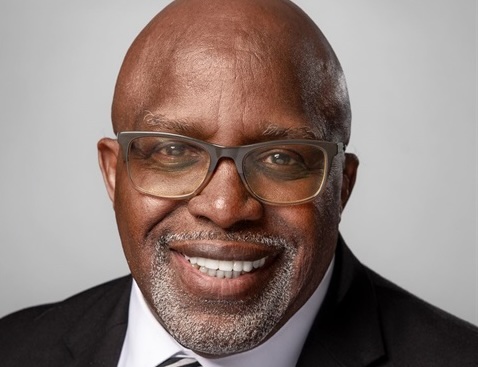
WILMINGTON — Clifford Barnett Sr., a pastor, is hoping to keep his council seat in the 2025 municipal election.
Barnett currently is the mayor pro tem on the council and was elected to the board eight years ago.
“I’m running for re-election to continue building on Wilmington’s progress toward being a safe, affordable, and well-prepared city,” he said. “Since first being elected to City Council in 2017, I’ve focused on real results, expanding workforce housing, improving infrastructure, and enhancing public safety. I have worked collaboratively with residents, city staff, and regional partners to achieve results. I bring experience, consistency, and a track record. Having served during hurricanes, the COVID-19 pandemic, and the challenges of our rapid growth, I know how to unite diverse voices, lead through crisis, and keep Wilmington moving forward responsibly with empathy, resilience, and results.”
The city council is a nonpartisan race, though Barnett is affiliated with the Democratic party. He’s up against incumbent Luke Waddell (R) and newcomers Richard Collier (R), JC Lyle (D), Kelly Roberts (R), Chakema Clinton-Quintana (D) and Cassidy Santaguida (D). Sean Guerrero (R) will also appear on the 2025 municipal ballot, though he dropped out of the race earlier this month.
Port City Daily asked all candidates a slate of questions about topics that are tracking high with voters and residents of Wilmington currently. Barnett’s answers have been edited below for clarity.
- A few things to consider this election season: A valid ID is required to cast ballot in North Carolina
- Election Day is Nov. 4, 2025, with voters required to go to their assigned precinct locations
- Early voting opens Oct. 16 and closes Nov. 1, and voters can cast a ballot at any of these four sites: Northeast Library (1241 Military Cutoff Road), Carolina Beach Town Hall’s Police Training Room (1121 N. Lake Park Blvd.), Cape Fear Community College’s McLeod Building, (411 N. Front St.), and New Hanover County Senior Resource Center’s Multipurpose Room, (2222 S. College Road). See all hours of operation here where you can also track the wait times at each early voting location.
Anyone who wants to register to vote can do so here through Oct. 10 or register and vote in one stop during early voting
The paywall has been dropped on candidate profiles to help voters make informed decisions ahead of the election. Candidate opinions and statements are not a reflection of Port City Daily.
Port City Daily: What makes you qualified for a seat on council and sets you apart from other candidates?
Clifford Barnett: My qualifications come from both experience and service. As a two-term council member and longtime pastor, I’ve built trust through listening, collaboration, and follow-through. I bring a record of delivering creative solutions, such as championing a $4M gap-financing model that produced 100% workforce housing, as well as partnerships like the one with Cape Fear Collective financially supporting the repurposing of housing to create affordable units.
I also lead outside my council member role in the community, creating solutions for our unhoused neighbors, and pulling the community together before it was a talking point. Bringing partners like One Christian Network to the table to lead the conversation on a safe parking lot option for the unhoused who sleep in their cars, while also utilizing Warner Temple Church as a site for the program. I lead with faith, fairness, and results.
PCD: Homelessness continues to be debated among area leaders; what isn’t being discussed about it, in your opinion, that you think could help better steer its direction? Do you support implementing the former joint strategy that the city and county devised in September 2024? If not, why and what strategies do you think should be implemented? How much money would you support the city dedicating to the effort?
CB: The conversation must center on coordination and compassion. I have always supported the joint City–County strategy adopted in 2024 but believe we must strengthen accountability and measurable outcomes in where we put our efforts. That is why I voted to support the council’s current efforts to fund social workers, ensuring that all our neighbors receive what they need.
I also continue to support and lead faith-based and other community partnerships to bring as many people to the table to address mental health, addiction, and other causes of homelessness. I support continued, sustainable funding that is guided by data-driven and results-oriented outcomes.
PCD: In development conversations, the supply of housing and affordability are often at odds with residents’ desire to keep density low. How would you propose tackling these issues respectively? Do you think it’s possible for the city to satisfy both desires? Why or why not?
CB: Yes, if growth is responsible and strategic. I support smart density along transit corridors and in commercial centers where infrastructure already exists, by diversifying housing types, such as townhomes, ADUs, and mixed-use developments, and by protecting existing neighborhood character and green spaces in all parts of our city. We can balance affordability with livability.
PCD What does balancing green space with development needs look like in your view, such as when it comes to protecting wetlands or rebuilding the tree canopy? Do you have examples of cities or developments that have done this successfully?
CB: Wilmington must grow smart and stay green. I support rebuilding the tree canopy, protecting wetlands, and using green infrastructure to manage stormwater. In Wilmington, we must balance growth with what currently exists. I will continue to ask questions about green space and recreation options in redevelopment and new development to ensure that development and green design can coexist. Growth must always preserve the natural assets that make Wilmington special.
PCD: With the Cape Fear Memorial Bridge price tag escalating to more than $1 billion, how to fund it also remains debated. Both a toll has been floated and a transit sales tax, which would need voter approval potentially in a tri-county referendum that could include multiple projects in New Hanover, Pender and Brunswick counties. Do you support either and/or is there another option you think should be considered to fund the bridge replacement?
CB: The bridge is critical to our economy and safety. I support a regional funding plan that combines state, federal, and private investments. A toll should not be an option; Wilmington should not be the first to have a toll for this type of project. I will continue to go to Raleigh to fight for this and the impact it will have on the residents of Wilmington.
PCD: Traffic is a main complaint for Wilmington residents — how do you envision the city’s role in addressing it? Do you think the city should promote public transportation or the expansion of it? How so? Do you think the city’s current plan to maintain and improve the roads it owns is/will be effective?
CB: Traffic relief starts with better coordination and connectivity. The city must strengthen partnerships with NCDOT, work to improve technology, expand pedestrian and bike options, and encourage public transit use. I support investing in Wave Transit to make it reliable, regional, and accessible for all residents.
PCD: With a new police chief starting his post for the WPD this fall, what areas would you like to see him focus on to strengthen public safety and create a sustainable workforce? Explain.
CB: I want to see continued focus on community-based policing, supports like social workers for high-need areas, officer compensation and encourage wellness. Strengthening recruitment pipelines rewarding retention within the department are essential for building a sustainable, trusted workforce.
PCD: As the city continues to see an influx of residents, how do you think city council should ensure Wilmington’s economy keeps pace and opportunities remain varied across all ages and types of households? What can the city do to ensure all its residents have a high enough wage to afford life in Wilmington?
CB: Growth should translate into opportunity. I support local business development, career training in high-growth sectors like film, tech, and healthcare, and partnerships with schools to connect residents to jobs. I will continue to support stronger local wages and workforce investment and policies that help residents live where they work.
PCD: Some residents have accused the city council of only representing a select few in the community, rather than the needs of all. Do you agree with this sentiment? Explain. What would you do in a leadership position to represent more equitably?
CB: While some feel unheard, I’ve always worked to represent the whole community. From downtown to our outlying neighborhoods. I will continue listening sessions, transparent decision-making, and partnerships that ensure every voice counts. Representation starts with accessibility and accountability. I live it everyday as a pastor and a council member.
PCD: What is one other issue not discussed above that you have a plan to address if elected and how would you do so?
CB: Preparedness and resilience. From flooding to hurricanes, we must strengthen infrastructure and emergency response coordination. I will continue advocating for resilient investments that protect lives, property, and the city’s long-term future.
Want to read more from PCD? Subscribe now and then sign up for our morning newsletter, Wilmington Wire, and get the headlines delivered to your inbox every morning.
