


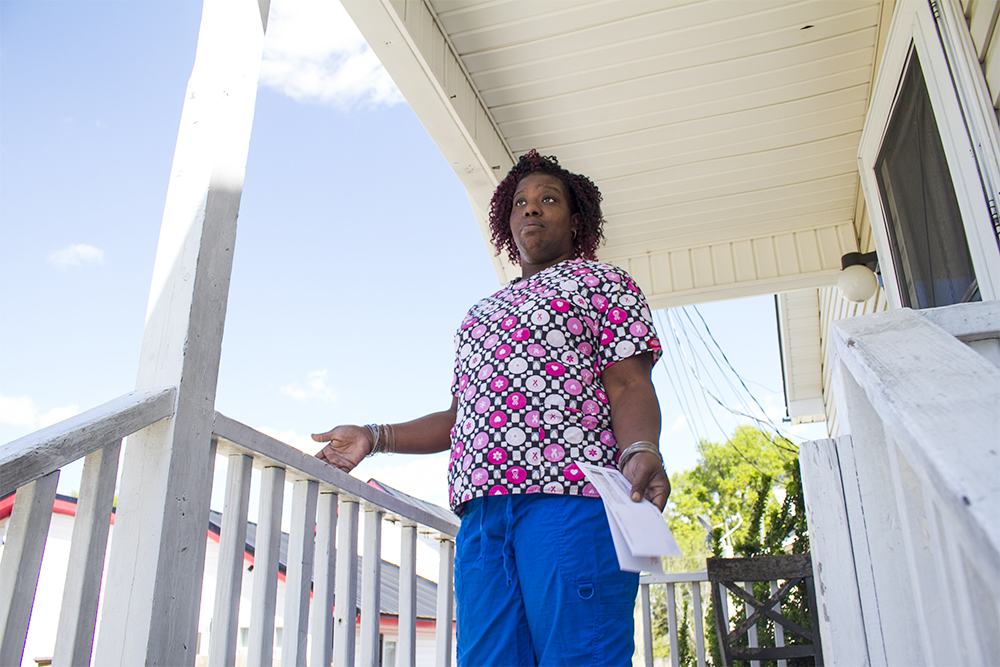
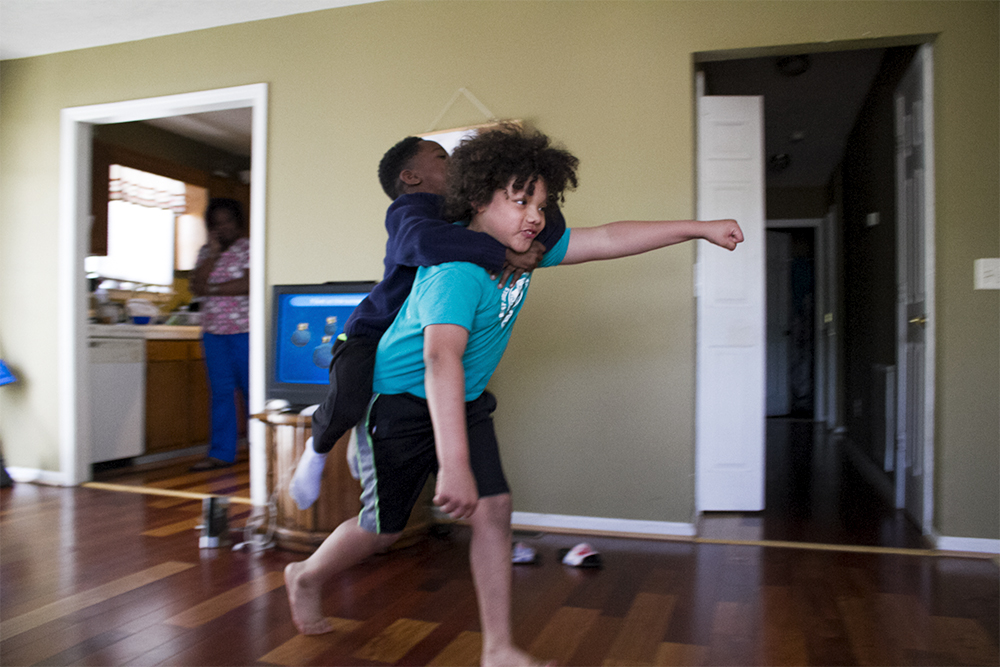
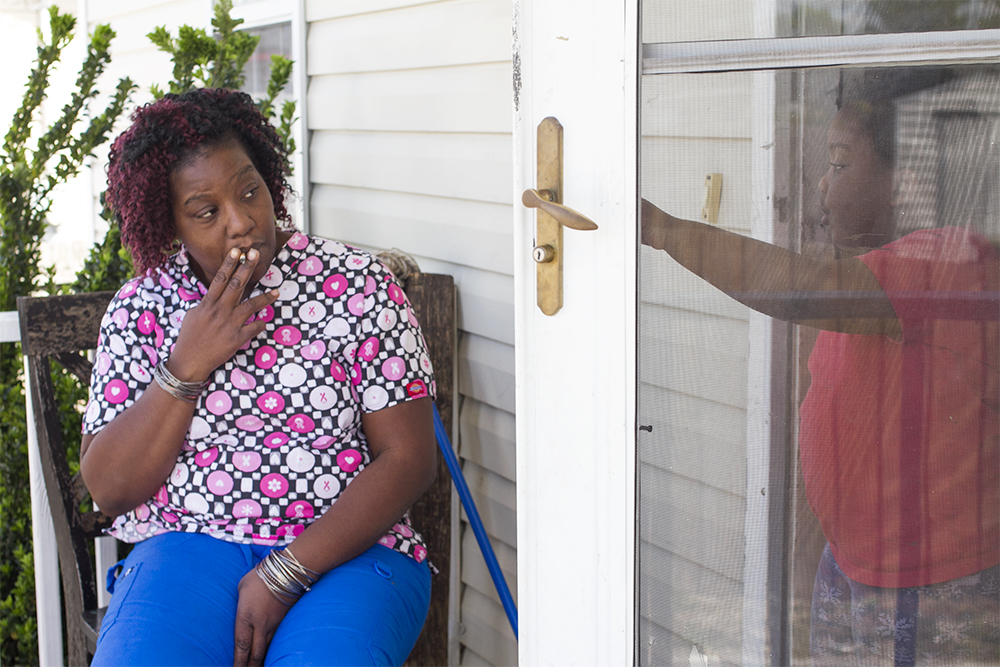
NEW HANOVER COUNTY — Tiffany Bradley is the godmother of her block. She has eight mouths to feed, two being her own children.
Out of work as a traveling CNA due to the coronavirus, her last paycheck arrived Friday. After that runs out, she will have to stretch just $200 a month in SNAP benefits to feed the eight children she cares for, all by herself.
Until learning about the governor’s order that bans utility disconnections, she worried about choosing between paying her high water bill and buying enough food to feed her household.
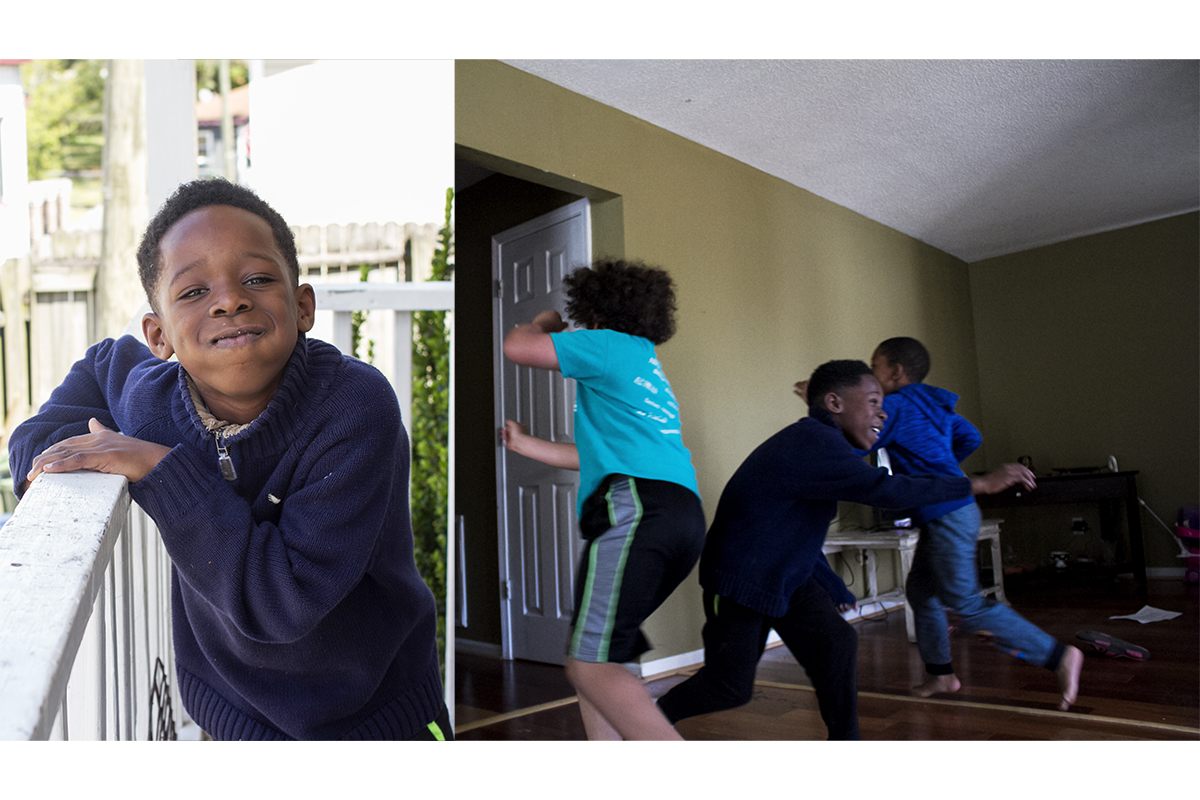
“I just keep all the neighborhood kids. I don’t know why, they all just flock to me,” Bradley said. “They don’t want to go home, I don’t know why, but they just stay. I do what I can with what I’ve got.”
Monday, the New Hanover County Schools (NHCS) system took on the task of delivering prepared meals to 48 different bus stops. For the first two weeks after closing the schools, the system made meals available at pick-up sites only, which presented a transportation barrier for children and families most in need of the meals. So, a network of volunteers delivered thousands of meals, either to doorsteps or community centers within eyesight or a short walking distance. Official communication from NHCS regarding access to pick-up or drop-off sites was available online (inaccessible to families lacking internet access) or through automated calls.
To reach her nearest meal drop-off or pick-up site, Bradley would have to walk several blocks, leaving eight-month and eighteen-month-old babies alone at home. “I’m sitting here trying to figure out how in the world is this going to happen? How in the world are we going to stretch out what we do have?”
During the first two weeks out of school, volunteers delivered meals to her doorstep. After putting fliers in meal bags Monday to alert families to the transition, volunteers took a step back Tuesday. They hoped NHCS would take over and lead a robust delivery system, not wanting to take jobs from bus drivers who need work. But for some families this week, days passed, and no meals came.
“The kids were asking me, are the meals coming? I’m like, ‘I don’t know baby. I don’t know why the meals aren’t coming,'” Bradley said. She asked other parents nearby if they had any extra supplies and put some hotdogs on the grill in the driveway.
“I don’t want the kids seeing what we don’t got and what we don’t have. I still try to make it so that they are still getting enough,” she said. “We know that we don’t have enough, but we’re stretching it out.”
By Thursday, her youngest daughter’s teacher made sure the family received meals. However, she cannot continue to deliver longterm, Bradley said.
First week of delivery
How did the school system do on its first week of meal delivery? It depends on who you ask. “I think it’s gone very well,” Assistant Superintendent, Eddie Anderson said Thursday.
“As an individual, I’m horrified,” volunteer Sarah Raper said Wednesday.
Some stakeholders say the school system can and should do more to reach marginalized communities, while others say it’s unreasonable to expect the schools to meet every need, which can be filled by other community groups.
Raper’s basic complaint, boiled down: taxpayers support the school system already, with infrastructure, resources, and confidential student data on hand that volunteer groups don’t have. With many employees out of work, including bus drivers, NHCS had two weeks to come up with a system that could meet the same needs the volunteer groups were filling in, for free.
Volunteers understand kinks in such a system are to be expected. But the number of hiccups this week, Raper said, are inexcusable. Tuesday, key volunteers opted to observe while the school system took over to make sure things went smoothly. At many stops, “The buses never came,” she said.
Raper estimates hundreds of children that need meals did not receive them this week.
“Really what I want is for kids to have food,” she said. “I think it’s sad. I think they could have just done the right thing from the beginning.”
She intends to file a discrimination complaint with the USDA, which reimburses local schools for meals served, because of NHCS’s apparent failure to make meals readily accessible to all families. To address delivery inequities, the school system should consider consulting with Champions for Compassion, the non-profit group that led Operation Ring and Run, Raper said.
Rebecca Trammel, founder of the non-profit, said she is happy to consult with the school system. Earlier this week, Trammel said she saw a grandmother waiting, on time, for a bus delivery in Wilmington’s northside. The grandmother waited for five, 10, 15, 20 minutes. Pacing.
“In the cradle of such opulence, the poverty here is unreal,” Trammel said. “And people either don’t know or they don’t care.”
‘No food came’
The phone number the school system shared for parents to pre-order meals went to a voicemail that told callers to order online. It did not ask the caller to leave a message. This left parents lacking internet access confused, many not participating in the pre-order system that helps NHCS determine how many meals to prepare (ordering isn’t a requirement, Anderson said, as staff prepares more meals than ordered). For the few callers who did leave a message, staff members were returning calls. By midweek, NHCS updated the voicemail to direct callers to leave a message.
Dr. Amanda Boomershine, associate professor of Spanish at the University of North Carolina at Wilmington and head of the Latino Alliance, said the first few days, residents of Hispanic communities her 75-member volunteer team serves told her buses weren’t arriving when they were supposed to.
“The first Monday I was getting calls, ‘We went to the bus stop, no one ever came,'” she said. “These kids are saying no food came.”
Many buses arrived either too early or too late compared to their designated time frame during the first few days, according to interviews with several volunteers and witnesses. When buses arrived outside of the pre-designated time-frame, and few people were around outside to receive the meals, they left for the next stop.
According to Anderson, bus drivers were instructed to stay at their established stops for 15 minutes. Next week, they’ll carry a fold-out table to encourage social distancing and ease the burden of handing out meals from the bus by themselves.
Sheran Shorter, a resident of Rankin Terrace, asked a bus driver that arrived outside the designated time-frame this week to wait longer so she could go knock on windows. She knew kids were hungry nearby who needed the food. Shorter said the bus driver asked her, “Can you take [the meals]?'” Shorter said. “I couldn’t be responsible for that many meals.” Plus, Shorter said it would be difficult to abide by social distancing rules to have neighbors pick up 50 meals from her personal residence.
“It’s causing a good bit of kids that really need it to not have meals. And I don’t really think [NHCS has] realized the damage that it’s really doing,” she said. She said she was told the meals that couldn’t be delivered would be wasted.
“I’m not aware that this week, that we wasted meals or any meals were thrown away,” Anderson said.
Three predominantly Hispanic communities the Latino Alliance served the first two weeks, including two mobile home parks and one apartment complex, were not served by buses this week, according to Boomershine. “Because the district transportation office knows where its students live, we are hoping they will get meals delivered by bus to those children.”
Late Thursday, she learned the school system would amend its bus stops to accommodate those three communities. Though needs her volunteer group were previously filling weren’t completely met this week, Boomershine is hopeful the hitches will get worked out.
“The schools have been wonderful,” Boomershine said of the staff preparing meals at the pick-up sites. “The cafeteria managers – they have been super accommodating and thankful to all of the volunteers. And just kind.”
“My goal is just to get food to hungry kids,” Boomershine said. “I think everyone realizes that this volunteer group was happy to fill a need. And we are hopeful that the district will be able to get food to the children.”
Service gaps
The school system is doing the best it can, Anderson said. Since the first day of closures, the system has increased its pick-up sites from 14, to 20, to 21. Delivery drop off sites have increased from 48 to 54.
“There’s always the opportunity to improve things. I think each and every day we’re reviewing how we did and what adjustments are needed so that we are improving,” Anderson said.
Lee Spooner, athletics director of the YMCA of Southeastern NC, has led his organization’s meal delivery efforts. The Y is grateful to support NHCS in its efforts to provide meals during school closures, Spooner said.
With paid employees, the Y continued its meal delivery program after NHCS launched its own. Since the closures, the Y has distributed 12,000 meals to children in need.
“We’ve found some kids are home alone and do not have the transportation to get to one of New Hanover County School’s pick-up locations. Other times we’ve seen the child’s caregiver may be at-risk or their family simply does not feel safe leaving their home during this pandemic,” Spooner said.
A yellow bus simply can’t reach certain roads a Y short bus can, he said.
“We understand the challenges the schools are facing,” says Spooner. “It would be unrealistic to assume the school system can do this by themselves. Our entire community is learning a new way of life, the school system is no different. They are listening and adapting on a daily basis to serve all children in need, and as the school system continues to address the needs, the Y can help fill in the gaps,” he said.
The YMCA’s Southeastern NC CEO, Dick Jones, said the group will continue to fill these service gaps. “The needs look different during a pandemic, but the Y remains committed to serving our community during this time,” Jones said.
For the first week of delivery, NHCS deployed 18 buses. About 80 bus drivers are working daily, a rotating crew with some actually driving buses and some assigned to other tasks to keep them working while the nation logs record unemployment claims, according to Anderson. During a normal day, NHCS employs about 150 bus drivers.
Child nutrition staff members are preparing about 6,000 meals a day during the closures, compared to about 15,600 typically. About 60 child nutrition staff members are working, compared to 200 prior to the pandemic.
The biggest difference caused by the school system picking up delivery duties is its inability to go door-to-door, Anderson said. Asked to speak to the difficulties of reaching children who need meals the most but have barriers to access it, be it internet, transportation, or language, Anderson said it has not been a major difficulty.
“Actually, that’s been fairly, I won’t say easy, but I wouldn’t say it’s a big challenge,” he said.
So what has been the schools’ biggest challenge? “Getting an operation this size up and running overnight,” he said. “The school system, we’ve probably got the largest foodservice organization running right now in the county. We’ve essentially got 20 restaurants serving breakfast and lunch and delivery. They are doing an amazing job.
“Establishing a business like that overnight has been the biggest challenge.”
Send tips and comments to [email protected]
