


CAROLINA BEACH — A proposal to nearly double residential density on 10 Cape Fear Boulevard properties sparked skepticism from Carolina Beach leaders Tuesday, as commissioners and council members questioned whether the upzoning would undermine the town’s family-friendly character and strain existing infrastructure.
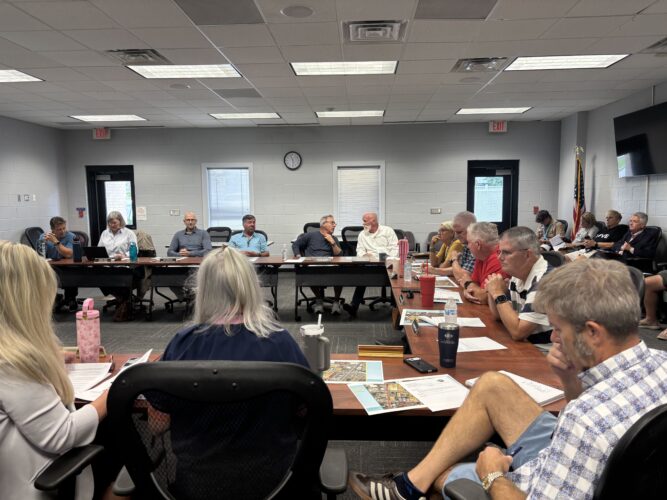
On Aug. 4, the Carolina Beach Town Council and its Planning and Zoning Commission met to review a proposal first brought to planning and zoning in July. Town staff has suggested a new zoning district, called commercial transition, and plans to apply it to 10 parcels along both sides of Cape Fear Boulevard from the Carolina Beach Market to Havana’s Restaurant.
Commissioner Todd Piper called the stretch of land, which leads into the central business district, “unsightly.” The area is full of low-intensity developments, with retail uses and lodging. There are on-street parking spaces and wider setbacks.
READ MORE: Carolina Beach upzoning proposal for 10 parcels faces pushback over density, other concerns
ALSO: Carolina Beach secures third land purchase of the year, fire department expansion planned
CATCH UP: Carolina Beach’s nearly $1M land purchase will help expand municipal facilities
The 10 properties in subject are currently zoned for mixed-use; however, the proposed commercial transition would allow for more intense development than mixed-use, but less than in the CBD. Mixed-use allows for a density up to 17 units per acre, compared to the new commercial transition district, which would allow up to 29.
The new district would reduce setback requirements to 10 feet in the rear, 5 feet in the front (though commissioners toyed with the idea of 7 feet) and no minimum side setbacks. It would also match the CBD building height at 50 feet. Like mixed-use, both residential and commercial uses are allowed, but unlike the CBD, bars would be prohibited. Commissioner Lynn Conto previously suggested breweries and distilleries also be prohibited.
The new commercial transition district is intended to act as a buffer and present a gradual shift from residential areas to the central business district; it also, in its application to the 10 parcels on Cape Fear Boulevard, will bring eight of the properties to conformity under the land code.
Both the promotion of transitional areas and turning nonconforming structures into conforming are two goals in Carolina Beach’s 2020 Land Use Plan.
“The feedback I have received from the planning and zoning commission is a concern of CBD creeping into the residential areas,” community development director Jeremy Hardison said.
The rezoning of the 10 parcels to the new district, if approved, would be considered an “upzoning.” Though the property owners have indicated support for the rezoning, trying to reverse the decision in the future would be hard due to state law prohibiting downzoning.
“We have never been through upzoning an entire area,” Planning and Zoning Chair Jeff Hogan said Tuesday. “So this is new territory for us.”
When the proposal was first presented to the planning commissioners in July the most immediate concern was the process; many argued there was not enough time between when the topic was first floated and when it was presented for approval. The proposal was tabled to have further discussion and bring town council into the fold.
At the Tuesday meeting with the two governing bodies, concerns more directly related to the substance of the proposal.
A concern repeatedly brought up was allowing buildings to reach 50 feet in height; some worried it would create an enclosed tunnel or canyon effect if all the parcels took advantage of the new maximum allowance. Commissioners and council members alike cited concerns it would make the street uninviting and unwalkable for guests.
Some of the 10 parcels include buildings, but some consist of empty lots. While commissioners and council members noted there was no guarantee developers would opt for the maximum allowance, Piper commented the 10 parcels up for rezoning are on expensive land.
“I’m building the highest and biggest density because I have to justify that sale price,” Piper said. “That’s the problem with this land. Everything there is expensive.”
Further, Conto pointed to nearby single-family homes on Raleigh and Charlotte avenues that would now be neighboring several-storied buildings; Piper commented new buyers would not be likely to keep the old building but rather opt for a new one.
“Like, no one’s gonna take the NAPA [Auto Parts] and turn it into something else,” Piper said. “That’s getting bulldozed.”
Commissioner Melanie Boswell, who, like Piper, was absent from the last meeting, agreed upzoning was problematic. Though the Land Use Plan asks for the area to be more of a transitional district, it also calls for responsible growth.
“We need to have our infrastructure upgraded and in a better situation before we look at increasing density from 17 to 29 [units per acre],” she said.
Based on the recent town budget, planned infrastructure developments so far include turning the south end of Canal Drive into a one-way street permanently and a multi-use path on St. Joseph Street. There are also stormwater and wastewater treatment plans on the books for the current fiscal year.
Along with her commissioner colleagues, Mayor Pro Tem Deb LeCompte agreed was wary of the proposed upzoning — particularly high-density growth. She said going from 17 units per acre to 29 was exactly the kind of high-density growth the town wanted to stray away from.
She then read from community concerns and aspirations in the Land Use Plan: “The family-friendly character and vibe of the town is cherished by residents. Lower structure heights are viewed as a contributing factor.”
However, commissioners and council members agreed something needed to be done to the 10 parcels in the area, though questioned whether upzoning was the proper tool. Piper and Conto thought it benefited businesses and sellers more than residents.
“I know that businesses provide services and amenities for residents, but I just wanna make sure we are keeping that check and balance,” Conto said.
One suggestion made by the planning commissioners was to keep the mixed-use zoning, which doesn’t have many by-right uses, and allow more uses through conditional zoning allowances.
However, no decision was made Tuesday. A public hearing on the commercial transition district is scheduled for Aug. 11.
Have tips or suggestions for Emily Sawaked? Email [email protected]
At Port City Daily, we aim to keep locals informed on top-of-mind news facing the tri-county region. To support our work and help us reach more people in 2026, please, consider helping one of two ways: Subscribe hereor make a one-time contribution here.
We appreciate your ongoing support.
