


WILMINGTON — City of Wilmington staff has proposed tighter guidelines on funding nonprofit organizations by creating a request for proposal process, different from previous years when any nonprofit could apply for the city’s human-services grant allocation. However, council raised concerns over certain services being left out of the funding process due to not meeting the new criteria.
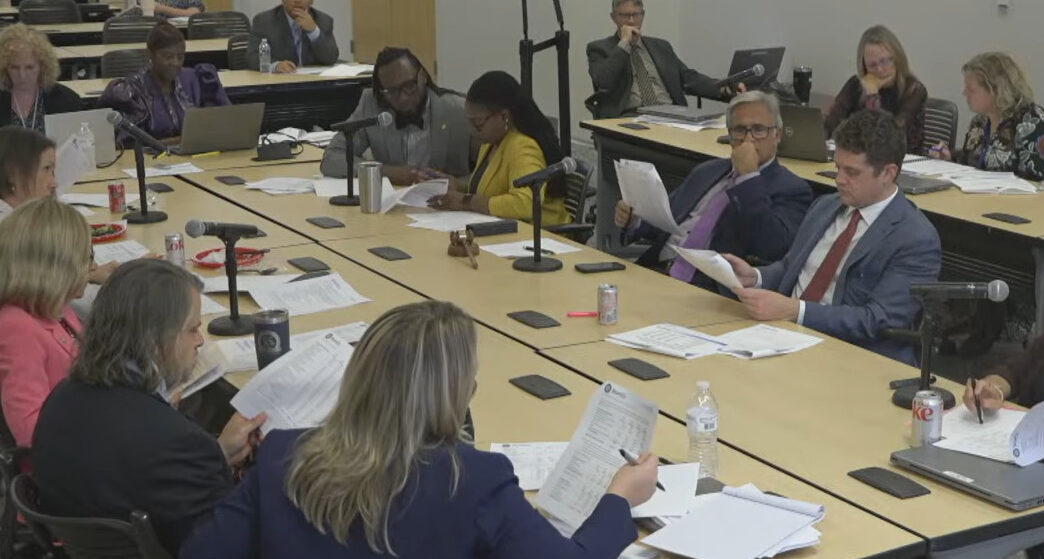
During this year’s budget cycle, the city diverted from its usual grant-making process in favor of the request for proposals, allowing the city to have more control over what services or initiatives it funds. Last Tuesday, council met to discuss the parameters of the new process.
The new proposal will create two categories of eligible funding — recreation and neighborhood services. Previously, organizations would request funds based on their perceived need. Under the new system, staff want to advertise for services it’s interested in funding and let organizations create proposals to compete in obtaining the money.
Staff presented recreation to include afterschool programming, the Police Activities League, water safety, active adults recreation, summer youth and youth employment programming.
Neighborhood services would cover community risk reduction, heirs’ property — assistance helping property owners resolve issues with inherited homes or land shared by multiple relatives — and housing preservation.
Council did not finalize the process due to concerns that some services would be pushed to the wayside for not falling into one of the proposed divisions. Council agreed to another special meeting to continue the discussion on how to move forward with grant funding.
“I’m nervous to take one step without being ready to take the next when it comes to picking who’s in and who’s out at this juncture,” council member David Joyner said.
The change comes a year since the city announced the human services grant was separated into two tiers — an impact fund and human services — in September 2025. Under the impact fund tier, up to two major awards are given out; for human services there is a maximum of 20 awards. Both tiers have focus areas on housing and neighborhoods, transportation and infrastructure, safety, organizational excellence and economic development and cultural vibrancy.
In this fiscal year’s budget $783,466, nearly $63,000 more than FY26’s nonprofit allotment, was set aside for human-services grant allocations.
Staff told council the RFP applications would be scored by the Community Relations Advisory Committee; the committee would then recommend organizations and funding awards to council. Scoring would be based on if the budget presented is realistic, the capacity to deliver services, and impact on Wilmington’s low-to-moderate income residents.
Applicants must have the ability to provide financial statement audits if the request is for more than $25,000. The funding requests cannot exceed 50% of the nonprofit’s previous fiscal year’s operating expenses or 75% of the proposed project budget.
Recipients who previously received awarded funds would need to reapply through the competitive process. While staff proposed multi-year agreements for some awards — with staggered terms to keep funding available for new applicants each year — the timeline of the application process was not addressed.
Port City Daily reached out to the city asking if applications open and close at a certain time or are on a rolling basis, how long the multi-year awards would last and what the overall RFP timeline is but did not hear back by press.
Council feedback
While the council generally was in favor of the new process, several had questions and worried about the funding priorities excluding social services.
“I think one way I would phrase this shift — and I’m saying it to make sure that I’ve got it — with going from organization-based to outcome-based, is this is not philanthropy anymore,” council member JC Lyle said. “This is, the city wants to provide a service and who will do this?”
Staff told Lyle she was “110% correct” in her explanation.
Council member Cassidy Santaguida questioned why the two categories — recreation and neighborhood services — had been chosen over others that would focus on, social needs, like addiction and families in crisis, food or housing programs.
“I’m not saying it’s the wrong choice, I just don’t think the people at this table participated in that conversation,” Santaguida said. “As the body that’s responsible for setting the vision and priorities for the city I think we should be part of that conversation.”
Staff developed the proposed categories and priorities independently — utilizing the city’s strategic plan, greater downtown plan, community surveys and resident comments — before presenting them to the board for discussion and approval.
City Manager Becky Hawke pointed out social services were inherently a county function.
“But recreation is a very clear, right pathway of something that we are able and required – or not required to provide but community expects us to provide,” she said. “The same thing with neighborhood services.”
Hawke added priorities stemmed from the city’s adopted strategic plan and the greater downtown plan — both of which have goals of expanding access to public spaces and supporting further economic growth and opportunity.
“I want to be clear, I’m not opposed to the city supporting recreation and neighborhood services; it just feels like choices have already been made about priorities,” Santaguida said.
Lyle said the proposed system is appropriate, but struggled with redirecting money away from other needs.
“Seeing that much recreation when we’re used to funding children eating, that’s just a difficult shift to make,” Lyle said. “That’s probably part of what we’re wrestling with here.”
Hawke reminded council some of the programs mentioned, such as food assistance and homelessness service — previously eligible for city funds — would still be eligible for other funding avenues. The federal Community Development Block Grant is an annual grant program by the U.S. Department of Housing and Urban Development that remains applicable. In FY26, Wilmington received approximately $894,587 in CDBG funds that went towards the Home Ownership Pool — which helps people get homes near employment and schools — relocation services, and program delivery for low- to moderate-income residents. CDBG money can be used for community development, housing, infrastructure, and public services; 70% of the funds must benefit low-and-moderate income individuals.
Tuesday, staff said they had a spending limit of using $130,000 of CDBG funds for homelessness services. The CDBG typically puts a cap on public-service expenditures of 15% of the current year’s grant allocation plus 15% of the program income received during the previous program year.
CDBG grants are typically announced by the federal government between March and May annually.
Unsolicited requests outside the funding cycle
On top of hearing about the request for proposal process, the council was also presented with a new way for handling unsolicited funding asks that come outside of the established process.
All unsolicited requests would go to the Community Relations Advisory Committee to evaluate if it meets an unmet city need and should be considered during a future funding cycle for a new or revised funding category.
Currently unsolicited requests go straight to council, which then has to decide if the organization should receive funds and where the money will come from.
The change comes approximately five months after the Community Justice Center and the Film Partnership of North Carolina asked council for $100,000 each this fiscal year. Both are funded by the county, and the CJC was also funded by the state this year. They had individually asked for the money in the spring, while budget conversations were ongoing. However, the requests were outside of the typical grant process and council asked to take up the nonprofit’s funding appeal after the budget passed in June.
The CJC and Film Partnership stood before the board in July, while Hawke presented possible revenue streams, including the council using the Economic Development Contingency Fund of $135,000. But council asked for documentation including a budget, performance metrics and an evaluation of accomplishments to see how money was spent and how effective the programs are.
Susi Hamilton of Film Partnership of North Carolina and Ben David of the CJC had not been asked by staff to present at the council meeting on July 21, though both were in the audience. When council members asked to speak to them, Hamilton said the process to obtain grant funding had been “clear as mud” this year.
Council put on hold its decision to fund the Community Justice Center and Film Partnership of North Carolina. Once council received the requested data from the organizations reconvene for a meeting on the issue. No date was set at the time of the July meeting.
The city did not respond to Port City Daily’s question whether a date for a vote has since been scheduled.
Port City Daily reached out to both the city and council asking if the new process would apply to the CJC and Film Partnership’s pending requests but did not receive a response.
Hamilton told Port City Daily last week she had not heard anything from city staff since July’s meeting.
As changes to the funding process are underway, discussions will remain ongoing. Council members will be able to come back to staff with further feedback and suggested changes. A specific meeting date was not decided upon.
Have tips or comments for Sophia DePhillips? Email [email protected]
At Port City Daily, we aim to keep locals informed on top-of-mind news facing the tri-county region. To support our work and help us reach more people in 2026, please, consider helping one of two ways: Subscribe here or make a one-time contribution here.
