


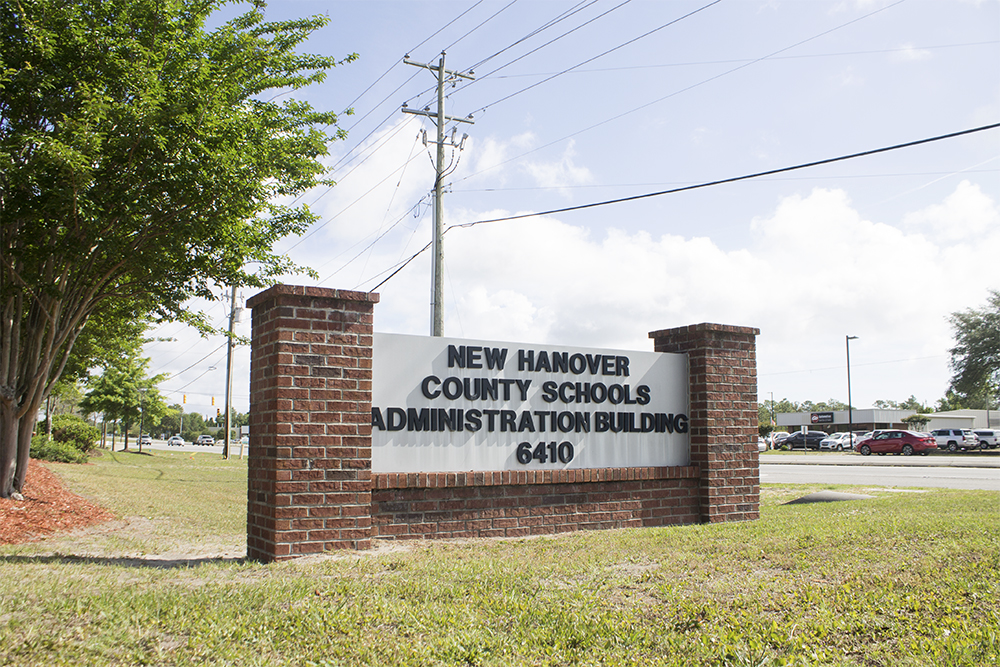
NEW HANOVER COUNTY — As a result of a state law allowing students to miss up to four hours of school per week for religious instruction, New Hanover County Schools Board of Education decided Tuesday to cancel a planned public hearing on whether to partner with a nonprofit Bible-study group.
In a 5-1 vote, with David Perry dissenting and Tim Merrick absent, the board decided there is no need for the input. The passing of the recent state budget allows parents or legal guardians to provide written consent for a student to receive religious instruction as an excused absence.
The Supreme Court has already ruled in favor of this allowance in Zorach v. Clauson in 1952, but the state legislation codifies it in law.
READ MORE: NHC school board schedules decision on LifeWise MOU, public hearing incoming
ALSO: LifeWise steering committee members address NHCS program, community concerns
LifeWise was founded in 2018 and provides “Bible-based character classes” to public school students once a week during the school day. It transports students off of school campuses during an elective period — such as gym, art and music — to teach a 30-minute class on Christian curriculum.
A local steering committee asked for a memorandum of understanding with the district in March 2026. The document would have outlined how schools and the nonprofit would coordinate transportation and scheduling.
In May, the board agreed to hold a public hearing on the MOU, though a date had yet to be decided. It would have welcomed LifeWise staff and community members to share concerns, support and questions.
Superintendent Christopher Barnes told Port City Daily Wednesday he believes an MOU for LifeWise is no longer required since the budget’s passing essentially means schools must excuse students upon a guardian’s request. By law, the schools have to offer excused absences, with a minimum of one hour and a maximum of four hours per week allowed for religious instruction.
“Now, the situation is on parents to determine and decide what they want to do with religious instruction,” Barnes said. “With the way that it’s written, it says that it’s really not a policy on religious instruction. It’s really an attendance policy.”
Barnes said while there could be logistical issues that need to be ironed out, such as a large amount of students exiting the school building in the middle of a day, under the state law nothing is stopping 20 parents from giving LifeWise permission to sign their children out of school to participate.
“It doesn’t matter if I think it’s a good idea, a bad idea, or not, this is state law,” Barnes said. “That indemnifies the district and puts the burden of that choice on the families and whoever they decide is going to bring their kid out of school.”
Though not included with funding, the state budget’s provision also comes with a caveat that private entities cannot provide religious instruction on public school campuses. The Supreme Court case mandated any religious program must be held off school premises, bars any government funds from being used for the program, and requires parental permission for participation.
The language in the state budget was taken from a bill that didn’t pass the legislature this year. Introduced by Sen. Michael l Lee (R-New Hanover), “K-12 Innovation and Transformation Act” was proposed in April and referred to the Committee of Appropriations/Base Budget in June, though didn’t gain further traction. Gov. Stein signed the budget, with its provisions included, into law on July 7.
Sen. Lee has been an advocate for parents’ choice in education, including promoting the expansion of the state’s private school vouchers program. It provides tuition money to families on a sliding scale based on need.
Port City Daily reached out to Lee to ask what prompted him to sponsor the act and if the New Hanover County school board debate over LifeWise played into it. Lee responded to Port City Daily’s request after press.
“This provision simply protects a family’s ability to have their child receive religious instruction if they choose to, by allowing an excused absence to do so. It’s a voluntary accommodation, it’s available to families of any faith, and it costs the schools nothing. The requirement that this instruction take place off school premises, rather than being provided by outside groups on campus, is intentional – it keeps our public schools neutral and ensures the instruction happens away from the school day’s setting, consistent with how released-time programs have long operated. I was not aware of the situation in New Hanover County until after this provision was presented to me; this is a statewide, faith-neutral policy and was not written with any single district or organization in mind,” Lee said. “As for its inclusion in the budget, policy provisions that carry no appropriation are commonly addressed this way, and because this one simply permits an excused absence, it has no fiscal component.”
Lee did not respond to questions raised on if he had heard from parents requesting the legislation nor what originally led to his support of the bill.
During Tuesday’s school board meeting, Perry noted he believed community members would be less than pleased to hear the board had canceled its public hearing — particularly since LifeWise has been a frequent topic of community discussion over the past several months.
LifeWise was first discussed publicly during a Feb. 24 board of education meeting. By March 25, advocacy group New Hanover County Educational Justice began a petition that garnered more than 1,000 signatures in a short timeframe.
Public qualms have been raised over proper vetting of LifeWise, as well as a belief that religious instruction should not interfere with public education and occur after school hours. Many also complained about possible classroom disruptions and equal representation of religions.
However, members of the New Hanover County chapter of LifeWise, Wayne and Carolyn Polston, previously told the board in March they believed the inclusion of LifeWise with New Hanover County schools could mitigate the rise in mental health struggles seen in schools, such as depression and anxiety.
“Hearing from the public is, I think, a good thing to get their input before we make a decision,” Perry said. “This has been a major concern of many people in our community and I think if we shut them up now, I think we’re gonna hear about it badly.”
His colleague, Josie Barnhart, originally introduced the motion to stop the public hearing. Pat Bradford seconded.
“When the process was first brought to us of a potential consideration of looking at changing our day and allowing a release for one entity and what were that criteria and stuff, that’s a lot of moving parts to say yes to basically an outside institution shaping how we do schools,” Barnhart said. “With this law passing there’s some maneuvering on our superintendents and our principals to say how is this going to be implemented, because following the law is different than adjusting our school district schedule to accommodate an organization.”
Bradford agreed, noting she did not believe the district could discuss LifeWise without first determining the implementation of religious instruction-excused absences. School policy has yet to be written and logistics, such as dismissal and pick-up, have not been outlined. Judy Justice concurred.
Chair Pete Wildeboer and Vice Chair Melissa Mason both voted in favor of rescinding the public hearing. Additionally, both noted that by canceling the public hearing, there would be more time to schedule a town hall for community members prior to the school year starting.
The superintendent said his goal is to find the least disruptive and safest ways to abide by the new law. At this point, his recommendation to the board is to get advice from the North Carolina School Board Association, as well as have conversations with other superintendents to figure out how to best implement the new legislation and its language into school policy.
Though the public hearing has been canceled, a back-to-school town hall will be held in August for parents, faculty and staff to ask questions regarding various topics. Participants can give feedback to the board during this time — connected to and separate from LifeWise. Another town hall will be held in October about the school bond on the November ballot.
Barnes added he didn’t think it was fair to families to have an official public hearing on LifeWise, leading them to think their thoughts would be considered on the matter, since law dictates otherwise.
“It’s not a question of whether we should do it anymore,” Barnes said.
Have tips or comments for Sophia DePhillips? Email [email protected]
At Port City Daily, we aim to keep locals informed on top-of-mind news facing the tri-county region. To support our work and help us reach more people in 2026, please, consider helping one of two ways: Subscribe here or make a one-time contribution here.
