


WILMINGTON — The Wilmington City Council voted unanimously Tuesday night to end a program designed to connect residents with technology job training and reallocate the program’s funding elsewhere, despite reservations about doing so two weeks ago.
The Digital Divide program was funded with $2.4 million of $25.9 million in American Rescue Plan Act dollars the city received amid the Covid-19 pandemic. The goal was to create a framework to train residents for jobs requiring tech-related skills in partnership with local employers and workforce development professionals.
READ MORE: City recap: Saffo contract approved, council pumps breaks on ARPA reallocation
At the Feb. 17 meeting, staff told council the program’s partners — originally StepUp, Cape Fear Collective and the Wireless Research Center, though the latter stepped down in 2023 and was replaced by Steigler EdTech— struggled to recruit people for the program. Thus, the partners were unable to spend all of their ARPA funding by the deadline. The federal government has mandated unspent funds be returned after Dec. 31 of this year.
City staff proposed reallocating $140,300 of the leftover funds, totalling $230,000, to another ARPA project, a road constructed for the new Salvation Army shelter. Because the federal deadline to obligate ARPA funding to new projects passed on Dec. 31, 2024, leftover money can only be shifted to other, non-complated ARPA projects, and the Salvation Army road came in over budget.
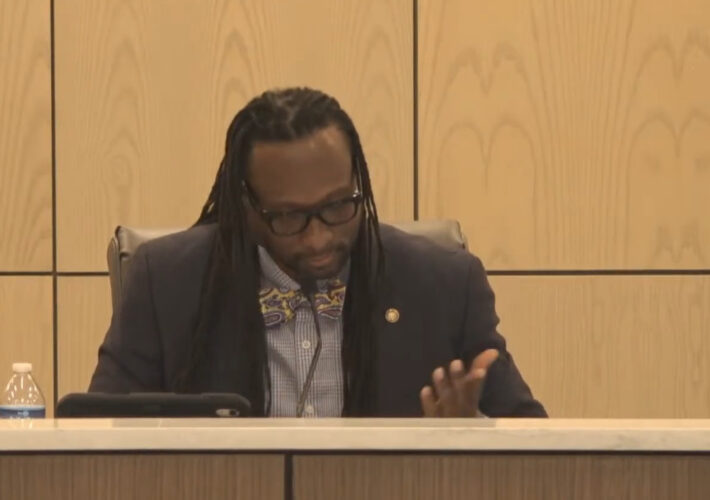
Still, some members of council, particularly Mayor Pro Tem Kevin Spears, were critical of staff’s decision not to update council on the program’s struggles.
“I feel that there’s a lack of transparency that took place as it comes to this,” Spears said at the meeting.
Though after staff’s presentation Tuesday, Spears, leading the meeting in Mayor Bill Saffo’s absence, softened his opposition. He did ask if the remaining funds could still be given to the program partners, but Wayne said ARPA rules would not allow this.
Still, the mayor pro tem said he wished more funds were spent directly helping people, rather than on administrative tasks.
“It doesn’t seem like a waste of money, but I think this is a theme for me this year — saying top heavy,” Spears said. “We spend a lot of money on administrative fees.”
Steigler EdTech received the largest share of the program funding with $1.5 million to provide a 24-week IT skill development course. The company received 800 applications for its training program, but only 34 were selected. Of the cohort, 28 graduated and secured employment.
According to Wayne, Steigler EdTech representatives told her a “large portion” of the funding was dedicated to getting the program up and running.
StepUp Wilmington was provided $500,000 to give 73 individuals training that resulted in 129 various professional IT certificates. Only 32 of the participants secured employment though the rest remain in the “active talent pipeline.”
Cape Fear Collective received $300,000 to help with program documentation and candidate placement.
Wayne said all three partners were grateful for the city’s partnership and described the program as successful, despite the inability to continue it.
“Whenever I spoke with StepUp, they were excited to announce that this is something that has actually become part of their ongoing program,” Wayne said, adding 600 people participated in StepUp’s Jobs Week last fiscal year.
The week consists of a 32-hour employment training workshop to help people with workforce strategies, time management and interviews.
However, Wayne said all three partners reported similar constraints to the program, particularly with obtaining firm-hiring commitments from companies. The program also suffered through a market shift toward artificial intelligence and changing economic conditions, according to Wayne.
Entry-level job postings in the U.S. overall have declined about 35% since January 2023, according to labor research firm Revelio Labs. The Harvard Business Review also conducted a survey published this year of 1,006 global executives; a majority of surveyed organizations have already made either low to moderate (39%) or large (21%) headcount reductions in anticipation of AI. Another 29% is hiring fewer people than normal in anticipation of future AI.
Ultimately, all of it impacted the number of junior-level talent positions available for the Digital Divide’s participants.
“I think one of the challenges that everyone said was ‘OK, the environment changed a lot,’” Wayne said. “And as I indicated earlier, one of the challenges with reallocating this funding is we are kind of stuck with the actual scopes of the engagement as they were developed prior to December 31, 2024.”
The city only has four other ARPA projects open — the Salvation Army road construction, a stormwater project at 10th and Grace streets, Wilmington Centric Tourism Assistance and Wilmington Police Department officer salaries, the latter as part of the Getting Home initiative with New Hanover County.
Wayne explained the stormwater project has about $19,000 leftover and the tourism assistance has spent around $343,000 of its $650,000-allocation but plans to expend the remainder by the end of year.
As for the police salaries, four officers were hired to conduct homelessness street outreach in a joint initiative with New Hanover County social workers called Getting Home. Council could have decided to recall the money for these positions — the employees wouldn’t have to come with it and could be transferred to vacant positions at the WPD, though the police force would see a reduction of four positions.
These positions are not to be confused with the four social workers the council added to WPD’s ranks in September. Voted on in conjunction with the city’s controversial anti-camping ordinance, the social workers will work alongside officers to conduct street outreach after the county shifted its Getting Home social workers to a caseload approach rather than responding to new unhoused complaints on the street.
No council member indicated they would prefer money be pulled or shifted from the other ARPA projects.
Tips or comments? Email [email protected].
At Port City Daily, we aim to keep locals informed on top-of-mind news facing the tri-county region. To support our work and help us reach more people in 2026, please, consider helping one of two ways: Subscribe here or make a one-time contribution here.
We appreciate your ongoing support.
