


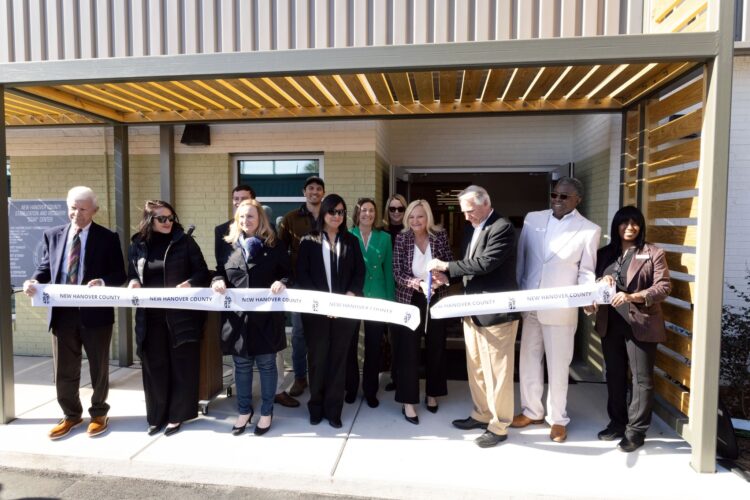
WILMINGTON — A new stabilization and recovery center officially opened Wednesday morning following a ribbon-cutting ceremony. It fills the gap left behind from another medically assisted recovery operation that closed about five years ago in the county.
The New Hanover County Stabilization and Recovery Center — known as STAR — will open soon. Providing medically assisted detoxification, transitional housing for men, inpatient beds for recovering patients, STAR is located in a 14,000-square-foot space and has 16 beds for patients, and two transitional housing beds.
READ MORE: County asked to contribute $3.4M to The Harbor’s potential new location, a collaboration with LINC
STAR is the first and only of its kind in the county, in the works since 2022. According to property records, the county officially purchased the property at 1605 Robin Hood Road for $1.49 million in 2023 after the former state-funded detox facility The Harbor closed.
Once located on S. 16th St., The Harbor was operated by RHA Health Services but shut down in 2020. Novant purchased the property in order to build a parking lot in its stead, leaving a gap of medically assisted recovery services.
Though in 2023 a new detoxification facility and program debuted at The Healing Place, it does not offer medical assistance like STAR Center will. Medically-assisted treatment is considered the gold standard of practices for opioid and alcohol use disorders and allows for FDA-approved medication to be provided to patients in conjunction with therapy. The Healing Place follows an abstinence-based holistic model in its long-term recovery program, refraining from medication.
The first STAR patients are expected to arrive in February. On top of rehabilitation from substance abuse, the center will offer group cognitive behavioral therapy and personal development classes and workshops to help patients and clients get back on their feet.
“This is one piece of a broader effort to strengthen behavioral services here,” County Commission Chair LeAnn Pierce said at Wednesday’s opening. “We know there’s more work to do, but today is a significant step forward. To everyone who helped us get here: Thank you.”
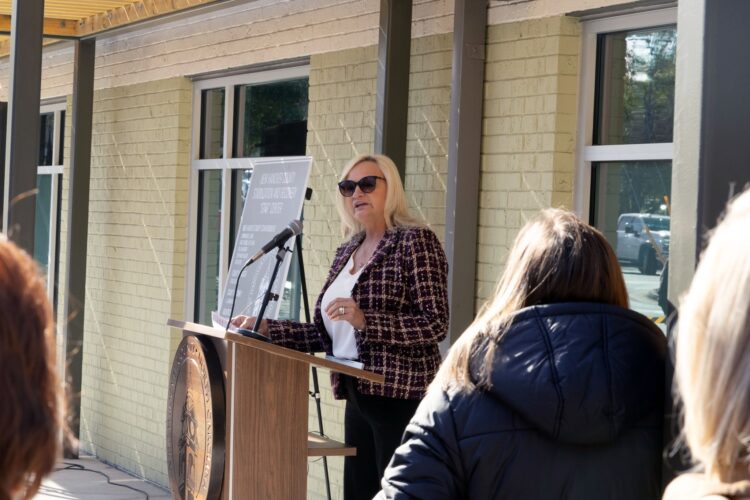
She was one of seven people to speak at the opening, including Michael Brisson from Thomas Construction Group and Charles Boney from LS3P Architects — contracted to design the new building. Also present was LINC co-director Michelle Gunn, and vice president of behavioral health at RHA Health Services Sara Huffman, and regional vice president with Trillium, Cecelia Peers.
LINC, a nonprofit organization that provides transitional living and case management services to men and women returning from incarceration, is in charge of operating the facility. RHA Health Services will provide clinical care staff to oversee behavioral health, substance abuse recovery, crisis and disability services. Trillium Health Resources connects patients to the right healthcare options and has provided about $1.5 million in funding for the renovations, while LINC contributed $900,000.
The center was built in a former retirement home and has been undergoing about $4.28 million in rehabilitation — remodeling the building to accommodate both the clinic operated by RHA and the housing, therapy, and personal development offered by LINC. Around $3.7 million was provided through the state’s budget to help the county fund the facility.
The STAR Center will place a priority on recently incarcerated individuals and those suffering from opioid addiction, according to LINC co-director Frankie Roberts. There are online applications for referrals to the center that will be followed up by an interview process. In addition to medically assisted rehabilitation and therapy, individuals can receive a specialized recovery plan and also get a library card or learn how to cook.
Commissioner Rob Zapple pointed to the gap in services from The Harbor’s closing that resulted in new, or more obvious, problems in healthcare services.
“All those people, over the last few years, that needed those services were put in the back of a van or a patrol car and driven up to Jacksonville or Raleigh,” he said, referring to the closest medically assisted detox facility, the Jacksonville Treatment Center. “Can you imagine that trauma?”
Roberts told Port City Daily he had driven people there personally: “I have had people in the car that by the time you get to Jacksonville, they changed their minds … because it’s an hour away.”
New Hanover County has a high overdose rate in the state, with 37 deaths per 100,000 residents, and a projected 90 deaths in 2024. In 2023, there were 105 overdose deaths.
Zapple told the crowd and Port City Daily he has his sights set on purchasing and expanding to the adjacent property to the STAR Center. Though commissioners would wholly have to agree on such a purchase, Zapple expressed a desire to add apartments to the complex to keep families nearby while loved ones, like parents to children, undergo the center’s recovery program.
“We know we have the people that would fill it, so why not?” he said, though acquiesced to the need to find a funding source first.
Have tips or suggestions for Emily Sawaked? Email [email protected]
At Port City Daily, we aim to keep locals informed on top-of-mind news facing the tri-county region. To support our work and help us reach more people in 2026, please, consider helping one of two ways: Subscribe here or make a one-time contribution here.
We appreciate your ongoing support.
