


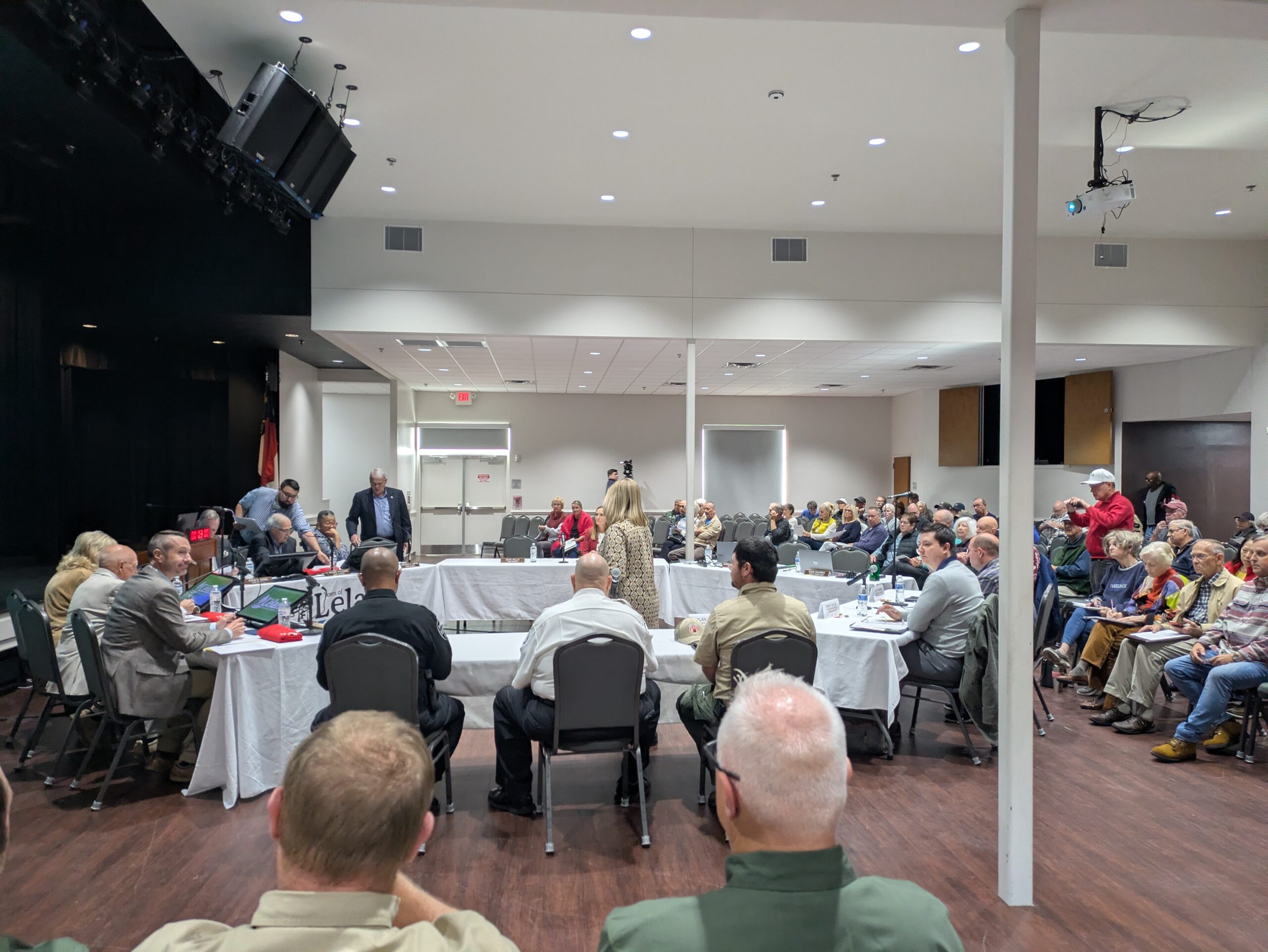
LELAND — Three weeks after Leland Town Council passed a burn ban on land clearing, it is appealing to the Environmental Management Commission to secure its legal integrity in regulating air quality against potential opposition. However, it doesn’t make the ban null and void.
READ MORE: Leland council initiates open-burn ban for land-clearing amid public outcry
ALSO: Leland votes in council change, surge in turnout ousts incumbent
At Monday’s public workshop, the town’s attorney, Steve Coggins, advised council the ban is currently legally vulnerable as it lacks authority to regulate air quality under North Carolina law. Because the burn ban restricts emissions and smoke, it is seen as an air quality control measure, which subjects it to specific state regulations.
For a municipality like Leland to enforce an ordinance that bans an activity the state’s Division of Air Quality rules generally allow (like land clearing burns under specific conditions), the town must first establish a certified local air pollution control program.
Coggins stated the town must seek EMC special permission to adopt the program per state statute 143-215.112. Speaking with Port City Daily Tuesday, council member Veronica Carter said gaining the EMC’s validation is necessary to “strengthen” the ordinance with a defensible, legal footing against any potential opposition.
“We want to make sure we’re dotting our ‘i’s’ and crossing our ‘t’s’ and saying to the state agency: OK, here’s what we got, are you good with it?’ And if they say, ‘Yeah, we’re good with it,’ then we feel like we’ll have a better chance of any kind of challenge,” Carter said.
Council unanimously approved the open-burning ordinance during an emergency meeting on Oct. 20 in response to numerous concerns from residents about an open burn at a Publix development off of Highway 17. The ordinance enacted an immediate ban on all open burning for land-clearing purposes, prohibiting the practice within town limits. Any developer breaking the ordinance will be fined $500 per day, per violation, and could face a class-three misdemeanor charge.
Wilmington-Cape Fear Home Builders Association Executive Officer Cameron Moore told Port City Daily Tuesday he believes Leland “lack[s] Statutory Authority to enforce the adopted ordinance.” The WCFHBA represents companies and professionals involved in residential development and home construction, including the developers whose projects are directly impacted by the burn ban. Moore cited G.S 143-215.112(b), which states no municipality may establish and administer an air pollution control program unless it is certified by the EMC.
Leland council enacted the ban in October under its powers for safeguarding resident health and safety, authorized by G.S. 160A-174. Carter said the town has not received any formal challenges to the ordinance to date.
“We have a duty to protect our citizens,” Carter stated. “That’s what we’re trying to do with this.”
NCDEQ public information officer Shawn Taylor said at the workshop this is the first time a municipality has proposed going directly to the EMC to approve an air quality program. Carter acknowledged this puts the town in “uncharted territory.”
“We’re just trying to make sure we have the strongest rule and ordinance that we can possibly have in our town and we’re doing everything we can to do that,” Carter said.
The procedure for obtaining state certification involves submitting an application to the DEQ, which reviews it within 90 days of submission before the EMC ultimately decides whether or not to certify the program.
From an economic standpoint, Moore asserted the new restrictions would cause the overall cost per-acre of development to increase. To properly dispose of land-clearing debris at a permitted solid waste facility — which Leland Fire Chief Ronnie Hayes estimated could be between $5,000 and $20,000 per acre — could ultimately trickle down to consumers.
“These added expenses would inevitably be passed on to the homebuyer, thereby raising the cost of homeownership and placing an additional financial burden on families seeking housing,” Moore stated.
In response to claims of increased costs to homebuyers, Carter asserted her priority lay with current residents.
“I’m not an engineer, I’m not a home builder, I’m not into site development, but I do know that there are folks in other states that somehow find a way to make themselves profit, I’m sure they will as well,” Carter stated. “My role is to take care of our citizens, our current ones, not necessarily the future ones.”
Unlike the emergency meeting where the ban was enacted, residents were given time to speak on the ordinance Monday. More than 14 people signed up to speak, including Daniel Wright, member of Facebook group, Stop The Burning, Freeze The Taxes – Leland.
Wright distributed a flyer containing what the group wanted the open burning ordinance to be. It listed three ways to “stop the burning in Leland”:
- Report and publicize violators with a public press release
- Suspend or revoke permits for violators
- Ban repeat offenders from securing future permits and contracts
When asked about the legal basis of the handout, Coggins said he was unable to verify the legitimacy for suspending permits and banning future contracts. However, Coggins confirmed the town does have the lawful ability to publicize violators.
“Even if it doesn’t stop, you can at least shame them,” Wright said. “I think one of the reasons Publix stopped was because people called and said, ‘Stop doing this, it’s hurting your reputation,’ so they stopped before the ban was even in effect.”
Carter stated while the council considers and welcomes all input, they must defer to the town attorney and staff, who are specialized in municipal law in North Carolina.
“We have a lot of people who are relatively new to the state in the big scheme of things, but they’re not members of the Bar,” Carter explained. “We’re dealing with the rules and regulations that we have, not the ones where we came from, where we used to live. For right now, we can only create rules, regulations, ordinances, within the boundaries of the state of North Carolina and its constitution and its laws.”
Carter said the next steps include approving an amended version of the ordinance at the next council meeting on Thursday, Nov. 13, and at that meeting, directing staff to initiate the EMC approval process.
Have tips or suggestions for Charlie Fossen? Email [email protected]
Want to read more from PCD? Subscribe now and then sign up for our morning newsletter, Wilmington Wire, and get the headlines delivered to your inbox every morning.
