


NEW HANOVER COUNTY — Both the City of Wilmington and New Hanover County commissioners signed off on resolutions in support of UNCW potentially launching a medical school in the area.
It will be considered by the UNC Board of Governors on May 21. A UNCW spokesperson told Port City Daily it welcomes resolutions from other county entities too and has letters of support from Novant Health, Wilmington Health, Dawson MED, Goshen Medical Center and MedNorth Health Center, among others.
READ MORE: UNCW announces plans to open medical school
The resolutions indicated the addition of a medical school would be a catalyst for workforce development, strengthen economic vitality, advance community safety, and particularly healthcare needs in the region.
Last month, UNCW Chancellor Answani Volety presented plans to UNC System Board of Governors’ Educational Planning Committee to build a medical school and doctorate programs at UNCW. If approved, it will be the first medical school approval by the board of governors in 50 years. That would prompt a national search for a dean and begin a formal planning phase with the UNC System and medical education accrediting body, and engaging campus and community partners.
UNCW indicated staffing would be gradually tackled, beginning with small leadership and administrative support and growing into full faculty as the program moves through the accreditation process.
“It provides a tremendous opportunity for our community and our region,” Mayor Bill Saffo said at the city council meeting as members took up the resolution. “I’ve always believed a university should support the region it resides in.”
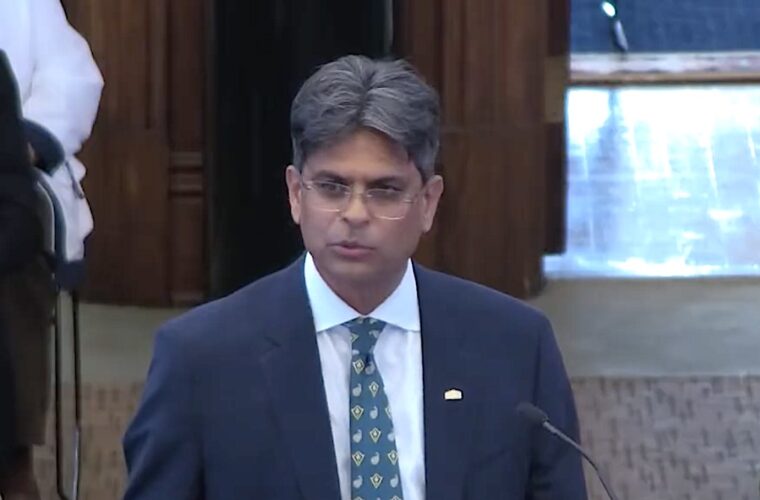
Before the county commissioners, Volety zeroed in on economics that impressed local officials at the dais. He pointed to data of a residency generating about $450,000 per person annually and creating three jobs a year.
“And every position you retain, that is $3 million per position creating 17 jobs and $125,000 each in taxes,” the chancellor posited.
If the medical school retains 80 to 100 people a year in the region, and it’s multiplied by $125,000, he estimated a quarter-billion dollars coming into the area.
“Fast forward, 20 years from now,” Volety said, “with doctors remaining in the area with clinical practices and businesses that go with the medical school, it could be an economic impact of $1.5-billion per year.”
He added students who complete residency in a location where they also attend school are 80% or more likely to stay in the area to live and work. The rate drops to 40% if the students do a residency outside of the region they also attended school.
UNCW’s school would not include a medical teaching hospital but depend on community-based training and relationships with area medical facilities, such as Novant Health New Hanover Regional Medical Center. The chancellor said the region already had supportive clinics and healthcare agencies lined up to collaborate, including area hospitals and federally qualified clinics in southeastern North Carolina.
“We have commitments to provide clinical placements and residencies,” Volety said, noting the focus will be on primary specialities, first and foremost, which is what the county and region needs most.
The area’s population is growing up to 3% a year, with New Hanover seeing around 12% or more in the last decade. Brunswick County is the fastest-growing statewide, by 45% in the last decade, and is served by Novant and Dosher Memorial Hospital. Pender has grown upward of 26% in the same time period and has Novant Pender Medical Center and Novant Health Scotts Hill.
As mentioned in Port City Daily’s reporting announcing the school’s potential, the tri-county region is experiencing “severe and acute” healthcare shortages despite population escalation, which Volety repeated to county officials this week. While New Hanover County has a “good number of physicians per 100,000 residents,” he said when counting rural areas flanking New Hanover, the industry comes up short.
Mayor Saffo pinpointed the state would be 7,700 physicians shy by the year 2030. A UNCW spokesperson added southeastern North Carolina is among the most underserved regions statewide as well.
“For those out there and in this room and try to get appointments for doctors — all doctors — it’s extremely difficult to do,” Saffo said. “And there is a 400-bed need for additional bed space in the region. So it would be a benefit to have this in Wilmington.”
The goal for the doctorate program is also to help the underserved patients in rural regions of Pender and Brunswick counties. In New Hanover County, around 13% under 65 are underinsured, while access to healthcare lags for around 15.7% of adults under 65 in Pender and 9% in Brunswick.
UNCW already has begun addressing shortages in the last few years, due to New Hanover Community Endowment’s $23-million grant, shared with Cape Fear Community College, New Hanover County Schools and the Wilmington Chamber of Commerce. Its goal is to expand the nursing pipeline by 80%, which Volety said there are already more than 700 students in the program collectively.
Demand on area medical schools is also outpacing applications fulfilled statewide, showing a need for more options. Volety pointed to UNC-Chapel Hill receiving 6,500 annually but only accepting 200 student and ECU’s 4,500 with only 80 slots available.
“Even newer med schools get 4,000 applications,” he said. “I don’t think we will have any problem attracting good talent. We have more than 2,000 pre-health majors at UNCW alone. Not to mention sister schools — we have plenty of demand.”
That would mean keeping students in the region who didn’t want to transition to other med schools. The resolutions also note North Carolina ranks 40 out of 50 states for medical students per capita.
Saffo said he has seen other endeavors, such as with a potential engineering program, fail due to peer schools in the UNC system blocking a pathway forward; the concern was it would deter students from the other universities.
“I hope we get it, it’s way overdue,” Saffo said.
Volety believed other UNCW programs would build on the medical school’s success, pointing to respiratory therapy, master of science and doctor of nursing, physicians assistant programs, social work in public health, and others.
He said in addition to offering a four-year degree, the three-year accelerated degree made the proposal a little more “nontraditional” but also is fast-tracked to address the shortcomings.
“That’s also 25% less debt, 25% faster completion and getting into community for quicker support,” Volety said.
Commissioner Rob Zapple, impressed by the “optimistic picture” that Volety painted, thought the medical school’s addition would make the county a place where people “want to live and invest in.”
NHC Commission Vice Chair Dane Scalise — also a UNCW trustee — called the medical school a five-year “dreamscape” but added a group of people have worked tirelessly in the last year to cross the finish line.
“Now, here we are at the precipice,” Scalise said, calling it a “wonderful opportunity.”
Walker acknowledged its dire need: “We know healthcare is the fastest growing sector and will be the most-needed sector. Wouldn’t it be nice if we were a hub?”
The commissioner asked Volety where the school would be located, to which he confirmed on campus, with simulation labs offered. A UNCW spokesperson said it’s too soon to estimate costs to build and operate the facility.
“Pending approval by the board, UNCW envisions developing a diversified funding model that brings together tuition, philanthropy, clinical partnerships, and state and federal investment to responsibly support medical education that serves our region,” the spokesperson detailed in an email.
At Port City Daily, we aim to keep locals informed on top-of-mind news facing the tri-county region. To support our work and help us reach more people in 2026, please, consider helping one of two ways: Subscribe here or make a one-time contribution here.
We appreciate your ongoing support.
