


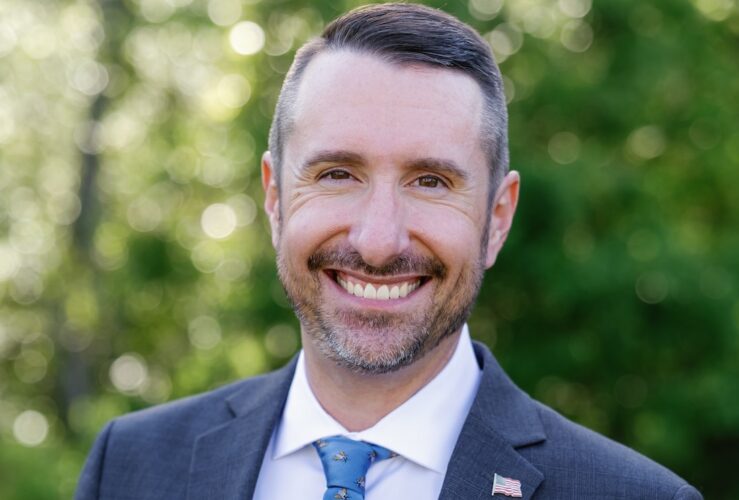
LELAND — Bill McHugh, an attorney and contract manager, is hoping to maintain his seat on Leland Town Council this election year.
McHugh said there is still work to be completed, which is why he is seeking a second term.
“While we have made significant progress and have had much success in building a safe, smart, and sustainable future, Leland still faces many challenges with its rapid growth and unique challenges,” McHugh said. “I want to help guide our community for another four years to ensure we remain forward-thinking and focused on goals that are practical, actionable, and deliverable.”
Though the council is a nonpartisan race, McHugh is affiliated with the Democratic party. Two seats are up for grabs and four more candidates have filed, including Leland Hyer (R), Susan Waleed (D), Frank Pendleton (R), and Edgar Robbins (I). Incumbent Richard Holloman (R) also filed, however, he has dropped out of the race.
Port City Daily asked all candidates a slate of questions about topics that are tracking high with voters and residents of Leland currently. McHugh’s answers have been edited below for clarity.
A few things to consider this election season:
- A valid ID is required to cast ballot in North Carolina
- Election Day is Nov. 4, 2025, with voters required to go to their assigned precinct locations
- Early voting opens Oct. 16 and closes Nov. 1, and Leland voters can cast a ballot at the Cooperative Extension Training Room, 25 Referendum Drive, Building N, Bolivia. See the hours here.
- Anyone who wants to register to vote can do so here through Oct. 10 or register and vote in one stop during early voting
The paywall has been dropped on candidate profiles to help voters make informed decisions ahead of the election. Candidate opinions and statements are not a reflection of Port City Daily.
Port City Daily: What makes you qualified for a seat on council and sets you apart from other candidates?
BM: Having served nearly four years on the council, I understand the issues this community faces, and the processes required to address them because I have already been a part of delivering positive change to Leland.
I have also built strong relationships with our neighbors in surrounding communities, as well as with county and state stakeholders across both the government and private sectors to help us reach our goals. I negotiate contracts for a living, and those skills are a great asset in a state where local governments are often limited in their authority. Despite these constraints, there are still effective ways to drive change.
I have a strong background in politics and the law, which enables me to understand both the powers and the limitations of towns in North Carolina. This understanding allows me to devise effective strategies to address our most pressing needs and to turn those strategies into actionable plans.
PCD: In the last year, what’s been dubbed a flooding ordinance has become a hot topic for addressing smart growth and development in Leland. Do you support it, why or why not? If not, how do you think council should address strengthening protections for homes built in or near floodplains?
BM: I support it 100%. In fact, it was my idea, and I brought it forward. In the wake of several flooding events, it became clear that something had to change. Different communities and how they handle flooding was researched and an example was found in Raleigh that I believed was a good starting point. Staff and our attorney worked to help find a balanced approach and we came up with something I thought would make a significant improvement while limiting the town’s legal risk.
That measure was ultimately tabled, despite my objections, by a 3-2 vote of the council. I have not given up, however, and we have agreed to hold a workshop on the topic to ensure everyone’s voice is heard. The date is not yet set, but I encourage the public to participate once it is.
This is a matter of public safety and a moral issue. No one should be building homes in unsafe areas. It puts residents and first responders at risk and is an outdated and foolish development practice that needs to be stopped or curtailed.
PCD: What does balancing green space with development look like in your view, such as when it comes to protecting wetlands or the tree canopy? Do you have examples of cities or developments that have done this successfully and what would you like to see done in Leland?
BM: Leland has made great strides in protecting green space, but there is so much more I want to do. Over the last four years, through negotiation, donation, and purchase, Leland has conserved around 1,000 acres, including the last undisturbed live oak tree stand on the Brunswick River. We also instituted a buffer ordinance, requiring vegetative buffers between all developments. This ordinance is strong and the best way to comply is to simply leave the forested areas alone.
We also have significant green space requirements for developments, along with an additional civic space requirement in our Flex Code. Our Planned Unit Development (PUD) ordinance has a maximum density that is lower than the county’s, ensuring that future development limits its overall environmental impact.
This is all a great start, but we have more work to do. I want to re-visit a tree protection ordinance and find creative ways to expand our conservation efforts in my second term.
PCD: In 2024, there was a 17% tax rate increase in Leland; were you in favor of this — why or why not? Do you think the current tax rate is sustainable?
BM: Nobody likes raising taxes, and when a larger budget with a larger tax increase and larger investment in our community was presented that year, the people of Leland soundly rejected it. We heard that message loud and clear: Leland’s residents want us to prioritize a low tax rate, and I support that goal.
As of the 2024/25 fiscal year, there were 23 NC municipalities similar to Leland in size. Only four of those communities had a lower tax rate.
The four-cent increase from 2024 enabled the town to create a police “power shift”, a specialized, overlapping shift that doubles police presence during the busiest 12 hours of the day, every day. This enhancement enables increased proactive policing, increased traffic enforcement, and better community engagement. All items the people of Leland established as priorities.
Our fire department’s ISO rating was upgraded to Class 2, top 8% in the state. The money used to hire new firefighters will ensure we can continue to meet that standard.
We also started our road resurfacing initiative, where 5% of Leland roads are repaved every year, prioritizing the most traveled roads in the worst condition. This will ensure the roads under Leland’s control are always in good condition.
My goal is to keep the current tax rate and ensure any future adjustments include significant community input and conversation. The town’s budget website is thorough, ensuring transparency in our finances and decision-making processes.
PCD: With the Cape Fear Memorial Bridge price tag escalating to more than $1 billion, how to fund it also remains debated. Both a toll has been floated and a transit sales tax, which would need voter approval potentially in a tri-county referendum that could include multiple projects in New Hanover, Pender and Brunswick counties. Do you support either and/or is there another option you think should be considered to fund the bridge replacement?
BM: I oppose any toll on the bridge. In the state of North Carolina, no existing piece of critical infrastructure has ever been replaced with a toll and our area should not be the first. A toll would be a regressive tax on the people of Leland, and I have loudly and consistently opposed it both before and during my time on the council.
I think it is absurd to suggest that the people of Leland and the Cape Fear region must pay an additional tax to fund critical infrastructure. The $500M Hampstead Bypass wasn’t toll funded, and there seems to be plenty of road work happening in Raleigh and Charlotte.
I believe priority number one should be funding the bridge through existing resources and revenue streams, rather than asking our community to fund it and I will continue to pressure our representatives in Raleigh and Washington to make that happen.
PCD: Traffic is a main complaint for Leland residents — how do you envision the town’s role in addressing it? Do you think Leland should implement public transportation? How so? Do you think the current plan to maintain and improve the roads it owns is/will be effective — explain.
BM: Traffic will always be a challenge in a growing community and Leland has taken action here. We are focused on enhancing road connectivity, which is an effective method for a town to divert traffic off main roads we don’t control, like US 17, 133, 74/76, Lanvale, etc.
Connector roads allow residents and first responders to move throughout the community without relying on these main routes. We also require developers, where permitted under state law, to provide roadway improvements.
Additionally, we have implemented our Integrated Mobility Plan and the Safe Streets for all initiatives. These dynamic plans are designed to help us plan thoughtfully for the future while prioritizing safety, connectivity, and options for pedestrians and cyclists.
While I don’t believe Leland is ready for public transit, that is a conversation worth considering for the future on a regional level. I don’t think we have the population density or demand for extensive mass transit at this time.
The 5% resurfacing plan I mentioned previously will keep our roads in top shape by ensuring they are all on a 20-year life cycle. Many of our roads are relatively new, with the majority being under 20 years old. This resurfacing plan exemplifies Leland’s proactive approach to addressing our infrastructure needs in a safe, smart, and sustainable way. I am very proud to have played a role in delivering this program to our community.
PCD: As Leland continues to see an influx of residents, how do you think council should ensure Leland’s economy keeps pace and opportunities remain varied across all ages and types of households — how will you balance economic growth and quality of life?
BM: We must continue to be business friendly and create an environment where businesses want to be and can thrive. We have done well to preserve our commercial space over the past few years, and we do see businesses that residents desire coming to town. We will soon have a Publix, Ulta, Marshalls, O2 Fitness, and a Texas Roadhouse opening in Leland, with many others inquiring about opportunities.
The greatest challenge is recruiting businesses that bring good jobs. Over the past four years we have put a major focus on life sciences, even hosting a summit at the Leland Cultural Arts Center to bring business leaders to town and show them what we offer. We were able to recruit Cygnus Technologies to Leland, who built a new office here and now operates in the Waterford area.
We must continue to promote this type of economic growth to ensure that people and families moving here also have opportunities to work here.
PCD: The town has discussed its approach to promoting commercial property in Leland, with only 5% of the town’s acreage being zoned for commercial use as of last year. How important of an issue is this to you and what do you think the town should and/or should not do to promote commercial development?
BM: In an area experiencing rapid residential growth, it is essential to keep enough commercial space available. That’s why I have opposed several rezoning requests from developers trying to turn commercial properties into higher-density residential zones.
Businesses offer great value to our community. They create jobs, provide vital services, and generate tax revenue while usually needing fewer municipal resources than residential properties. This makes them a strong financial asset for local governments and a benefit to the entire community.
The FlexCode enables a mix of residential and commercial development. Recently, we rezoned large portions of the Jackey’s Creek property for this purpose. Our goal is to establish a strong commercial and institutional presence there, which will help develop the walkable downtown area everyone desires for Leland. This development is also expected to provide important services, including medical facilities. Ultimately, we aim to attract a full hospital to the area, which is vital for our growing population.
PCD: What is one other issue not discussed above that you have a plan to address if elected and how would you do so?
BM: Burning. I want to stop burning caused by land-clearing, which has increased dramatically recently and is becoming a public health hazard. Many older residents in our community are particularly vulnerable to the dangers of smoke inhalation. I have already taken action to bring this conversation to the forefront.
Leland will host a workshop to address this problem and come up with a potential ordinance and/or action plan to stop or limit the practice. There are many questions as to what authority a municipality has to address this problem, especially how to do so without adding costly municipal services.
I believe we have a path forward, and I will continue to push for a solution. I will not settle for anything less than meaningful action to stop or reduce this harmful and outdated development practice.
Want to read more from PCD? Subscribe now and then sign up for our morning newsletter, Wilmington Wire, and get the headlines delivered to your inbox every morning.
