


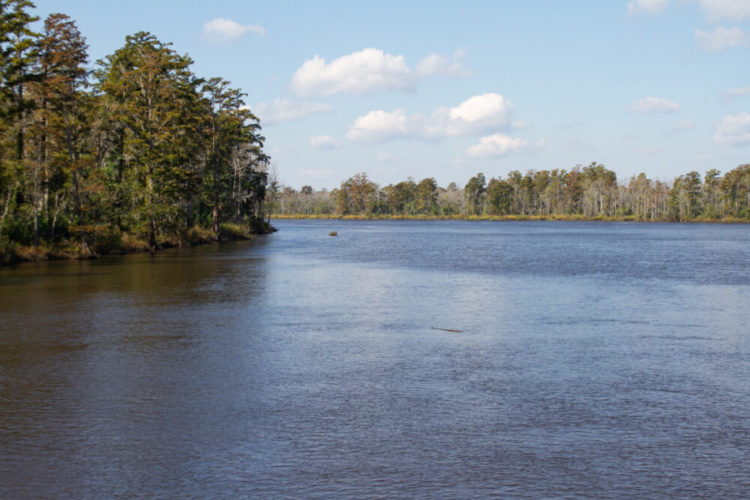
SOUTHEASTERN N.C. — Cape Fear River Watch and the Southeastern Environmental Law Center sent a letter to Chemours earlier this week claiming it has not adhered to a 2019 consent order with the state by continuing to allow PFAS into groundwater and the river. Chemours denies the negligence claims and violations, and the parties may go to court to resolve the dispute.
In a letter issued to Chemours on Sept. 23, the company’s legal team and the North the Carolina Department of Environmental Quality, the Southern Environmental Law Center laid out three areas of the consent order Cape Fear River Watch claimed the company fell short of:
- Groundwater remediation requirements;
- Preventing chemical discharge in groundwater moving around the site;
- Preventing PFAS discharge at outfalls leading to the Cape Fear River; and
- Air emission control requirements
READ MORE: Chemours, DuPont, Corteva settle multi-million PFAS lawsuit with NC localities
ALSO: Class action suit against Chemours goes to jury trial next spring
CATCH UP: Two PFAS strains remain hazardous substances after court rejects industry challenge
The 2019 court-enforceable agreement was made between NCDEQ, Cape Fear River Watch and Chemours in order to hold the company accountable and prevent more PFAS pollution from its Fayetteville Works facility. In 2017, it came to light that Chemours was dumping forever chemicals into the Cape Fear River for 40 years. The consent order mandated the company also investigated and cleaned up contamination, and provided replacement drinking water to qualifying private-well users.
A 2020 addendum, also cited by the groups in the letter, further addresses river pollution and asks Chemours to stop residual contamination from entering the river.
“We’re going to do what we’ve always said we were going to do, which is hold them accountable to the consent order that they signed,” CFRW Riverkeeper Kemp Burdette told Port City Daily. “They are going to have to clean up this mess in the way that they said they would do it before that consent order is considered complete.”
The notice says Chemours had to reduce PFAS discharge by 75% at the Willis Creek outfall per the consent order’s stipulations, but data from Chemours’ Cape Fear River PFAS Mass Loading Assessment from June 2026 says it has reduced by 50%. The letter also says groundwater contamination is still present on-site and affecting nearby waters, and notes a corrective action plan has not been announced as required.
SELC said if Chemours did not remediate violations, the two environmental advocacy groups would take the company to court.
“Chemours’ violations endanger families and communities from its ongoing PFAS pollution and cannot continue,” SELC senior attorney Jean Zhuang said in the announcement. “With people suffering, it’s past time for Chemours to be held accountable.”
However, Chemours does not agree with allegations. In a statement sent to Port City Daily, the company said it’s taken “significant actions”: the mile-long barrier wall in 2023 to stop groundwater contamination, a treatment system for Outfall 003, installing a thermal oxidizer to mitigate air emissions, replacement drinking water supplies and other programs and systems.
“Because this matter may become the subject of legal proceedings, we are unable to comment on specific allegations at this time,” a Chemours company spokesperson said.
Burdette said the programs and mitigation techniques Chemours has proven it’s possible to reduce PFAS discharge, and now they need to do a more thorough job.
“What they just need to do is finish the job,” he said, referring to partially mitigating PFAS discharge but not addressing all instances and strands.
Aside from not following requirements of the consent order, the notice indicates Chemours also reached an agreement with the state that some of its responsibilities had been fulfilled. This was gleaned from the September settlement agreement between N.C. Attorney General Jeff Jackson, local municipalities, Chemours, Corteva and DuPont. Burdette said the $600-million settlement suggested Chemours had satisfied some requirements from the consent order, including those about air emission reductions.
However, the notice from the SELC says the requirements haven’t been satisfied and, further, cannot be until Cape Fear River Watch also agrees.
“Cape Fear River Watch has not made such a stipulation and does not agree that Chemours has satisfied its Consent Order obligations,” the notice, signed by Zhuang and two other SELC attorneys, said.
Jackson’s settlement specifically states it does not replace the 2019 consent order, but Burdette said he wanted to make sure it was abundantly clear Chemours was not off the hook.
“So that’s why we sent that letter. It was to just make it crystal clear to everybody involved that Chemours is not done,” he explained to Port City Daily.
It is unclear if the issue will actually be seen before a judge, as neither Burdette or SELC could convey next steps.
Chemours has broken the consent order twice before, both in 2021. In January 2021, NCDEQ told Chemours it was in violation at Old Outfall 002; in March NCDEQ ordered $127,000 in stipulated penalties under the consent order for an inadequate mitigation system design.
Have tips or suggestions for Emily Sawaked? Email [email protected]
At Port City Daily, we aim to keep locals informed on top-of-mind news facing the tri-county region. To support our work and help us reach more people in 2026, please, consider helping one of two ways: Subscribe here or make a one-time contribution here.
We appreciate your ongoing support.
