


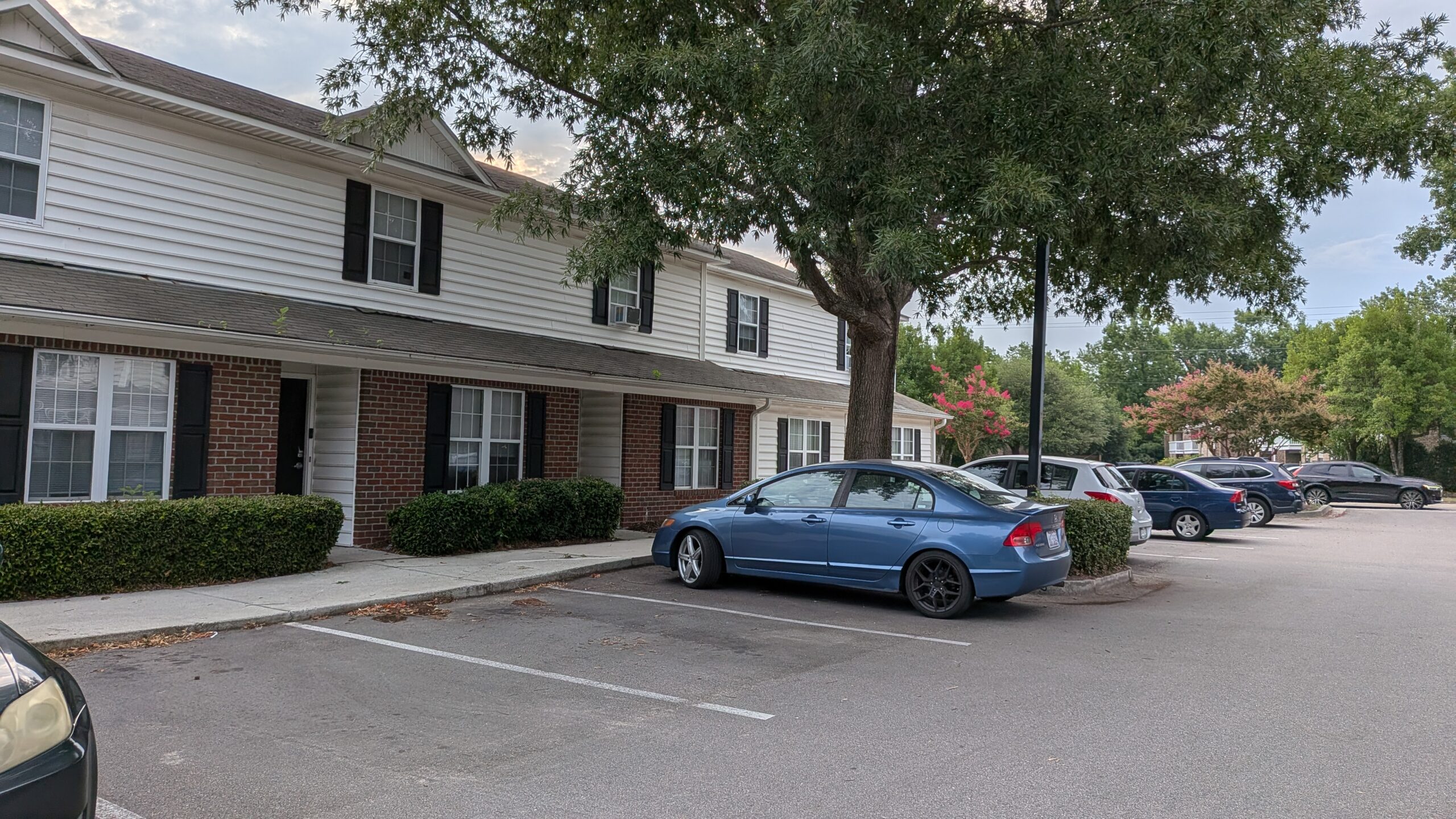
SOUTHEASTERN N.C. — Limits on local government power may result in cheaper housing and less pollution with new legislation regulating minimum parking space requirements and stormwater for redevelopment. Governor Josh Stein signed House Bill 162 into law Monday.
The bill rids developments from having minimum parking space allotments, which also cannot exceed the standard 90-degree parking spot size of 9 feet wide and 20 feet long. Exceptions to the rule on size are allowed for handicap parking, parallel parking, and diagonal spaces.
The second half of the legislation prevents redeveloped properties — whether demolished, relocated or replaced altogether — from having to increase stormwater controls, even if municipal or county codes have strengthened them.
READ MORE: ‘Chasing ghosts’: NC House approves elections bill expanding state oversight
ALSO: Public camping ban passes final vote in North Carolina House
“Parking Lot Reform/Stormwater Control” passed its final vote, 111 to two, on Monday, June 30 — largely bi-partisan with only two representatives, Gloristine Brown (D-Pitt) and Maria Cervania (D-Wake), voting in opposition. Upon making it law a week later on Monday, July 6, Stein called it another tool in the toolbox to tackle housing affordability.
“It increases flexibility for homeowners and homebuilders by eliminating mandatory minimum parking spaces based on occupancy in most counties,” Stein said. “This change will lower rents for people. It also enables local governments to offer voluntary incentives for stormwater control, which can help protect property from flooding and improve community resilience.”
Supporters of the bill echo Stein’s sentiment — that eliminating parking spot requirements would make for cheaper and more affordable housing. Cost per parking space in urban areas can rise as high as $50,000, increasing development prices which are often passed on to the consumer.
“For many years, parking lot reform has been pointed to as a common-sense, low-hanging-fruit solution that lowers the cost of building while encouraging public transit use, more thoughtful development projects, and complete community design,” Cape Fear Housing Coalition board member Liz Carbone said.
Additionally, the bill disallows a minimum number of parking spaces required for residences and other structures, such as businesses and restaurants. The only exceptions are for coastal areas; however, historic districts or sites on the state’s list of historic designations are not included in the exemption.
Local governments also can’t demand more emergency fire vehicle access roads into one- or two-story family dwellings than already in the fire code.
A representative for Brunswick County, Meagan Kascsak, told Port City Daily the county is aware of the legislation and does not expect major changes to their parking regulations and requirements since a good portion of Brunswick is in a coastal county and largely exempt. However, the county’s staff is reviewing the legislation for possible stormwater changes.
Advocates have also cited the legislation would help lower flood risk and improve water. The stormwater control programs listed in the bill allow developer incentives for projects that go above and beyond stormwater control requirements. However, incentivizing is not mandatory.
“Reducing the requirements for large areas of impervious surface in new developments can lead to less flooding and increase the preservation of on-site trees and natural areas,” Carbone said. “In land-scarce New Hanover County, hundreds of acres of land sit vacant waiting for cars, where instead there could be businesses creating jobs and homes creating stability for our community’s residents.”
Local governments with their own stormwater ordinance have 12 months to comply with the new guidelines.
New Hanover County spokesperson Alex Riley said the county doesn’t have a “state-delegated stormwater permitting program, therefore HB 162 does not directly affect the county’s stormwater ordinance.”
In the tri-county region, Senators Michael Lee (R-New Hanover), Bill Rabon (R-Brunswick), and Brent Jackson (R-Pender) all voted in favor of the bill, as well as Representatives Deb Butler (D-New Hanover), Ted Davis (R-New Hanover), Charles Miller (R-Brunswick), Frank Iler (R-Brunswick), and Carson Smith (R-Onslow).
Rep. Butler remained optimistic it would prompt “smarter development,” with less asphalt, better water quality and less flooding.
“If it gives communities and property owners more flexibility while protecting our environment, that’s a win for everyone,” she said.
Changes to the bill were made in June after going to the committee for Agriculture, Energy, and Environment, chaired by Sen. Jackson; Sen. Rabon is also a member. The bill was originally filed in February 2025 as the “Local Gov’t Applicants/Criminal History Check,” before it was workshopped into its current form and passed.
Have tips or comments for Sophia DePhillips? Email [email protected]
At Port City Daily, we aim to keep locals informed on top-of-mind news facing the tri-county region. To support our work and help us reach more people in 2026, please, consider helping one of two ways: Subscribe here or make a one-time contribution here.
