


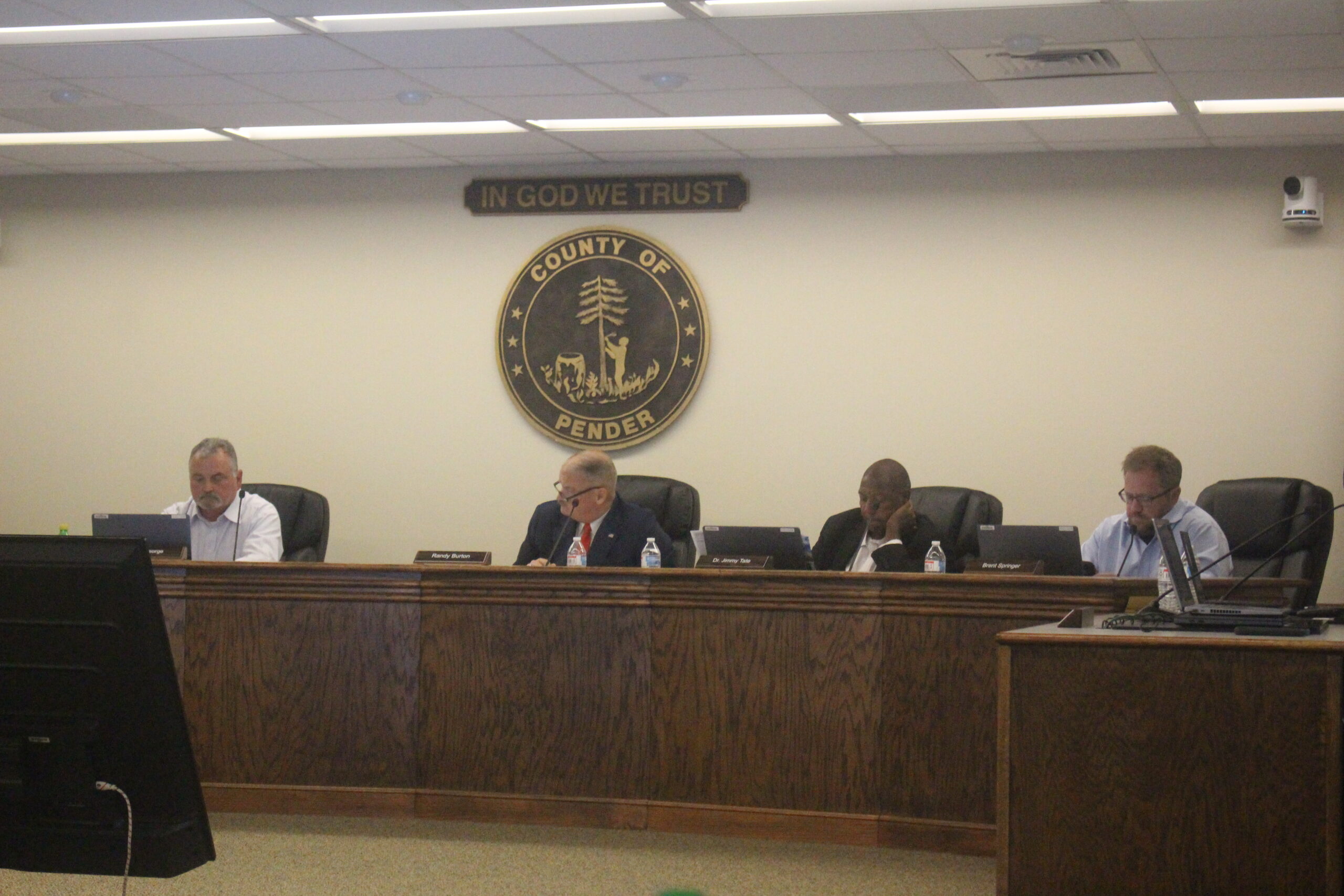
PENDER COUNTY — Pender County commissioners voted 3-2 Monday to move forward with using 2026 property revaluation numbers, reversing an earlier decision to suspend the reval, and resolving weeks of legal and budget uncertainty.
Commissioners Jimmy Tate and Vice Chair Brad George voted against the motion, which directs staff to proceed with using 2026 appraisal numbers in budget planning, send updated appeal notices to property owners, and set an appeal deadline of June 30, 5 p.m.
READ MORE: Senate bill proposed to pause 2026 reval numbers in a dozen counties, including Pender
The board had previously extended the appeals period into the fall, but Monday’s action resets a June 30 filing deadline so notices can be issued and appeals processed in time to finalize the county’s tax base for setting this year’s tax rate. By state law, it also has a June 30 deadline.
“We don’t want to send out a recommendation for your value, then tell you it’s wrong or change it,” County Manager Colby Sawyer said upon mailing 55,000 notices with updated appeal date information.
Commissioners already were warned suspending the revaluation likely exceeded their authority under state law, but had paused the process hoping to get help from state lawmakers to permit the suspension. Senate Bill 889 was filed April 28, for 12 counties use 2025 values for one year before implementing 2026 values and extend the timeline for appeals into 2027. However, it’s uncertain to pass before the filing deadline, so the board reversed course.
“I’ve talked to people in Raleigh and all this is going to do is keep kicking the can down the road,” Commissioner Jerry Groves said at the meeting. “Turn in your appeals, make sure you get fair treatment, and go on with our lives. That’s what we gotta do.”
The 2026 numbers were paused in April in a unanimous commissioner vote, however, officials learned shortly thereafter it also left them in a legal gray area.
Interim county attorney Katherine Barber-Jones with Hartzog Law Group reminded commissioners once the new reval took effect Jan. 1, 2026, state law left the board with limited authority to deviate from those values. It was Barber-Jones’ first time handing out legal advice as the board’s interim attorney since their former lawyer, Trey Thurman, resigned a few weeks ago amid the reval debacle.
The same information Barber-Jones iterated had been explained to the board of commissioners by counsel for the North Carolina Department of Revenue on April 13. Counties cannot suspend or roll back revals without authorization from the General Assembly.
“If this decision was challenged, most likely it would be interpreted as not within this board’s authority,” Barber-Jones said.
Barber-Jones forewarned the county could face legal action if it failed to properly levy taxes, including enforcement from the NCDOR or lawsuits from taxpayers alleging “unlawful taxation,” either individually or as a class.
Framing the decision as a path forward, Chair Randy Burton said the county should rely on updated values and lower the current 73.75 cents per $100 value tax rate rather than delay the process further.
“We don’t have a revenue problem, we’ve got a spending problem,” Burton said, echoing a point he has repeatedly made in the last few months. “We need to make sure that we spend your money, the taxpayers’ money, the way that it needs to be spent to deliver the core services that you deserve.”
Officials emphasized higher property values do not automatically mean higher tax bills, noting the board can lower the tax rate to offset increased valuations and keep overall revenue similar to this year. The county brought in roughly $75 million in ad valorem taxes in fiscal year 2024-2025.
According to staff, the tax rate would have to be cut by about half just to remain revenue-neutral — meaning the county would set a rate that would bring in the same amount of revenue as it did last year — based on 2026 values.
“We’re not looking to raise your taxes — we don’t really care what your revaluation says your property is worth,” Burton said. “We want to get your tax rate down so you don’t owe more than you did this year.”
Tate, who voted against the motion, questioned whether lowering the tax rate now would provide lasting relief, noting future boards could raise it again.
“Do later boards that come in after us go back and change the tax rate back up based on inaccurate data?” Tate questioned. “I believe we should [lower the tax rate], but it’s only a temporary fix.”
Tate cited ongoing complaints from residents that the data used in the revaluation may be incorrect. Resident home values doubled, tripled, even quadrupled in the recent reval, as their homes had not been through the process since 2019. Many stated properties were incorrectly assessed, claiming errors with reported square footage and the accuracy of sales data. County staff indicated roughly 400 valuation decisions were in limbo as a result of the suspension as staff were unable to accurately predict revenue for the upcoming budget. The board will continue budget discussions at a work session May 7.
Barber-Jones said rather than halting the revaluation, the appeals process is the proper avenue for resolving disputes. It’s a refrain made previously by Vincent Valuations’ owner Ryan Vincent in meetings with the commissioners; the county paid the company $2.3 million to handle the 2026 revaluation.
Each taxpayer has the right to appeal the valuation before the county’s Board of Equalization and Review, a quasi-judicial body appointed by commissioners that must hear cases and make determinations on appeals based on submitted evidence.
The board also weighed pending legislation in Raleigh — Senate Bill 889, filed April 28 by Senate leader Phil Berger and co-sponsored by one of Pender’s representatives, Brent Jackson and Steve Jarvis (R-Davidson, Davie). Barber-Jones said if the bill becomes law, the county would have no choice but to revert to 2025 numbers, but noted the bill’s timeline remains uncertain.
“The General Assembly feels a little bit like looking into a crystal ball,” she said.
If the bill does not pass, Barber-Jones explained, using 2026 values remains the only authorized path.
Have tips or suggestions for Charlie Fossen? Email [email protected]
At Port City Daily, we aim to keep locals informed on top-of-mind news facing the tri-county region. To support our work and help us reach more people in 2026, please, consider helping one of two ways: Subscribe here or make a one-time contribution here.
We appreciate your ongoing support.
