


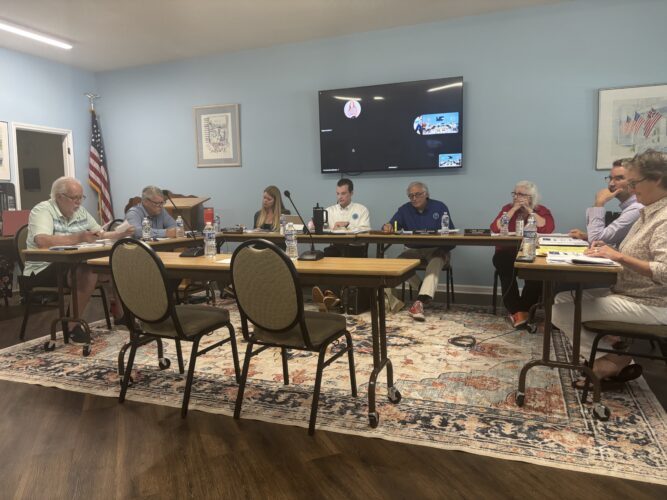
SOUTHPORT — The budget, first presented on May 27, includes 1.5 cent more on the tax rate from last year and a 7% increase to residents electric rate, to accommodate an increase in wholesale power costs by Duke Energy. However, debates among aldermen over the last four budget sessions have centered on rate increases, employee benefits, and budget cuts. It left the city needing to allocate fund balance money to cover more than $260,000 just days before the public hearing.
City Manager Noah Saldo recommended $28.1 million inclusive of $15.3 million for the general fund, a $1.6 million capital fund and $11.2 million enterprise fund to cover electricity. The aldermen and staff first met on May 27 for a presentation on the recommended budget.
“We are the highest tax rate in Brunswick County excluding Bald Head Island,” alderman Paul Gross said at May’s budget workshop.
READ MORE: Southport parks department in limbo as investigation continues, budget remains uncertain
ALSO: Small workforce housing project advances in Southport
CATCH UP: 3 people suspended, 1 resigns in Southport, following probe into missing funds
The tax rate in Southport is currently 31 cents per $100 value, but should Saldo’s original iteration pass, the tax rate will be $32.5 cents per $100 value. That means a home worth $450,000 would pay $5.63 more monthly; the city projected the tax rate increase would bring an additional $251,000 in revenue.
Bald Head Island’s tax rate is about 65 cents per $100 value.
“Our trends in spending are somewhat alarming,” Gross continued. “From 2016 to 2021, our budget increased 19.6% over that five-year period. From 2021 to 2026, it increased 89.9%.”
Gross told Port City Daily his goal was to have no tax increase for the upcoming budget year and suggested cutting employees. Gross pointed out the amount of employees Southport maintains, nearly 90, seemed excessive compared to municipalities of similar size, like Sunset Beach and Shallotte, which each have about 60.
Across the board, the greatest rising expenses in the 2026 budget are employee salaries and benefits. State employee retirement increased by 5.42% or and employee healthcare costs increased by 4.88%. There was also a 2.5% rise in liability and workers compensation insurance. The budget also proposed cutting healthcare coverage for dependents and making employees pay a $35 premium per month; both proposals were denied in a 4-to-2 vote by the aldermen on Monday, which resulted in a $11,365 deficit.
Gross questioned the city’s ability to reduce overtime costs; he said in FY2025, the city spent $341,000 in overtime. Over the last few fiscal years, overtime has increased in some departments. For example, the fire department had $94,000 in 2024 overtime, compared to $183,000 in 2025; it’s gone down slightly for 2026, by less than $50,000 though there are still 22 days to go in the budget year.
Saldo explained he was addressing overtime pay concerns by making hourly employees salary and requiring supervisor signature for overtime hours. However, there was across-the-board recognition that overtime could not be avoided in the case of emergencies.
The cost of maintaining the same level of service in the city has also increased, Saldo said. He gave the examples of fire and rescue needs continuing to grow with building maintenance and equipment costs and electricity and gas cost gaining expense. So in order to keep up with inflation and other costs, the city needs to bring in more revenue.
However, revenue generation also presented an issue in Southport.
Southport experienced declining revenue from its ABC board, equivalent to $383,291, because operational costs have increased and the ABC store needs more revenue to offset the increase, according to Gross, the liaison to the board. Because of the water and sewer merger with the county, the city also lost an additional $251,754, which was the yearly cost of providing Duke Energy, which has a facility in the city, with sewer and water. However, water and sewer costs were a part of an enterprise fund, which is self-sustainable. Alderman Marc Spencer told Port City Daily he was concerned about the city’s limited revenue options, especially given the lack of developable land and the increasing population; Brunswick County grew by 24% between 2020 and 2024.
The board ultimately came to the following consensus: To please everyone, the city would propose taking fund balance money from previous years. Fund balances are savings accumulated by municipalities and are typically used to cover emergencies.
It had to cover a $11,365 deficit and make up for roughly $251,000 the city projected making from the 1.5-cent tax increase. Alderman Rebecca Kelley called using the fund balance a “Band-Aid,” however no other alternative received unanimous approval.
Employee costs
The most contentious budget item across the board revolved around employee costs. The general fund accounts for the addition of four new police officers, the reduction of two employee positions in internal code enforcement and parks and recreation departments.
The budget also includes a 2.75% cost-of-living adjustment and a $500 merit bonus, though some aldermen worried it would be perceived as a “Christmas bonus” instead and not actually based on merit, since everyone would receive the same amount. Gross approved of the flat bonus because the alternative of a percentage bonus would have to be applied to the cost of pension and 401(k).
Saldo explained it was for financial reasons that he decided on a $500 merit bonus.
“When you go to a percentage increase, it does not just affect base salary,” he said. “It supports retirement, the whole nine yards.”
The $500 merit bonus was a recommendation from Gross to Saldo about three months ago, the aldermen said, noting his background in government finances.
“Well, we weren’t fortunate to sit with Noah three months ago,” Alderman Robert Carroll retorted, noting he and the others only got the budget on May 27. “I ask if we could get started significantly earlier in this next budget cycle.”
“I was disappointed we received the draft recommended budget so late this year but accept the City Manager’s promise to have it much earlier next year,” Gross said.
The city’s original plan was to save an additional $60,000 by reducing dependent health insurance contributions from 50% to 25% coverage; this is in part due to the rising cost of healthcare, which has been an issue across the state. State employee retirement increased by $55,240 and employee healthcare costs increased by $54,465.
Some aldermen on Monday suggested reducing coverage of spouses and other dependents to zero to save an additional $59,000. However, the board voted 4 to 2, with Gross and Kelley dissenting, to keep the city’s health insurance contributions to 50% and get rid of healthcare premium costs of $35 a month.
“Just as a matter of principle, I think that we can cut this budget in other areas without taking it away from the employees,” Alderman Lowe Davis said on Monday, June 8.
Gross implored Davis to find a solution, noting definitively, he would not vote on any budget that increases the tax rate.
Carroll called out Gross for his suggested cuts.
“Is it fair to say, though, that everything you recommended came at the expense of our employees?” Carroll asked. “Every single item.”
Gross denied as much was true. He wanted to see facility fees from Southport’s community building increase for non-residents; so for example, he suggested on Monday raising the cost of renting out space for weddings to $5,800, around $300 more than currently allowed. Community buildings brought in roughly $300,000 the past year, up from $275,000 the previous year.
Community building staff, however, noted on Thursday the city could not justify raising the cost of reserving the space because the building did not receive the necessary upgrades that made the building on par with other locations.
Police and fire/rescue
All aldermen had questions about costs associated with the police department and fire and rescue. Both departments’ budgets made up a bulk of this year’s total expenditures.
The city is planning to spend about $2.9 million on the police department, which accounts for the four new employees.
Two were projected to start in July, but the aldermen decided Monday to push their hire dates to September to save more than $12,000. The remaining two will be hired in January next year. Salary and employee benefits make up about $2.3 million of the department’s predicted expenses, in part due to the cost-of-living adjustment. The budget also covers vehicle maintenance for the police fleet, both routine and necessary to avoid using outdated technology.
Chief Todd Coring explained additional staff were needed to monitor drug activity in the community.
Coring also referenced the September 2025 incident at American Fish Company when a man opened fire on the bar from a boat. Three people were killed and six injured.
He added Southport police have experienced a roughly 88% increase in calls between 2022 and 2025.
The most prominent concern, though, was related to the fire and rescue teams, which make up about $4.6 million, though not because of the department’s equipment needs. Southport has been in a back-and-forth discussion with the county over its fire district, because Southport’s fire department covers a portion of the unincorporated parts of Brunswick County.
Southport gets $2 million from Brunswick County. The county collects fire fees from residents living in unincorporated areas and shares it among municipalities that serve their nearby unincorporated neighborhoods receive money from the county to subsidize the services. The fire fees are based on building square footage and vacant acreage instead of property tax, which would yield more revenue for the county and therefore cities.
In Southport, city officials said the amount it receives, $500,000, is short of what is needed to maintain the same level of service.
Alderman Robert Carroll asked Saldo in May about the coverage area — or the fire district — within the city versus the unincorporated parts of the county. Saldo explained the measurement is done based on land rather than population, so half of the fire district Southport serves 4,200 residents is within actual city limits and the other half is unincorporated.
“Southport residents are paying more for the fire services than those outside our city limits because we’re capped at the fire fee,” Gross said on June 5, noting those in unincorporated parts of the county did not pay Southport taxes or fees for the same fire services residents are receiving.
However, there is also a push across the state for the General Assembly to raise the fire fee cap by 50%; if this happens and the county’s fire fee committee approved an increase for Southport, the money to cover the unincorporated county would not be paid for by Southport residents but by the county and unincorporated residents.
Saldo noted in his budget recommendation he hoped the potentially -increased fire fees would help eliminate debt incurred by the department, which covered the rising cost of equipment and fire apparatus maintenance. The total debt for the fire department is currently $526,700, but the rescue team also has debt equal to $97,250.
The aldermen also toyed with the idea of relying on EMS services from the county rather than providing their own, which Gross suggested would save the city money. He pointed out the department only projects making about $400,000 but plans to spend about $1.5 million. The aldermen said the county has a legal obligation to have an EMS bay in the city that has the same response time as the current EMS team run by Southport.
However, because EMS was requested by the community, Alderman Karen Mosteller suggested a workshop where residents could speak on the issue, which the other aldermen agreed to.
Capital fund
The city’s capital fund has a total budget estimated and proposed to be $1.6 million to cover nine projects and replacements of equipment.
For fire and rescue, the capital projects include upfitting an ambulance used by the city’s EMS in order to maintain proper response time and emergency care. Southport also needs to replace self-contained breathing apparatuses, which are used by firefighters when responding to a fire emergency. This will cost $120,000.
The most expensive capital projects planned for next fiscal year are stormwater system improvements and street paving, to cost $558,000 and $512,000 respectively. Streets in need of repaving include:
- Dutchman Creek Road
- Spikerush Trail
- Longleaf Drive
- Frink Drive
- E. Nash Street
- Cape Fear Drive
- 11th Street
- Park Avenue
- River Drive
Sidewalk improvements are projected to cost $150,000 and are planned for Howe Street, West Street, Nash Street, Moore Street and more than a dozen others.
The city is also planning to upkeep some of its buildings. Southport’s old city hall and courthouse will be redesigned for $80,000, and facility maintenance, like on the community building, will cost a total of $136,000.
The city is spending $5,000 for cemetery maintenance as well and will spend an additional $50,000 on improving Franklin Park, which was critiqued by Carroll because of previous investments. He explained wanting to change the line item to represent all parks, like Lowe-White Park.
“I want it to be very clear that it’s for parks,” he said Thursday. “We had people who heard that Franklin Square Park had received $183,000 over the last three years and they almost lost their mind.”
Electric fund
The city’s only enterprise fund’s total budget is $11.2 million and includes adjustments to accommodate the increase in costs of wholesale power.
Southport has to buy wholesale power to cover all electricity in the city; the municipality began working with a nonprofit now known as ElectriCities of North Carolina in 1966 because the nonprofit offers ways for the city to reduce energy costs. The nonprofit acts as a middleman between the utility company and local municipalities, buying and distributing power to communities.
Duke Energy raised the cost by 7% for the power it sells to ElectriCities. Because the organization now has to pay more money for the power, the cost has translated into a fee increase of the same amount for residents.
However, in addition the city has aa $2 million transformer project planned on Howe Street behind Dosher Hospital.
Southport’s electric system is at capacity, so the proposed project would ease the strain on the city’s electrical grid. This issue is further exacerbated by extreme heat and cold events, according to Saldo.
“Failure to move forward with this transformer investment risks rolling brownouts [or partial outages] and reliability concerns,” Saldo said.
Another update is a $500,000 project to upgrade the underground electrical system, making the combined total to improve the city’s power grid $2.5 million.
Parks and recreation
Most of the aldermen’s concerns and questions related to the budget included where else the city could cut costs or increase fees. The parks and recreation budget was at the center of this discussion on Thursday and came up again on Monday, with Kelley calling it the “elephant in the room.”
Some aldermen suggested cutting programs or reducing services to help offset rising costs of service and reduce spending. The annual summer camp and the city’s senior center were noted in particular, though Gross also wondered if the city’s before- and after-school program is needed since the local Methodist Church also has one.
“If 10 out of the 13 say, ‘Hey, I love where I went last year at the Methodist Church … then do we have the need to reopen a program for 2 or 3 children?” Gross asked.
He noted 13 Southport children participated in the before and after school program before it was shut down from the parks and recreation due to an ongoing State Bureau of Investigations probe which began in March. Funds were discovered missing from the parks and recreation department, leading to administrative leave of four employees, all of whom ran the department’s programs.
Kelley was in agreement with the possibility of discontinuing the before- and after-school program; while she supported the program but was also compelled to save the money. The parks and recreation expenditures are projected to be over $757,000 while only predicted to bring in $21,500.
“So if you’re looking to balance revenue and expenditure…” Davis started.
“This ain’t the department to do it,” Carroll finished for her.
However, Carroll said the program was in demand.
“We’ve had people showing up to parks and rec, to the meetings we have had recently, wanting that program back,” he told the other aldermen.
No decision was made about the program; however, as the finance director, Joey Kronenwetter, noted it was difficult to calculate the exact amount that would be saved and was likely not going to be a significant change.
Kelley also asked the city manager on June 4 if there were plans to bring the summer camp back, to which Saldo replied yes. However, he explained, because the camp typically started right after school let out for the summer and that date already passed, the summer camp would not be accommodated in the upcoming year’s budget. Programs like youth basketball will be, though.
Gross also suggested the city-owned senior center was unneeded. He pointed out Brunswick County’s Senior Center located by the Walgreens, which he said offered a wide array of services, as well as free lunch during weekdays. He added the Brunswick County Community College also offered activities for seniors, particularly in the creative arts, like sculpture work.
“How much more additional adult programming do we need to offer in parks and recreation given the opportunities that are already in our city?” Gross asked on Thursday.
On Monday, however, Spencer was adamant about not cutting programs.
“Everything we’re talking about is expenditure,” he said. “There are no revenue solutions at this point. It’s all cut, cut, cut.”
Spencer suggested exploring paid parking options, but Davis and others noted the board needed to hear options and pitches from the parking companies before any decision could be made. The paid parking idea was tabled by aldermen in June last year, due to it being highly unpopular among residents.
The city is planning to host a public hearing on the budget on June 11 and an additional budget workshop on June 17.
Tips or comments? Email Emily Sawaked at [email protected]
At Port City Daily, we aim to keep locals informed on top-of-mind news facing the tri-county region. To support our work and help us reach more people in 2026, please, consider helping one of two ways: Subscribe here or make a one-time contribution here.
We appreciate your ongoing support.
