


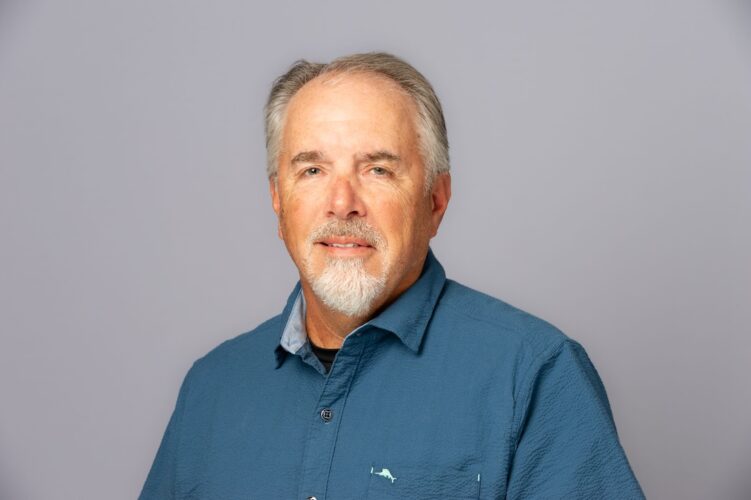
KURE BEACH — Mark Dirks, senior partner and founder at Beacon Technologies, is eyeing one of two seats open on Kure Beach Town Council.
It’s Dirks’ first time seeking public office.
“But I feel like I’ve been working with the public and my communities for a very long time,” he said. “I believe all the steps of my career and life have led me to this point — coaching baseball and football as far back as my teens, leading school organizations and supporting big brother/big sisters while I attended Wake Forest University, collaborating with peers and business leaders in large businesses like AT&T, Lockheed Martin, KPMG & Accenture, founding and leading WeavingHope to build two preschools in Rwanda, following my entrepreneurial mindset to build what is now a 28-year old web technology company, Beacon Technologies, that embraces work/life balance, an employee-focused culture, and more importantly stresses the importance of giving back to the community through its BeaconCares program (recently recognized statewide by The United Way).”
The Kure Beach council race is nonpartisan race, though Dirks is affiliated with the Republican Party. He is up against Byron Ashbridge (U) and Tracy Mitchell (R).
Port City Daily asked all candidates a slate of questions about topics that are tracking high with voters and residents of Wilmington currently. Dirks’ answers have been edited below for clarity.
- A few things to consider this election season: A valid ID is required to cast ballot in North Carolina
- Election Day is Nov. 4, 2025, with voters required to go to their assigned precinct locations
- Early voting opens Oct. 16 and closes Nov. 1, and voters can cast a ballot at any of these four sites: Northeast Library (1241 Military Cutoff Road), Carolina Beach Town Hall’s Police Training Room (1121 N. Lake Park Blvd.), Cape Fear Community College’s McLeod Building, (411 N. Front St.), and New Hanover County Senior Resource Center’s Multipurpose Room, (2222 S. College Road). See all hours of operation here where you can also track the wait times at each early voting location.
Anyone who wants to register to vote can do so here through Oct. 10 or register and vote in one stop during early voting.
The paywall has been dropped on candidate profiles to help voters make informed decisions ahead of the election. Candidate opinions and statements are not a reflection of Port City Daily.
Port City Daily: Why run for office now? What makes you qualified for a seat and sets you apart from other candidates?
Mark Dirks: I have been considering running for local town council for several years, even in my previous location, but knew I could not just jump into the role for two reasons: (1) There’s a lot to learn if I’m going to actively make a difference; and (2) I wanted to take a small step first to make sure it was right.
After spending the last four years with the Kure Beach Marketing Advisory Committee (the last three as the chairperson), attending nearly all of the Kure Beach Town Council meetings, and more recently, the Stormwater Committee meetings, there is no question that it was time and I’m ready.
I bring a unique type of leadership that I’ve honed over my career — not just in business, but through teamwork with my family, my players (as a coach), and my relationships with my Beacon team members. I bring a positive, hard-working, “can-do” approach. I believe most people who know me would say that I’m a problem-solver, that I will listen to varying opinions, weigh pros and cons, rely heavily on data and facts, and then ultimately make the best decisions possible to achieve objectives and drive progress. However, I fully understand it is impossible to make everyone happy all of the time. Change is unavoidable. So, we can either adapt proactively, or scramble reactively. I’d prefer to help protect and improve our classic beach town by planning proactively.
I have a Bachelor’s of Science in mathematics from Wake Forest (minors in sociology and computer science) and Master’s of Science from Kansas State University in computer science. So while data, process, and logic are at my core, with everything I’ve learned in business since I started working as a paperboy at age 12; I believe “caring” is at the heart of success.
PCD: If you had to rate the status of the town’s infrastructure — streets, stormwater and water systems, sidewalks and bike paths — how would you do so? What projects do you think the town should prioritize?
MD: Over the last month, I’ve spent quite a bit of time going door-to-door, listening to what’s on citizen’s minds. By far, the most common concern is “water” (both stormwater and water systems). Of course, “growth” is a close second with respect to concerns. With the recent floods, the current town council has taken positive actions to work with the state to start installing larger outfalls to move more stormwater. Three of the 13 outfalls have been installed and have brought marked improvements, with the other 10 being planned after the turtle nesting season.
However, for me, the priority for the town should always be to focus on what has the most significant impact on the most citizens — which at this time, is addressing the infrastructure. How? It starts with a comprehensive plan that maps out where we are now in terms of water systems, stormwater management, power lines, and streets (traffic) and where we want it to be 5-10 years from now. Kure Beach is large enough that it can no longer be reactive to issues — and, therefore, must lay out a long-term plan. In addition, and even more importantly, this plan must be communicated well with the citizens, especially the value.
Many of the people that I talked with understand that it will take time (and money), but they want to see a plan, followed by some level of execution of that plan. Why is this so important? Tourism is increasing. More people are looking to retire in Kure Beach. Streets are logjammed. The aquarium is expanding significantly and the Ft Fisher State Historic Museum just opened. Demand on KB’s infrastructure (as well as trash, sewer, fire, and police services) must align with all of this (and future projections). And, ultimately, this will require help, collaboration, and assistance from MOTSU and most likely state representatives. It’s a long process, but my goal is to help establish a solid plan, realizing it will take some time to do it right.
PCD: Residents commonly say they want KB to retain its small town charm. What is your approach to that in growing regions? What specific initiatives would you support or vote against to accomplish this?
MD: If you look at my website, my first point of emphasis focuses directly on this — lifestyle preservation. Of course, the 35-foot height limit for buildings is the key and should never, ever change. Whoever created that ordinance was brilliant. I will never vote to change that.
Secondly, we have to address tourism smartly by collecting data, modeling growth, and determining how we want to control and manage growth. Otherwise, as I’ve said in multiple town meetings: “Someone else will decide for us.” Through the Convention and Visitors Bureau (CVB), I have been working to obtain the data to help us understand the facts that will better inform marketing decisions around the shoulder and off seasons. I believe there are better ways to use our marketing budget, and I believe the CVB is willing to work with us accordingly, but 20-year-old legislation has a grip on how that budget is to be used. That legislation needs attention — and I’m just not one to readily accept the “that’s untouchable” rhetoric.
A couple of questions I’ve kicked around: (1) How can we limit new townhouses and/or duplexes? (2) How can we reduce the ever-growing volume of signage on the beaches and access areas which detracts from the natural beach beauty? (3) How do we use marketing budget (from ROT) more directly for the town and its business partners (to facilitate tourism and value)? (4) How do we put more emphasis on, and possibly get state assistance for, improving the infrastructure issues that are directly impacting that “small town charm” due to growth/building (e.g., alternative route to Ft Fisher area, stormwater management upgrades, etc.).
None of these are “easy” topics to address, but we must do so in order to preserve Kure Beach.
PCD: Beach renourishment is already on the plate for sustainability of Kure Beach, but how else should the town address environmental mitigation against erosion, susceptibility to storms, rising sea levels, etc.?
MD: I provided significant input to the NHC Tourism Development Authority (TDA) with respect to their recent studies and surveys in developing a 10-year plan. Of course, our beaches are the the number one asset (and the lifeblood of our town). I admittedly do not have a good answer at this time other than the fact that regular, dependable beach renourishment is absolutely essential — but it’s expensive.
I have a lot of questions: Is it enough to renourish the beaches every three years? Are there more aggressive beach renourishment programs? Is it time for revised building requirements to better prepare for these issues? Does Kure Beach (and Carolina Beach) need to make commitments to adopt a sustainability framework and actively work toward achieving targeted levels (even a small step would make a difference)?
My wife and I have been very active members of the Pleasure Island Sea Turtle Patrol for four years. In addition, our house was one of the most affected by the floods of 2025, so we are intimately aware of the issues and impacts. Consequently, we are strong advocates of protecting the environment, wildlife, our property, and the beauty of Kure Beach.
PCD: What is one other issue not discussed above that you have a plan to address if elected and how would you do so?
MD: I am a supporter of the Island Greenway; however, I have concerns about its proposed location. Yes, there have been feasibility studies, but we have many citizens (along Settlers) that are not in favor of it running behind their homes. I understand. While the Greenway would certainly be an added attraction for tourists and local bikers/walkers, I believe there are more important things to tackle first (and spend money on) that affect way more of KB’s citizens. I keep asking myself: “Is there a win-win” here, somewhere regarding the Greenway? I need to spend some time learning more about this project, options, and usage data.
Keep in mind, according to the Greenway website, it’s only 37% complete (from Maine to FLA), so at this time, I don’t see a rush to make this a decision. I really am interested in learning more about MOTSU and our relationship — and if there’s a way we can work together to develop a more comprehensive five to 10-year plan that addresses the bigger long-term picture (the Greenway, stormwater, water systems, roads and eventually the revitalization of Eakes Park). Eakes Park is outdated and neither a tourist attraction, nor where it should be for the Kure Beach citizens. The town has a great set of preliminary plans to revitalize Eakes Park, which will be an asset for our residents (which tourists will enjoy too).
Again, MOTSU controls if/when that ever happens — and this is why the Kure Beach-MOTSU relationship is so important.
Want to read more from PCD? Subscribe now and then sign up for our morning newsletter, Wilmington Wire, and get the headlines delivered to your inbox every morning.
