


SOUTHEASTERN N.C. — As the federal government goes into day 17 of a shutdown due to Washington politicians disputing the expiration of Obamacare provisions, Medicaid providers in North Carolina are grappling with less funding already from the state and planning ahead for what could come down the pike.
READ MORE: State requests leveraging Medicaid to compel hospitals to relieve medical debt
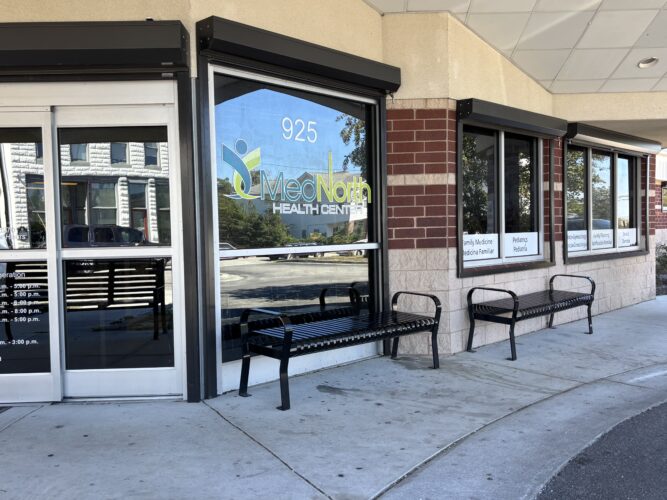
“We’re having more patients calling us and requesting to become patients of ours because their old provider is no longer accepting Medicaid,” Althea Johnson, CEO of MedNorth, said. “They already are opting out or not taking any Medicaid patients because of the rate reduction.”
The Department of Health and Human Services reduced Medicaid reimbursement to providers at the beginning of the month due to a North Carolina budget stalemate between Gov. Josh Stein and the General Assembly.
The state received a $1.8-billion incentive in 2023 from the federal government to expand Medicaid and pay for it for over two years. Expanded Medicaid covered 660,000 more people in North Carolina, and they had planned to continue funding the expansion after the incentive ran out, with the federal government covering 90% of the expansion budget.
A state budget hasn’t passed yet due to disagreements among the Assembly over tax rates and state employee raises, though a “mini” budget supplement to the Department of Health and Human Services went into effect in August. It included $600 million but was $319 million less than what the DHHS said it needed for Medicaid. The department gave the state legislature an Oct. 1 deadline to release the rest of the money in order to keep operating normally, else they would initiate cuts, notably to provider reimbursements.
The General Assembly didn’t agree to the full amount due to funding shortfalls on multiple fronts, including the loss of COVID-19 relief funds and the reductions coming down through President Donald Trump’s One Big Beautiful Bill.
North Carolina received $3.6 billion in COVID-19 relief funds and used it to pad mini-budgets during times of disagreements, though it has now run out. With those relief funds gone and Medicaid covering more people than it had before additional federal support, the state hasn’t come to a funding agreement. Thus cuts began Oct. 1 to provider reimbursements, decreasing anywhere from 3% to 10%.
The providers receive reimbursements for taking in Medicaid patients, which is typically lower than what is received from private insurance. With the recent Medicaid cuts, providers haven’t fully seen the aftereffects yet, as they haven’t filed the October reimbursement paperwork for most recent care. Primary care doctors face an 8% cut while specialty doctors could see up to 10%.
“In an area like ours, where there’s a high demand for primary care providers, what’s the incentive to accept Medicaid patients if you can fill your whole practice with private insurance patients and get more money?” Leslie Smiley, executive director of the Cape Fear HealthNet, said.
Cape Fear HealthNet partners with local providers to get uninsured individuals healthcare across the New Hanover, Brunswick, Pender, and Columbus counties. They have a network of volunteer providers they refer their clients to so that they can receive healthcare despite not having insurance.
This includes MedNorth, which also takes Medicaid and will experience a 3% rate reduction, and Cape Fear Clinic, facing a 10% reimbursement reduction. Both providers cover several areas of care and work with Medicaid/Medicare and uninsured individuals, seeing cumulatively 10,000 patients a year.
While the reimbursement rate cuts are the most tangible concern Smiley has, it’s not the only one. The One Big Beautiful Bill Act, signed into law on July 4, 2025, includes tax cuts and new spending — increasing the deficit by around $3 trillion — desired by the president. But there is trade-off: reductions to some of the federal government’s largest spending items — the Supplemental Nutrition Assistance Program and Medicaid, among them. Federal spending on healthcare will be reduced by $1 trillion through 2034. In 2024, the federal government spent $1.98 trillion on healthcare.
The provisions of the One Big Beautiful Bill Act haven’t taken effect yet but will kick in Jan. 1, 2026. For one, the enhanced Federal Medical Assistance Percentage that was created to incentivize states to expand their Medicaid is set to end on the first day of 2026. Funding to Medicaid in North Carolina will also be significantly reduced. Under the standard FMAP, the federal government pays 64.62% of North Carolina’s Medicaid costs (not including the expansion), but the enhanced version of that assistance, which went into effect in 2021, had the federal government paying 75.23% of the state’s Medicaid program.
With FMAP sunsetting, it doesn’t necessarily mean funding has to end at the state level, but North Carolina implemented a trigger law when it expanded Medicaid in December 2023. The law states that North Carolina will essentially end the Medicaid expansion if federal funding drops below 90%. Because of how extensive the cuts from the One Big Beautiful Bill Act are, that projection is predicted to eventually become a reality.
For providers like Cape Fear Clinic, the shift would be dramatic, according to its CEO, John Devaney. Devaney explained between 65% and 70% of their patients are on Medicaid and 30% are uninsured. Before expanded Medicaid, the ratios were almost entirely opposite.
“We honestly changed our business model because of Medicaid — because we were expecting the income from that to help subsidize more uninsured patients, which it did,” he said. “But then if I’m back to majority uninsured patients and not having that income, that would impact whether or not I have the level of staff I need.”
Devaney described their current staff and volume as “lean,” as is. The clinic has 24 employees, as well as six providers, seven pharmacy specialists, one nurse, and two medical assistants, who serve a little over 2,000 people annually. If expanded Medicaid were to be cut, Devaney said he would have to completely change his approach, back to what it was before more patients became covered, which planned for 70% of their patients being uninsured, rather than only 30%.
The government shutdown hasn’t helped, either. In Washington, politicians are battling back and forth primarily over Obamacare subsidies in the Affordable Care Act. Open enrollment was shortened by a month, to end in December instead, and automatic renewal of coverage is set to end by 2027.
The Obamacare subsidies include premium tax credits, which can be used by eligible recipients to reduce the cost of their insurance premiums, making insurance more affordable to those who need it. The deadline for renewal is at end of this year — and come January, if Congress has not approved it, premiums are set to double, triple, and even quadruple in price for people across the state and country. This could result in millions of people in the U.S. no longer being able to afford insurance.
According to a press release from Gov. Stein, 157,000 North Carolinians are set to lose their healthcare and another 888,000 will have their premiums doubled if the PTCs end. In the Cape Fear region, there are 85,000 people enrolled in the ACA Marketplace and 81,000 who receive PTCs.
Organizations like Cape Fear HealthNet will have to fill in the gaps if those subsidies expire.
“Now they’re uninsured again and they look to programs like ours,” Smiley said.
Smiley estimates 23,000 people are on expanded Medicaid in the Cape Fear region, of whom HealthNet may be expected to serve should the expansion falter, but they don’t have the capacity nor funding for it.
Since Medicaid expansion, Cape Fear HealthNet has served around 1,400 people annually — before 2023 it was serving around 2,800. Its funding comes from grants, like a recently submitted application to the Leon Levine Foundation. Smiley noted recently the nonprofit lost $75,000 from the Duke Endowment, a Charlotte-based private foundation. Though there was never a minimum number of clients HealthNet had to fulfill to receive money from Duke, Smiley said after the expansion went into effect about half of their original clientele qualified for Medicaid. According to Smiley, Duke Endowment thought there was a less need for money because there were less uninsured clients due to Medicaid expansion.
Budget cuts from the New Hanover County Board of Commissioners this year have only added insult to injury. Specifically, the New Hanover County DHHS had to cut the vendor status of its nonprofits, and while some were awarded grants by The New Hanover Community Endowment, like Cape Fear HealthNet, others were not.
Cape Fear Clinic’s Devaney has been applying for grants, including to The Endowment, but he said grant funding has become more competitive due to the plethora of cuts and increased needs shifting to foundations. Devaney suggested New Hanover nonprofits could be at a greater disadvantage.
“We’re being told by some foundations that we’ve asked for support that they don’t want to fund in New Hanover County because we have The Endowment and we should just go to The Endowment for everything,” Devaney said. “But you can’t go to The Endowment for everything.”
The $1.6-billion Endowment was founded from the sale of New Hanover Regional Medical Center to Novant Health in 2021 and doles out millions in grants annually. To date, it’s equaled around $159 million given through 353 grants and will be expected to give out 5% of its assets by 2028, due to IRS laws. However, The Endowment has a broad range of awardees, including education and housing, and isn’t solely focused on healthcare needs.
While organizations like Cape Fear Clinic and the HealthNet are predicting and trying to prepare for future over-capacity with less funding, MedNorth is beginning its first-ever fundraising campaign to pay for its new building and renovations coming in 2026. It hopes to raise $30 million in the next three years.
Johnson stated they were going to increase the footprint from 16,000 to 35,000 square feet, essentially doubling the amount of examination rooms to 51 and adding on seven more dental operators. With the renovations, the goal is to increase service from 8,100 patients to 12,000 annually.
Though no official budget from North Carolina’s General Assembly and the governor is in sight, nor any certainty about whether the subsidies under the ACA are going to end, providers are at a standstill as they wait to see if they will even have the funds to continue operating normally, let alone over capacity. Patients, in the meantime, are anxious, uncertain, turned away, and in many cases uninformed, all three service providers explained. And this, as Smiley put it, is an “everybody issue.”
“That person who doesn’t have insurance will impact you eventually,” she said, “because your insurance is going to be higher because [hospitals and providers] have to cover the uninsured.”
[Ed. note: The article has been updated to correctly reflect Althea Johnson’s name; PCD regrets the error.]
Have tips or suggestions for Emily Sawaked? Email [email protected]
Want to read more from PCD? Subscribe now and then sign up for our morning newsletter, Wilmington Wire, and get the headlines delivered to your inbox every morning.
