


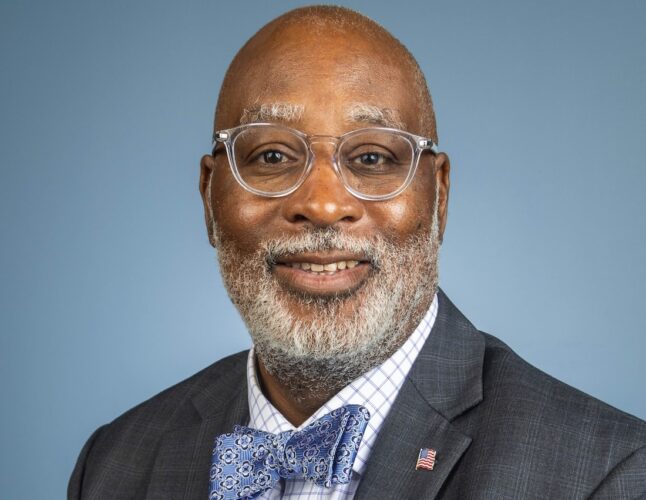
WILMINGTON — Jonathan Barfield Jr., a Navy veteran and real estate broker, is hoping to secure the mayoral seat in the 2025 municipal election.
Barfield served as the New Hanover County commissioner for 16 years — serving as board chair for four years and vice chair for three — and also was on the Wilmington Metropolicatan Planning Organization, Cape Fear Community College Board of Trustees, Department of Social Services Board and worked on Governor Stein’s transition team, co-chairing the team that interviewed candidates for secretary and deputy secretary of military affairs.
This is Barfield’s first run for mayor.
“The relationships that I have at the state level, working with Governor Stein’s team and having served on the New Hanover County Commission for 16 years gives me the ability to leverage those relationships when needed to connect the City of Wilmington with needed resources or relationships to advance the city’s needs and priorities,” Barfield said. “I also have key relationships with elected officials from both our county and the surrounding counties, which help foster regional collaborations on key issues.”
The city council is a nonpartisan race, though Barfield is affiliated with the Democratic party. He’s up against incumbent Bill Saffo (D) and Billy Craig (R).
Port City Daily asked all candidates a slate of questions about topics that are tracking high with voters and residents of Wilmington currently. Barfield’s answers have been edited below for clarity.
- A few things to consider this election season: A valid ID is required to cast ballot in North Carolina
- Election Day is Nov. 4, 2025, with voters required to go to their assigned precinct locations
- Early voting opens Oct. 16 and closes Nov. 1, and voters can cast a ballot at any of these four sites: Northeast Library (1241 Military Cutoff Road), Carolina Beach Town Hall’s Police Training Room (1121 N. Lake Park Blvd.), Cape Fear Community College’s McLeod Building, (411 N. Front St.), and New Hanover County Senior Resource Center’s Multipurpose Room, (2222 S. College Road). See all hours of operation here where you can also track the wait times at each early voting location.
Anyone who wants to register to vote can do so here through Oct. 10 or register and vote in one stop during early voting
The paywall has been dropped on candidate profiles to help voters make informed decisions ahead of the election. Candidate opinions and statements are not a reflection of Port City Daily.
Port City Daily: What makes you qualified for a seat on council and sets you apart from other candidates?
Jonathan Barfield: Serving at the most powerful governing body at the local level for 16 years has given me a global view of the needs of our community. Providing services such as 911, emergency operations center, health and human services, mental health, and substance use disorder services for our community has been an awesome honor and tremendous responsibility.
PCD: Homelessness continues to be debated among area leaders; what isn’t being discussed about it, in your opinion, that you think could help better steer its direction? Do you support implementing the former joint strategy that the city and county devised in September 2024? If not, why and what strategies do you think should be implemented? How much money would you support the city dedicating to the effort?
JB: As a county commissioner, I tackled this issue head-on by providing needed resources both to providers of services and those who were unsheltered. To address the situation downtown, the county deployed full-time social workers to connect our unsheltered with wraparound services. The county even provided a secure storage area where individuals could leave their belongings, freeing them up to look for work and get the help needed to find a sustainable living situation.
I believe the city needs to invest more in the providers of services, whether it be the Good Shepherd of the Salvation Army or the host of day shelter providers, to increase their capacity to help our unsheltered population. The county and city convened several meetings with key stakeholders, and they have given valuable insight into how to help solve the problem. Now it’s time to listen and do.
I believe a partnership between the City of Wilmington and the New Hanover County Community Endowment could financially go a long way in alleviating the challenge that our unsheltered neighbors face of not having a permanent housing solution.
PCD: In development conversations, the supply of housing and affordability are often at odds with residents’ desire to keep density low. How would you propose tackling these issues respectively? Do you think it’s possible for the city to satisfy both desires? Why or why not?
JB: With Brunswick County being touted as the fastest-growing county in the state and the development we see taking place in Pender and even Columbus County, I believe working regionally with surrounding counties to lessen the development impact in the City of Wilmington and New Hanover County will help lessen the impact on the built infrastructure here and allow for needed infrastructure to catch up with demand. Recognizing that Wilmington is almost built out also weighs in on this thought process.
Over the past several years, allowing more density has been the preferred method of land development, considering the cost of land development, which includes all costs associated with building a community to include water, sewer, and roads, increasing at a rapid pace — evidenced by the sheer cost of housing. Ensuring that our road system and other infrastructure can handle this demand is critical to orderly growth.
PCD What does balancing green space with development needs look like in your view, such as when it comes to protecting wetlands or rebuilding the tree canopy? Do you have examples of cities or developments that have done this successfully?
JB: As a county commissioner I helped to lead the way with the county establishing a tree ordinance that would help preserve our tree canopy in the unincorporated parts of the county, and the same time with our planning department we strongly urged developers to use as many low-impact development techniques as possible to help preserve our eco-system, protect natural habitats and water both underground and that which flows into our streams, etc. We also required developers to set aside in every community a certain amount of green space into their built environment.
I have been a strong supporter of our parks and garden system here in the county, working to enhance the amenities that they offer. Most days you can find me at Long Leaf Park getting a 3.25 mile walk in, usually with my grandson in his stroller, and then on the playground — I, too, value the great assets that add tremendous value to our community.
PCD: With the Cape Fear Memorial Bridge price tag escalating to more than $1 billion, how to fund it also remains debated. Both a toll has been floated and a transit sales tax, which would need voter approval potentially in a tri-county referendum that could include multiple projects in New Hanover, Pender and Brunswick counties. Do you support either and/or is there another option you think should be considered to fund the bridge replacement?
JB: I believe that it is the State of North Carolina’s responsibility to solve this problem. It is a state facility that has always been managed and maintained by the state. To now want to toll an existing road with a minimum $2 toll each way would be unprecedented and an enormous burden on working families and our senior citizens. By shifting a new bridge south, we will see many homes in the City of Wilmington destroyed, which will further add to our affordable housing crisis.
The City of Wilmington needs to advocate for the State of North Carolina to do its job and acknowledge the state taxes paid by our residents over the years should be enough for them to take care of their facility in the city driving economic development in southeastern North Carolina.
PCD: Traffic is a main complaint for Wilmington residents — how do you envision the city’s role in addressing it? Do you think the city should promote public transportation or the expansion of it? How so? Do you think the city’s current plan to maintain and improve the roads it owns is/will be effective?
JB: I served on the Cape Fear Public Transportation Board for 13 years and I was a strong advocate of expanding the services offered to increase the number of choice riders using the system, to include the addition of Bus Rapid Transit lanes where it makes sense. I also supported reducing the headway or wait times from 60 minutes to 20 minutes. This would also help increase ridership and attract more choice riders.
I believe that having multiple modes of transportation, to include more bike lanes that are safe to ride on, and the extension of the Cross City Trail throughout the county can all help to reduce the amount of vehicular traffic. I am hopeful that with flyovers being installed at the major intersections of the MLK Parkway we will eventually have traffic flowing as it should have been when the parkway was initially designed, without the need to stop at stop lights for long periods of time, but instead to have free-flowing traffic.
PCD: With a new police chief starting his post for the WPD this fall, what areas would you like to see him focus on to strengthen public safety and create a sustainable workforce? Explain.
JB: I believe the community policing model works effectively when used. I believe that it will be important for our new chief to get a good feel for our community by meeting neighbors in every community and being accessible. I believe we all want safe neighborhoods, no matter what part of the city you live in, and all deserve equal attention and protection. It is also important for the city council to invest in increasing the pay for our first responders which includes law enforcement and hire the additional officers needed to adequately equip the police department with the right number of personnel, so that offices are not over worked and over stressed.
PCD: As the city continues to see an influx of residents, how do you think city council should ensure Wilmington’s economy keeps pace and opportunities remain varied across all ages and types of households? What can the city do to ensure all its residents have a high enough wage to afford life in Wilmington?
JB: Over my 16 years on the New Hanover County board of commissioners, I have helped bring thousands of high-paying jobs to our community by partnering with Wilmington Business Development, the Greater Wilmington Chamber of Commerce and in some cases the State of North Carolina, to provide the right economic incentives to attract major companies to our community. I have assisted with incentives for GE, Castle Branch, Live Oak Bank, National Gypsum, Forton Industries, Acme Fish Company and many more.
Having a county and city that is easy to do business with is the first step and I will continue to fight for high paying jobs for our community. Having served on the Cape Fear Community College Board of Trustees for nine years, I recognize the important role they play in equipping our community and region with the trained workforce that so many employers are looking for. The degrees and credentialing offered to students goes a long way in helping to increase their earning potential. By using all of the tools in our toolbox we can continue to build a strong economy and workforce here in southeastern NC.
PCD: Some residents have accused the city council of only representing a select few in the community, rather than the needs of all. Do you agree with this sentiment? Explain. What would you do in a leadership position to represent more equitably?
JB: Serving as a New Hanover County Commissioner for 16 years I would often remark that the Oath of Office I took states that it is my responsibility to represent all of the citizens in the county regardless of political party, race, or zip code. I believe that I lived up to the oath that I took and I will continue to do so.
PCD: What is one other issue not discussed above that you have a plan to address if elected and how would you do so?
JB: I would love for the city and county to partner and address the mental health crisis in our community and building a facility like the Healing Place would provide needed service and long-term housing, as those affected by mental health issues get the help they need. The county set aside $50 million from the sale of the hospital in a mental health and substance use fund. I believe with these two entities we could help a lot of people on their road to living a healthier life. Going somewhere for two weeks and receiving acute care is not enough and more needs to be done.
Want to read more from PCD? Subscribe now and then sign up for our morning newsletter, Wilmington Wire, and get the headlines delivered to your inbox every morning.
