


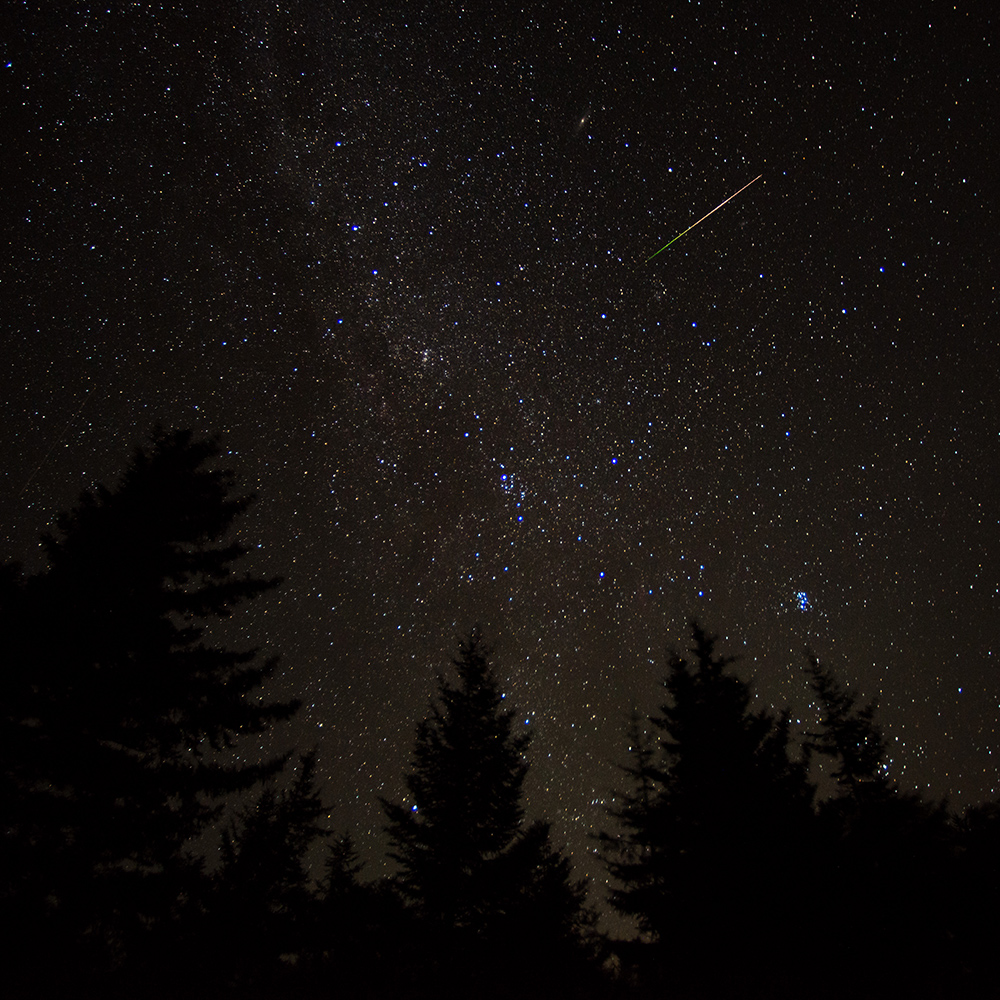
SOUTHEAST N.C. — If you are tired of being stuck inside due to the coronavirus pandemic there’s good news — tonight is the peak time to see the Lyrids Meteor Shower. So grab a blanket, go outside, and look up (just stay six feet apart from other star gazers)
“A new Moon this year will make way for good viewing of the Lyrids, leaving the sky dark. While rates of Lyrids per hour can be low, they are also known to produce bright fireballs, and this year we are expecting rates of up to 15 meteors per hour,” according to NASA.
Tonight’s forecast is calling for mostly clear skies so viewing the meteor shower should be possible in the Cape Fear region.
“The Lyrids are best viewed in the Northern Hemisphere during the dark hours (after moonset and before dawn). Find an area well away from city or street lights. Come prepared with a sleeping bag, blanket or lawn chair. Lie flat on your back with your feet facing east and look up, taking in as much of the sky as possible. After about 30 minutes in the dark, your eyes will adapt and you will begin to see meteors. Be patient—the show will last until dawn, so you have plenty of time to catch a glimpse,” NASA suggests.
The Lyrids are actually pieces of space debris that originated from the comet G1 Thatcher and are one of the oldest meteor showers known, first being observed more than 2,700 years ago.
“The Lyrids, which peak during late April, are one of the oldest known meteor showers: Lyrids have been observed for 2,700 years. (The first recorded sighting of a Lyrid meteor shower goes back to 687 BC by the Chinese),” according to NASA.
“Their radiant, or point in the sky from which they appear and where they get their name, is in the constellation Lyra. The Lyrids appear to come from the vicinity of one of the brightest stars in the night sky – Vega. Vega is one of the easiest stars to spot, even in light-polluted areas.”
The timing of the meteor shower is fortuitous, peaking on Earth Day and during International Dark Sky Week.
“This will actually be a good year for the Lyrids and it is exciting the peak is on Earth Day and in the middle of International Dark Sky Week,” according to Bill Cooke, lead of NASA’s Meteoroid Environment Office at NASA’s Marshall Space Flight Center. “While the Lyrids aren’t as prolific as other meteor showers like the Perseids or Geminids, they usually do produce some bright fireballs, and since the Moon will be nearly invisible April 22, rates should be about as good as it gets for this shower.”
