


PENDER COUNTY — For over 25 years Pender County residents have been paying advance tap fees for water services they never received. The county is now looking at a refund process, as it still doesn’t have a plan to provide water access.
As of June 2026, 1,552 individuals have paid an advance water tap fee, which reserved a connection in the county when water lines are made available. Many of the residents who paid the fees are currently using wells for water access. Pender County Utilities only serve approximately 11,000 of the county’s 72,000 residents.
A five-phase water plan was introduced more than two decades ago to bring county water infrastructure to rural area residents. The county said the reason there is no connection, still, is because of lack of funding to lay multiple lines. A spokesperson for Pender County did not respond to Port City Daily’s questions regarding each phase of the plan and its progress.
READ MORE: ‘Industry is winning’: State budget funds PFAS research, but some balk at lack of regulatory teeth
However, the tap fees began at $100 per tap in the 1990s and have had a flat rate increase of 19%. The money collected was deposited into the county’s utility enterprise fund.
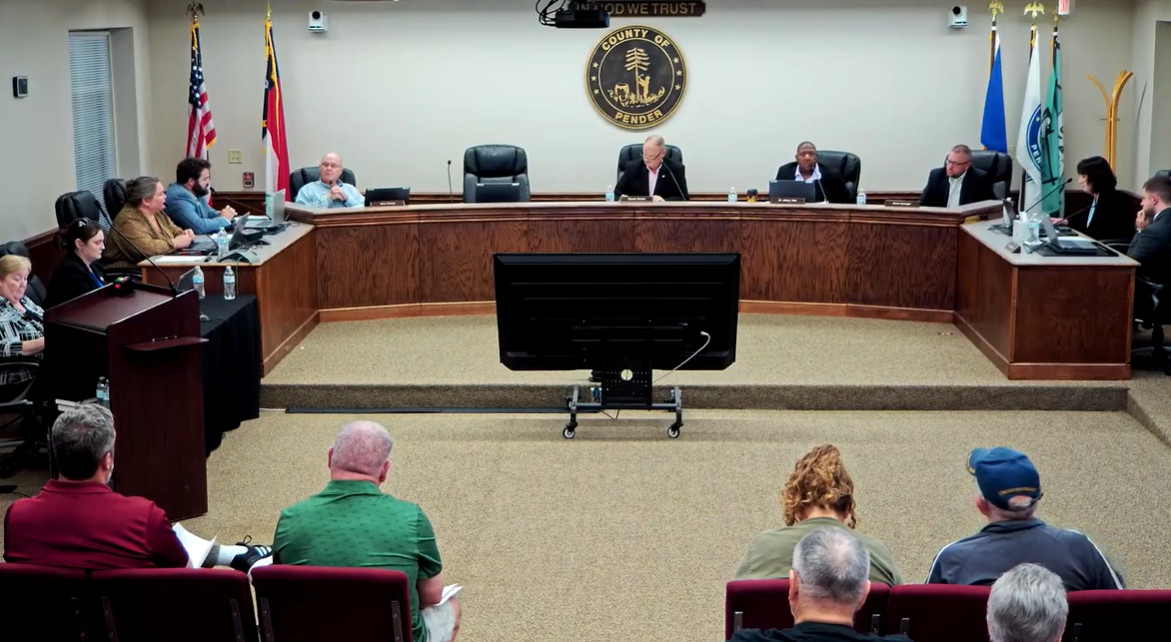
The board’s attorney, Katie Barber-Jones, shared during Monday’s commissioner meeting that each of these advance fee agreements were essentially individual residential contracts.
“The county did not commit to a timeline for providing water in these agreements,” Barber-Jones said. “As you can tell from the agreements, they’re applying, they’re requesting water service. It’s clear that the underlying intent of those agreements was for the county to provide water.”
She added, because the county did not commit to a timeline, the county is technically not in breach of the contracts.
The county has been issuing refunds to residents who have requested them since. However, Barber-Jones recommended the board agree to a uniform refund policy rather than allow at-will reimbursements done on a case-by-case basis. Doing so would allow county staff to determine how much it will cost and provide a formal written policy.
Barber-Jones presented the board with three possible policy options — automatically refund all 1,552 residents who paid into the water fund, continue refunding upon request without interest, or notify all property owners of what they have paid into, what amount they gave and that a refund is available.
Commissioners seemed inclined to choose option three, as recommended by Barber-Jones, County Manager Colby Sawyer and Director of Utilities James Proctor.
If the commissioners chose the third option, Barber-Jones added a recommendation the county include listing a possible anticipated timeline for water service.
As stressed by Barber-Jones and county commissioners, if someone decided they wanted a refund and then water service came to their area of the county, residents would have to pay the current price. The current tap fee is between $1,925 and $3,000, compared to just a few hundred dollars years ago.
Commissioner Jimmy Tate feared if someone was requesting a refund it was because they were in a time of financial need; therefore, they would not be able to afford the new tap fee when water connection becomes available.
“If they need the $100 back, Mr. Proctor, there’s a reason they need it,” Tate said, adding he would like to see language added in the proposed policy saying if water is provided within a certain timeframe after the refund, an individual can re-enter into the program at the rate they previously paid.
Tate also brought up another unfulfilled obligation in easements property individuals let the county use in return for a free or reduced tap fee in the future. Tate asked about how refunds would work for an individual who gave up an easement but then moved, meaning once water access is given they won’t be on the property to benefit from it.
Barber-Jones said those contracts would likely be repudiated, noting the “entitlement goes with the land.” Current property owners would be the ones to benefit from the tap discount.
“Been lying to these people for three-and-a half years”
While commissioners feared impacts on individuals who couldn’t afford water at full price, Commissioner Jerry Groves seemed skeptical of water coming to Pender communities any time soon. He claimed the county has been “lying” to constituents about its plan to provide water access.
“These people have thought in their minds for years that Pender County may get them water one day and there has been no plan to do that,” Groves said to Port City Daily.
Groves told Port City Daily he’s been aware of the refund problem since he joined the board three-and-a-half years ago. He brought it up for the first time in a June board meeting.
“I still feel like management wants to retain that money for themselves, and along with that, there is no movement to give these people water that have been asking for it for 20 years. There has been nothing done until I started the conversation,” Groves said.
Port City Daily asked during his tenure what Groves has done to help bring water to constituents.
“I have talked to [representative] Carson Smith, and Carson Smith advised me if the county would put together a plan. I also talked with David Rouzer’s office, and they advised me if the county would put together a plan that some money may be obtained, but there has been no movement from management to do a plan.”
Groves claims county staff is aware a plan is needed for any funding to be provided.
Burton, Tate and commissioner Brent Springer did not respond to Port City Daily’s request for an interview by press.
In Monday’s meeting, Proctor said the county can’t put down pipes for water access until a cost estimate is given so they can request funding. Proctor said it would be too expensive for the county to independently fund a water project without help from a federal- or state-level grant.
“We don’t have the funding for multiple lines to be run,” Proctor said. “We don’t have the funding for that. So we have to say, ‘OK, where are we going to, where do we want to install water? How is it going to be paid for?’ And is there enough users to use the water and to pay the expense back?”
The county did previously mock up a cost estimate to install water lines from Malpass Corner to the Sampson County line.
The proposal would bring water access to 38 households but would cost approximately $19.4 million for 14.5 miles of pipe. Proctor noted the county’s current water rate of $7.50 per 1,000 gallons — with an average household using 3,000 gallons a month — 38 families would generate $29,700 per year in water revenue, nowhere near the $19.4 million needed to pay for the project.
Cheryl Highsmith — a lifelong Pender County resident and long-time advocate for water access in the community — spoke at the same June meeting where Groves addressed the payouts.
Highsmith frequently attends county meetings and speaks during the public comment period, championing clean accessible water access and pushing the county to address the needs of her community, which sits adjacent to the Sampson County line off of N.C. Highway 11.
In a conversation with Port City Daily Tuesday, she claimed under a previous county manager, David Andrews, the opportunity to apply for a grant to install water pipes had come up under then-president Joe Biden’s infrastructure bill. She claims Andrews would not apply for the funding.
“What I was told was the reason that he did not want anyone applying for that was because he was applying for funding for the new department of health, the human resource building, and he did not want them to get that confused,” Highsmith said. “It was two separate entities. So to me, that was a lame excuse.”
A representative for Pender County did not respond to Port City Daily’s request to confirm the grant was available to the county.
In terms of the advanced tap fee payments, Highsmith stressed nobody had ever come to her community to offer one to her, noting the residents of western Pender County often feel forgotten.
To Highsmith, the issue of water in Pender County goes beyond ensuring individuals get their money repaid to them in due time. It’s also about ensuring the health and wellness of the county — which lack water access is detrimentally impacting.
Many individuals where Highsmith lives — western Pender is more rural than the rest of the county — rely on wells to provide water.
“All of us have magnesium, rust, iron, some households they have bacteria in their houses,” Highsmith said in reference to well water in her area. “I mean, nobody is drinking this water. Nobody can drink it. Nobody can cook with it, and it’s not even safe to bathe in it. There are a lot of individuals in this neighborhood that have health issues. There are children. I mean, it’s all about the quality of life.”
There is also the possibility the well water could be contaminated with PFAS, industrial forever chemicals that are likely carcinogens. November 2022 testing results showed roughly a third of 188 Pender wells sampled had detectable PFAS levels with a cluster along the U.S. 17 corridor.
Highsmith added as a kidney transplant patient, her doctors told her she’ll never be able to drink her well water again.
She also referenced a comment made by Proctor during Monday night’s meeting, where he mentioned District 4 — which Highsmith resides in — voted against water connections referenda twice.
In November 2006, residents had the chance to vote for a $17.50-million water bond referendum that would be used to bring water to the area. In 2006, the Columbia-Union water and sewer district voted against the bond by 26 votes — 534 to 508. The same district voted down the measure again in 2008.
Highsmith believes this is unfair, as Proctor was referencing events that happened nearly two decades ago, when water quality was far different then what people have access to now and has worsened over time.
“You see everybody else getting everything for the exception of western Prender County,” Highsmith said. “When conversations come up, that’s the first thing that they want to revert back to, 2006 and 2008. Yes, that happened, but this is 2026 now. We do not live in a third-world country; we live in the United States of America and we all deserve clean, treated, healthy water because there are a lot of contaminants in the ground.”
She pointed to Monday’s meeting as an example of how long the residents of Pender have been fighting for water, questioning why the county would take people’s money without a clear plan on a path forward.
A county spokesperson did not respond to Port City Daily’s questions regarding total money generated by the advance tap agreements, what happened to the five-phase water plan and what the phases included. Nor did she answer what access the county has to the earliest contracts and if any grants to get the municipality water have ever been submitted.
Have tips or comments for Sophia DePhillips? Email [email protected]
At Port City Daily, we aim to keep locals informed on top-of-mind news facing the tri-county region. To support our work and help us reach more people in 2026, please, consider helping one of two ways: Subscribe here or make a one-time contribution here.
