


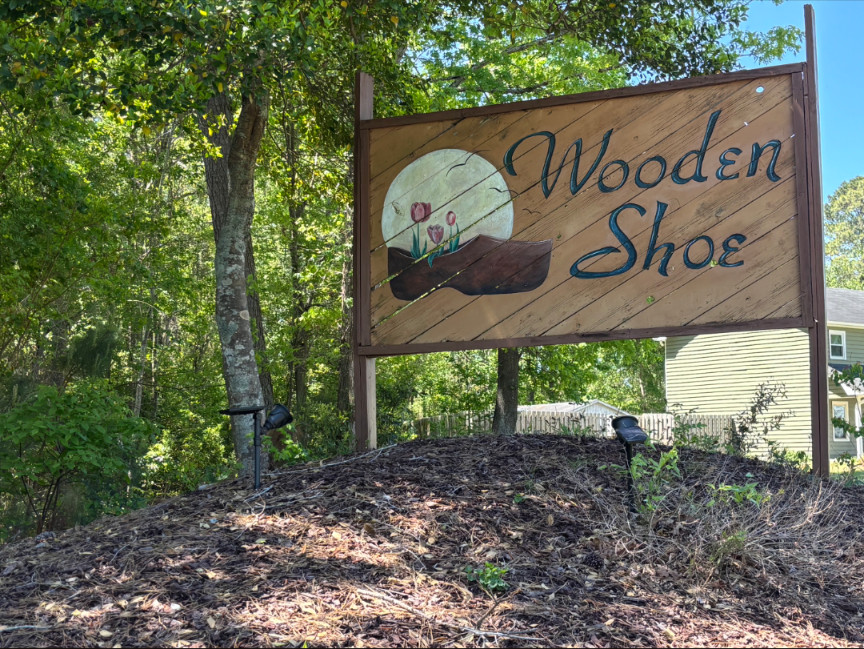
NEW HANOVER — Two separate appeals have been filed against the proposed Hilton Bluffs subdivision in Castle Hayne after it was conditionally approved by the county in March.
The appeals were filed in early April, one by attorney Grady Richardson on behalf of “Save the Hayne,” a nonprofit organization representing 39 residents from the neighboring Wooden Shoe and Marathon Colony communities. The other appeal was submitted by the Southern Environmental Law Center on behalf of seven additional Castle Hayne residents. Both appeals ask the New Hanover County Board of Adjustment to vacate the technical review committee’s March 10 conditional approval and issue a stay, effectively halting forward movement, while appeals are reviewed.
READ MORE: Hilton Bluffs poised for first 580 homes to break ground in phased build-out
ALSO: Sledge Forest developer removes unauthorized BBB seal from website following state complaint
The Board of Adjustment, which handles administrative appeals, will decide whether county staff correctly applied development rules when approving the project. If the board finds errors, it can overturn the TRC decision — or the approval could stand if it agrees with county staff’s determinations. The county indicated both appeals would be heard together, though a date has not been set.
Hilton Bluffs is allowed by-right, meaning the project must be approved if it complies with all applicable developmental rules in the county unified development ordinance and doesn’t need commissioners to vote on it. The property zoned Rural Agricultural generally allows up to one unit per acre.
However, by utilizing Performance Residential standards, Copper Builders is able to cluster the total density allowed for the 1,800-acre tract onto a much smaller footprint. Under the current plan, the 1,800 homes would be concentrated on roughly 600 acres of buildable uplands, while the remaining 1,200 acres — consisting largely of wetlands and protected forest — are used to offset the project’s intensity.
Last month, TRC gave the go-ahead for the developer to begin constructing the first 581 homes on roughly 581 acres of upland areas.
The county TRC, consisting of varied departmental staff including planning, engineering, and fire services, signed off to ensure its alignment with the technical standards of the UDO. In other words, they had to make sure the project would have safe roadways, stormwater runoff was handled correctly, the project complied with CAMA and met environmental conditions, including preserving 1,200 acres of the site through a conservation easement before full build-out. The developer still has to secure all permitting before breaking ground.
The pending appeals argue the county’s technical review committee misapplied its standards in areas involving road connectivity, traffic safety, and environmental calculations.
Residents are not speaking on the matter per the advice of legal representation, Richardson told Port City Daily. But the appeal states several “major errors” the Save the Hayne group believes warrant a reversal by the Board of Adjustment.
“If we are successful in our efforts, as we believe we will be, none of the current configuration of the preliminary site plan should be implemented,” Richardson said.
Much of the challenge centers on the developer’s intent to use existing neighborhood roads for subdivision access. Both appeals argue the TRC erred by approving a plan that routes traffic from 581 homes through private easements in the Marathon Colony and Wooden Shoe communities.
The roads in question — Marathon Avenue and Indian Corn Trail — are two-lane local roads residents say cannot handle the projected increase in traffic. According to the project’s traffic impact analysis, the first phase of Hilton Bluffs is projected to add about 990 daily trips, while the full 1,800-unit build-out is estimated to generate 14,795 trips.
The appeals also note the TIA approved for the project was actually calculated based on the developer’s initial 4,000-unit concept. Neighbors argue this suggests the potential for much higher volumes than the current 1,800-home application indicates.
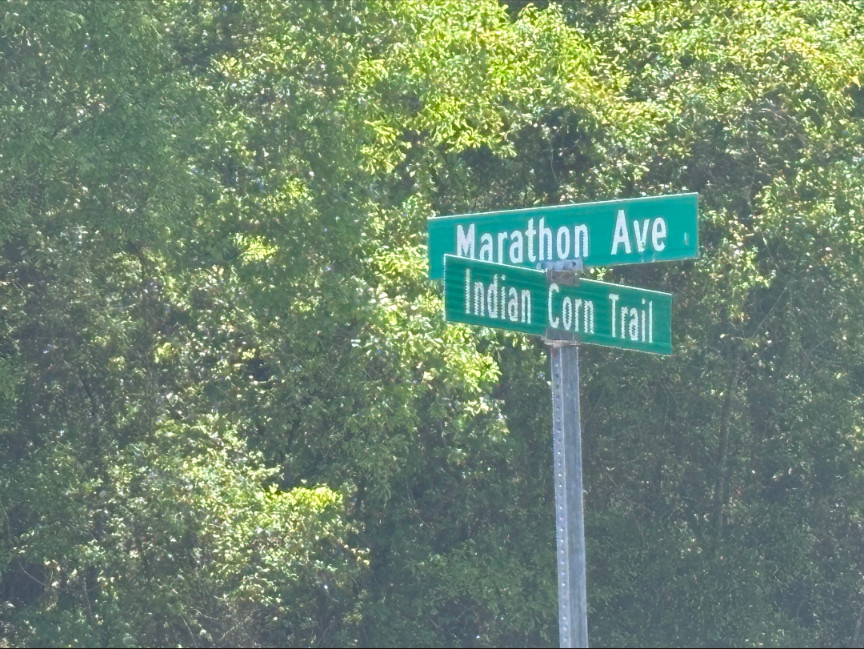
Marathon Avenue serves as the primary gateway into the Marathon Colony subdivision, eventually turning into Indian Corn Trail. Under the approved plan, both would serve as access points to Hilton Bluffs.
Additionally, the TRC granted approval based on site plans depicting Marathon Avenue as a 60-foot public road. However, the Save the Hayne appeal argues the road is actually a 25-foot wide private easement. Under the UDO, major subdivisions like Hilton Bluffs are required to be served by roads meeting specific standards, including a minimum right-of-way width of 60 feet for public roads to accommodate required drainage, utility easements, and emergency vehicle access.
The SELC appeal mirrors similar concerns and alleges the county failed to properly evaluate the safety of neighborhood streets like Indian Corn Trail and Tall Oaks Drive before granting approval. The roads, which will help connect to the development, feature 10 miles-per-hour advisory speeds and sharp turns residents say make them ill-suited for increased traffic volumes.
Save the Hayne’s filing contends the TRC violated the county’s UDO by failing to require Copper Builders secure “adequate connectivity” to public state-maintained roads, rather than relying on infrastructure never intended for through-traffic. Residents claim the added traffic would effectively turn residential drives into public access routes without property owners’ consent.
Beyond traffic, both appeals argue the TRC failed to protect the ecological integrity of the site, referring to the upland forest, wetlands and sensitive habitat areas. They contend the approved plan would fragment forested areas and alter natural drainage systems, leading to permanent degradation of the habitat.
Richardson’s filing asserts clearing the 581-acre upland area — where initial homes will be built — would cause “irreparable harm” to the local ecosystem through the removal of trees and substantial land alteration. According to a tree removal permit filed by Copper Builders on March 30, a total of 34,437 caliper inches or 1,629 significant trees are proposed to be removed.
In total, 122,660 trees are expected to be cut down throughout all phases of the project. To counter their removal, 12,698 trees are proposed to be retained. County rules require developers to offset the loss of canopy, so Copper Builders is required to provide mitigation for 12,246 trees. This means the developer must either replant that specific number of new trees on the property or pay a fee to the county’s tree fund to be used for planting elsewhere in New Hanover County.
No specimen trees — large, mature trees that meet size thresholds under the county’s UDO, such as large live oaks — will be removed.
SELC adds the county wasn’t calculating density correctly because a portion of Sledge Forest is designated by the state as an Exceptional Significant Natural Heritage Area — environmentally sensitive land that must be largely preserved under local development rules. Under the UDO, land with this designation must be 90% preserved, limiting development to just 10% of that acreage.
Copper Builders proposes preserving 1,200 acres of the 1,800-acre site, though the developer must secure an approved conservation arrangement to make the protection legally binding. An agreement with nonprofit Unique Places to Save fell through in fall 2025 after the group failed to secure a state grant to purchase the protected acreage. No new conservation partner has been secured yet, though Copper Builders President Wade Miller has indicated they are working to identify one.
The Southern Environmental Law Center argues the undevelopable land was still counted toward density calculations, allowing 1,800 homes to be concentrated on roughly 600 acres of buildable land. SELC’s central claim is the calculation is incorrect. The group states the “Exceptional Significant Natural Heritage Area” designation requires 90% of that land to remain undisturbed, meaning it should not have been fully counted when determining how many homes are allowed on the site.
The group maintains the 90% preservation rule makes that land legally “unbuildable,” meaning it should have been subtracted from the total acreage to determine the total amount of developable land before any homes were approved. By using the gross 1,800-acre figure — which includes undevelopable wetlands — to justify the unit count, the SELC contends the county effectively granted a “density bonus” that exceeds the UDO’s limits for rural districts.
The SELC appeal further maintains the error has environmental consequences. Because the project is so dense, the current site plan places infrastructure in close proximity to the forest. Thus SELC states it creates “edge effects” — such as light pollution, noise, and runoff — that will degrade the interior of the habitat even if the trees remain standing.
Miller told Port City Daily the company has reviewed the appeals filed against Hilton Bluffs. He states the plan reflects years of engagement with county staff, neighboring property owners and conservation groups, and believes the project balances development with preservation.
In addition to conserving 1,200 of the 1,809 acres on the site, Miller said he has plans for additional land to be permanently protected in the future. Miller also noted the project has been reduced from an initial 4,000-home concept to 1,800 homes built in six phases, and said all development will be on previously harvested timberland rather than old-growth forest.
Miller highlighted planned infrastructure improvements, including public water and sewer service and upgrades to nearby roads, such as additional turn lanes added to Castle Hayne Road and multiple signalized intersections.
He said the company is confident in the county’s approval, adding that Copper Builders will participate fully in the Board of Adjustment hearing.
“While some concerns may be sincere, for others, this is not about saving the forest — it is about attempting to stop the lawful development of private land,” Miller stated about the appeals. “We are confident the approval reflects a careful and correct application of the county’s ordinances.”
Ed note: This article was updated after press to include more information on the trees proposed for removal.
Have tips or suggestions for Charlie Fossen? Email [email protected]
At Port City Daily, we aim to keep locals informed on top-of-mind news facing the tri-county region. To support our work and help us reach more people in 2026, please, consider helping one of two ways: Subscribe here or make a one-time contribution here.
We appreciate your ongoing support.
