


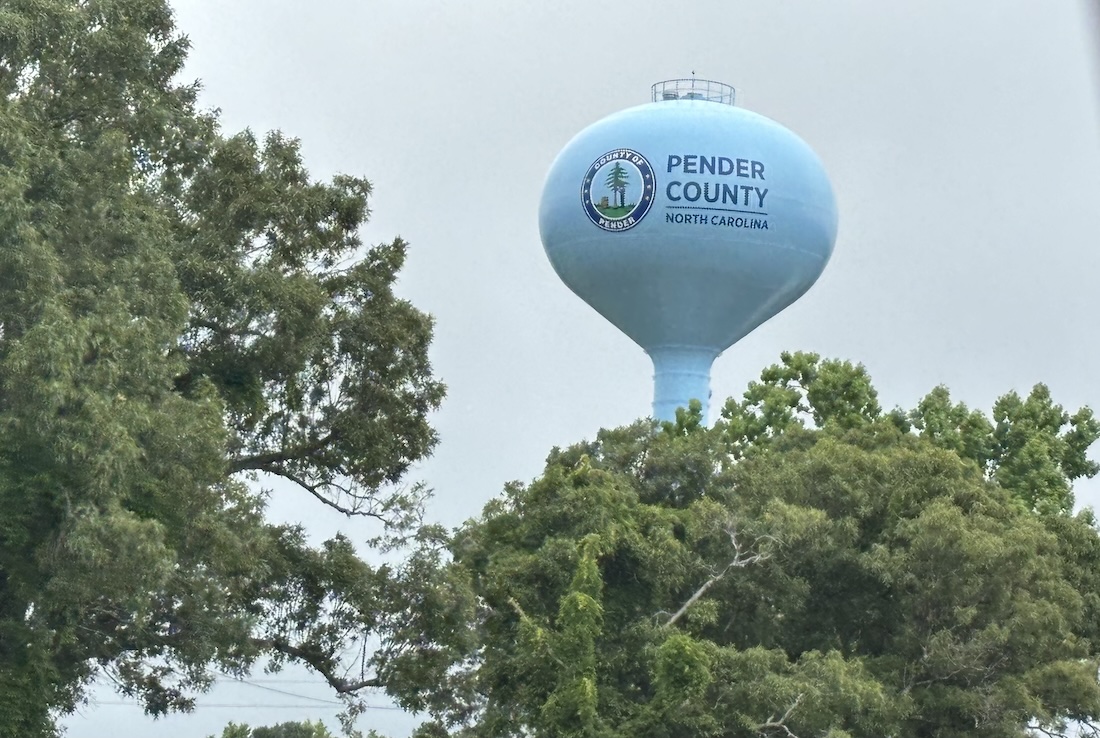
PENDER COUNTY — Uncertainty and a lack of clear answers now surround Pender County’s controversial 2026 property revaluation after commissioners abruptly suspended the use of newly aggregated data, leaving the county — and its municipalities — in limbo during the height of budget season. Local governments rely on updated property values countywide to calculate tax rates for annual budgets, so the pause has thrown a wrench into their ability to finalize spending plans.
Faced with public criticism over steep property value increases and potential data inconsistencies, Pender County commissioners voted unanimously on April 7 to halt the county’s 2026 revaluation just days after new property value notices were mailed. Multiple residents have complained of an increase that doubled, tripled, and even quadrupled since the last 2019 revaluation. Commissioners want to audit the results from Vincent Valuations, which conducted the revals for $2.3-million taxpayer dollars, to determine whether the current rates reflect fair market value.
READ MORE: ‘Man that is high’: Pender property values increase 105% to 110% since last reval
ALSO: Amid tax impact concerns, Pender commissioners certify revaluation standards
In addition to the board pausing the newly issued assessments and using 2025 property tax values for its own upcoming budget cycle, commissioners also voted unanimously to hire an independent audit firm, not yet decided, to review the 2026 reappraisal data.
Port City Daily attempted to reach Vincent Valuations, which has worked with multiple North Carolina counties on revaluation cycles, including Alamance, Beaufort, and Watauga. No one from the company responded by press. In a fast-growing county like Pender, the market rates have escalated vastly, Ryan Vincent of Vincent Valuations told commissioners last month at their budget workshop — especially due to the Covid-19 boom and more developments built since 2019.
Commissioners took up the revaluation on Tuesday after almost 40 residents spoke in opposition for two hours during public comment. According to the county, 479 property owners have already filed formal appeals about their property values increasing; this was less than one week after the new notices were mailed.
Concerns included a lack of consistency in property assessments and broader questions about how measurements and property characteristics were recorded. In practice, appraisal firms — like Vincent Valuations — assess properties using exterior inspections and historical housing market data, rather than entering homes.
Sharon Mathis, a retiree living in Rocky Point, told commissioners her 1,000 square-foot, single-wide mobile home has had no major improvements since 2019, yet has a $171,000 improvement value.
“Who in the world’s coming up with this and what are they comparing it to? Because I’m clueless and it’s making my head spin,” she said, noting her home’s new value is $193,000.
According to property records, the same home was $32,887 last year, which would make for a 486% increase. On average, property values increased countywide between 105% and 110%, with some areas seeing sharper spikes — including Watha (up to 180%-185%), Atkinson (140%-145%), and Surf City (116%-121%).
“We’ve got a lot of figures that don’t add up,” Commissioner Jerry Groves stated at the meeting. “There’s enough inconsistencies, in my opinion, that it needs to be redone — that’s what needs to be done.”
Chair Randy Burton said the impact of pausing the revaluation could extend beyond the current board. Vincent Valuations spent roughly two years preparing current assessments and it is uncertain if a new firm had to redo the work that it could be completed by the Jan. 1, 2027 legal deadline, as counties are required to conduct a revaluation at least once every eight years.
The delay could leave the process open for the next board — four commissioners will be voted on in November’s general election.
“What happens after December this year is…” Burton paused. “God help the next board.”
Pender County does its revaluation every seven years, though in 2023 a former board tried to change it to four to avoid “sticker shock” and keep the property values in line with current market rates. The current board voted to switch it back to a seven-year revaluation schedule last year after resident complaints; it is slated to begin again in 2030.
The board’s decision this week to pause and reset the 2026 cycle to 2027 may still keep the county within its statutory allowance of eight years, if cutting it close.
Under North Carolina law, a county must set property values based on what homes would sell for on the open market at the time of the revaluation. So, in Pender County the 2026 values were set to begin as of Jan. 1 this year.
If the audit the commissioners ordered show Vincent Valuations’ numbers are accurate to the market, the 2026 reval could be used still. But if the housing market changes significantly during the pause, those values may no longer reflect what homes are actually selling for, forcing the county to either update the data or start over with a new reval.
It is unusual for a revaluation to be halted after notices have already been mailed. There is little precedent in North Carolina for a county pausing utilization of the numbers due to concerns over accuracy. Most counties instead address errors through assessment corrections and appeals while the revaluation proceeds.
Similar delays have occurred in other North Carolina counties during periods of economic volatility. During the 2008–2009 recession, Person, Stanly, and Rockingham counties postponed revaluations amid declining property markets. Those decisions to suspend reappraisals were tied to broader economic conditions rather than data concerns and resulted in outdated property values and larger adjustments when revaluations were eventually completed.
Port City Daily sent numerous questions to county staff and reached out to all commissioners multiple times to understand the effects of the decision. Few details were given, such as what the plan is following an independent audit — whether the goal is to correct issues in existing data, update assessments with additional market information, or scrap the initial work entirely and start the revaluation over with a new firm. A full restart of the process raises issues about timing, as the work isn’t completed quickly and the 2027 legal deadline looms.
Most questions were answered with: “The County continues to work through the process and determine next steps.”
A Pender County spokesperson added the county manager’s office is also in contact with the North Carolina Department of Revenue and the UNC School of Government.
The county said it was holding a special meeting on Monday, April 13, at 6 p.m. to “discuss and take action on the 2026 reappraisals.”
After press, Commissioner Brad George posted on social media he had little insight and limited advanced materials that were going to be presented Monday. However, he said the department of revenue and school of government indicated some actions taken by the board could be misaligned with North Carolina General Statutes.
“Because of the seriousness of that, I have specifically requested that a representative from the North Carolina Department of Revenue be present at the meeting. My goal is to ensure that commissioners receive clear, direct information from the source, rather than relying solely on interpretations from county staff or legal counsel,” he wrote.
County officials also did not answer whether any provisions for recouping spent funds exist in the contract with Vincent Valuations — or if they were prepared to pay for a new revaluation altogether.
Tate suggested at this week’s commissioners’ meeting the board could find a way to cover the costs when asked by Brent Springer how the county accounts for the $2.3 million it forked out already. In addition, the county spent $31,849 to mail the 54,405 property assessment notices to residents.
“We can cut spending money on this board for what we want to — and let’s find it tonight,” Tate said of the budget.
The decision to halt the revaluation data provides short-term relief for property owners who will be taxed for another year based on older — and lower — values, but complicates budget planning for local governments, which rely on the county property values to set their own tax rate. Municipalities’ largest revenue stream often comes from property taxes; they are determined by taking the tax rate and multiplying it by the property value.
In Burgaw, town officials said the shift is forcing them to reevaluate revenue projections and spending priorities.
“This change was unexpected and we had already put significant time into developing our budget priorities,” Burgaw Town Manager James Gantt said. “Now we’re having to revisit that work while we wait on clearer direction from the county.”
Gantt said it remains too early to determine the full impact on the town and added the lack of clarity creates logistical challenges, particularly in continuing budget planning and communicating with residents.
In Surf City, during an April 8 emergency meeting called in response to the county’s pause, the town council unanimously voted to rescind its receipt and publication of the draft budget presented April 7. Council cited uncertainty around property values and the inability to calculate a reliable revenue-neutral tax rate due to the pending revaluation.
A revenue-neutral tax rate means the government collects roughly the same total revenue as the previous year, even when property values increase. Town Manager Kyle Breuer said the revaluation itself does not directly determine how much money the town collects; council could set a higher tax rate to bring in more revenue with the same property values.
“The actions of the county do not have a major impact on the town’s current budget drafting process other than our statutory requirement to determine a revenue-neutral tax rate,” Breuer said.
By law during a revaluation year, North Carolina requires government entities to publish the rev-neutral rate for taxpayers to see, even if elected leaders don’t vote on its use.
Breuer suggested during Surf City’s budget presentation to reduce the tax rate by roughly 22 cents per $100 of assessed value, bringing it down from 53 cents to around 30 cents.
Additionally, Surf City faces an added layer of complexity as it spans both Pender and Onslow counties, which are operating on different revaluation timelines. Unlike Pender, Onslow County conducts property revaluations on a four-year cycle and is still moving forward with its 2026 data set. Breuer said the town will need Pender’s property values to calculate the revenue-neutral rate.
In Pender County, the current tax rate is 73.75 cents per $100 of assessed value; after the 2026 reval numbers were discussed at the commissioners budget meeting in March, leaders expressed a desire to reach revenue-neutral.
Chair Burton spoke to the packed gallery during the April 7 commissioners’ meeting.
“I never vote to raise your taxes,” he said. “This county does not have a revenue problem. We have a spending problem.”
As Pender County struggles with its own revaluations, a broader statewide concern has risen over escalating property taxes. Senate Leader Phil Berger (R-Rockingham) announced in February he intends to file legislation proposing a 12-month moratorium on property tax revaluation changes during the General Assembly’s short session, which begins on April 21. Berger’s proposal would freeze assessments at current levels for a year while a 10-member Senate working group studies reforms, such as placing limits on how much property tax revenue local governments can collect.
“North Carolinians are shouldering the burden of massive increases in local budgets,” Berger said in a statement. “It doesn’t matter to our citizens if a tax is paid to the state or a local government; it’s their money coming out of their pockets. A moratorium will be the first step in making much-needed reforms to property taxes in our state.”
If passed, this moratorium would mandate county property revaluations be delayed by one year across North Carolina.
Until any action is taken statewide or in Pender County, residents affected by the local 2026 revaluation in Pender should continue filing appeals by the May 15 deadline.
Have tips or suggestions for Charlie Fossen? Email [email protected]
At Port City Daily, we aim to keep locals informed on top-of-mind news facing the tri-county region. To support our work and help us reach more people in 2026, please, consider helping one of two ways: Subscribe here or make a one-time contribution here.
We appreciate your ongoing support.
