


WRIGHTSVILLE BEACH — At its last budget meeting, a local island’s town manager suggested its brand new parking committee be run informally. Now, the town is switching gears, instead proposing the committee be subject to open meetings laws.
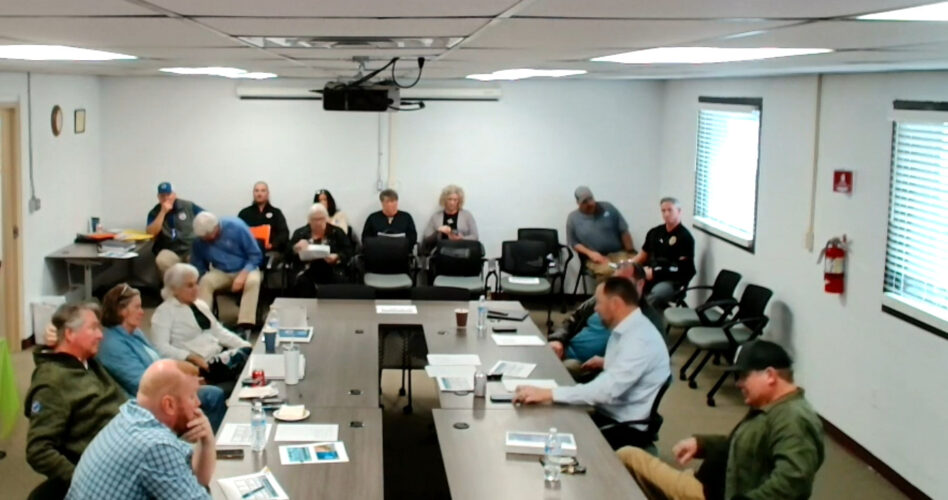
At Monday’s budget work session, Town Manager Haynes Brigman brought back to the table for discussion the Wrightsville Beach parking committee. Wrightsville Beach’s aldermen voted unanimously at its February meeting to create one, to bring data-driven, research-based solutions and recommendations to the board. In previous conversations, the aldermen and town manager walked away with the notion the group would be informal and appointed by staff. Now, the aldermen will be voting to appoint members.
READ MORE: In its infancy, WB parking committee to be ‘informally’ appointed, managed
A formal committee also means aldermen will lay out what the committee needs to accomplish and it would be required to keep minutes. Minutes are only required for public bodies, like formally appointed boards and committees, under one of North Carolina’s sunshine laws, G.S. § 143-318.9.
An informal committee would mean minutes don’t have to be kept, though Brigman said in February committee meetings would be announced. Technically that also would not be required by law of an informal committee; the public would be welcome to attend.
“This is an important issue, and I think minutes need to be kept and people need to be aware,” Mayor Pro Tem Jeff DeGroote brought up at the March 2 meeting. “It’s better transparency.”
DeGroote also brought it up at the February budget session, noting an informal committee would mean less accessibility due to expectations being more lax.
Alderman Zeke Partin agreed with DeGroote on Monday: “We just wanna know who recommended these changes and if everybody agrees or not. When you have an informal suggestion, it’s not always taken very [well].”
According to town ordinance, aldermen are not required to sit on board-appointed committees, though Wrightsville Beach’s town clerk noted this may just be “something the Board prefers to do.”
Alderman Todd Schoen expressed at the budget session he was originally in favor of the committee being formal. He was one of two aldermen, including Alderman Margaret Baggett, suggested as liaisons to an informal committee in February..
“I originally wanted to be part of it,” Schoen said at the budget session. “I thought that a formal committee going forward was the way to go. I kind of got the feeling that that wasn’t as popular.”
No detailed explanation for the change from informal to formal was provided at the meeting and neither the aldermen nor the town responded to Port City Daily’s request for comment regarding the decision.
Port City Daily previously reported staff would parse through volunteers and choose members board members, with advice and input from the aldermen, as discussed by the group in February. Though at this week’s budget session, Brigman called the article “premature” and said no decision had been made about a formality.
“The benefit of having it more informal is it allows you to flesh things out without worrying about people taking something and running with it,” he said. “That’s not the intention or accurate.”
Port City Daily reached out to the town’s communications manager last Thursday before publication to inquire into how many people will sit on the committee and if it would include aldermen, but was told plans are not yet finalized — also included in the Feb. 28 piece.
Port City Daily also reached out to Schoen and Mayor Ken Dull this week to ask if the town received pushback about the parking committee being informal since the article went to press; they referred to town staff for input.
Aldermen and town staff reiterated at this week’s work session their desire to still include residents and business owners on the committee.
“There’s business owners that brought up issues that have to do with parking and traffic that I hadn’t thought of because it doesn’t affect my daily existence here,” Brigman said at the meeting.
The aldermen and Brigman also discussed for November to be the month the committee would bring recommendations back about the town’s parking program. This likely will include recommendations about parking space availability and rates, the latter of which aldermen have voted up and down over the years. For the upcoming season, they voted to lower all-day parking rates by $5, while hourly rates remained unchanged ($5 an hour for non-premium spots and $6 an hour for premium).
The suggestions the committee will present will arrive right at the end of the paid parking season, March 1 through Oct. 31, and early enough for the aldermen to consider budget implications resulting from recommendations.
Wrightsville Beach’s parking program makes up about a third of the town’s total revenue for the 2025-2026 fiscal year and is one of four main revenue streams, alongside property tax, sales tax, and room occupancy tax. Wrightsville Beach is expected to make about $7.2 million in parking revenue by this fiscal year’s end, out of nearly $21 million in projected general revenue — both are expected to exceed original estimated amounts.
In the new draft of the budget for the 2026-2027 fiscal year, while not yet finalized, the parking program is projected to bring in $6.95 million. The total general fund revenue currently projected to come into the town for 2026-2027 is $19,221,100; the town opted for more conservative estimates as it has in the past.
At the February budget work session, Brigman noted the town was reaching its revenue limit, unable to increase it yearly without making changes to either the town’s property taxes or the parking program. He reiterated this at the town’s March budget work session.
“There will come a time in the not-so-distant future that the town will have to evaluate how to generate additional revenue if we want to keep operating the way that we do,” Brigman said.
It’s unclear when the parking committee will debut, though the hope is by spring.
Mayor Ken Dull noted on March 2 that after years of the parking program being operational, he and the other aldermen realized the often controversial parking topic needed to be fleshed out by people other than just elected officials.
“The further we got down a lot of these rabbit holes,” he said, “the more we realized we didn’t know.”
Wrightsville Beach received permission from the state legislature in 1998 to use funds from its paid program for needs other than parking. It was the first coastal town in southeastern North Carolina to do so, as most municipalities must use parking revenue for parking-related costs. However, other beach towns have followed in its footsteps since.
The parking committee will likely be a yearslong board, functioning similarly to the parks and recreation committee.
The aldermen and Brigman noted the committee would be brought up at April’s regular aldermen meeting, to give enough time for the town’s communications manager, Bailey Hartsell, to advertise for recruitment. Hartsell could not confirm when the recruitment notice will be posted to the town’s website.
Have tips or suggestions for Emily Sawaked? Email [email protected]
At Port City Daily, we aim to keep locals informed on top-of-mind news facing the tri-county region. To support our work and help us reach more people in 2026, please, consider helping one of two ways: Subscribehere or make a one-time contribution here.
We appreciate your ongoing support.
