


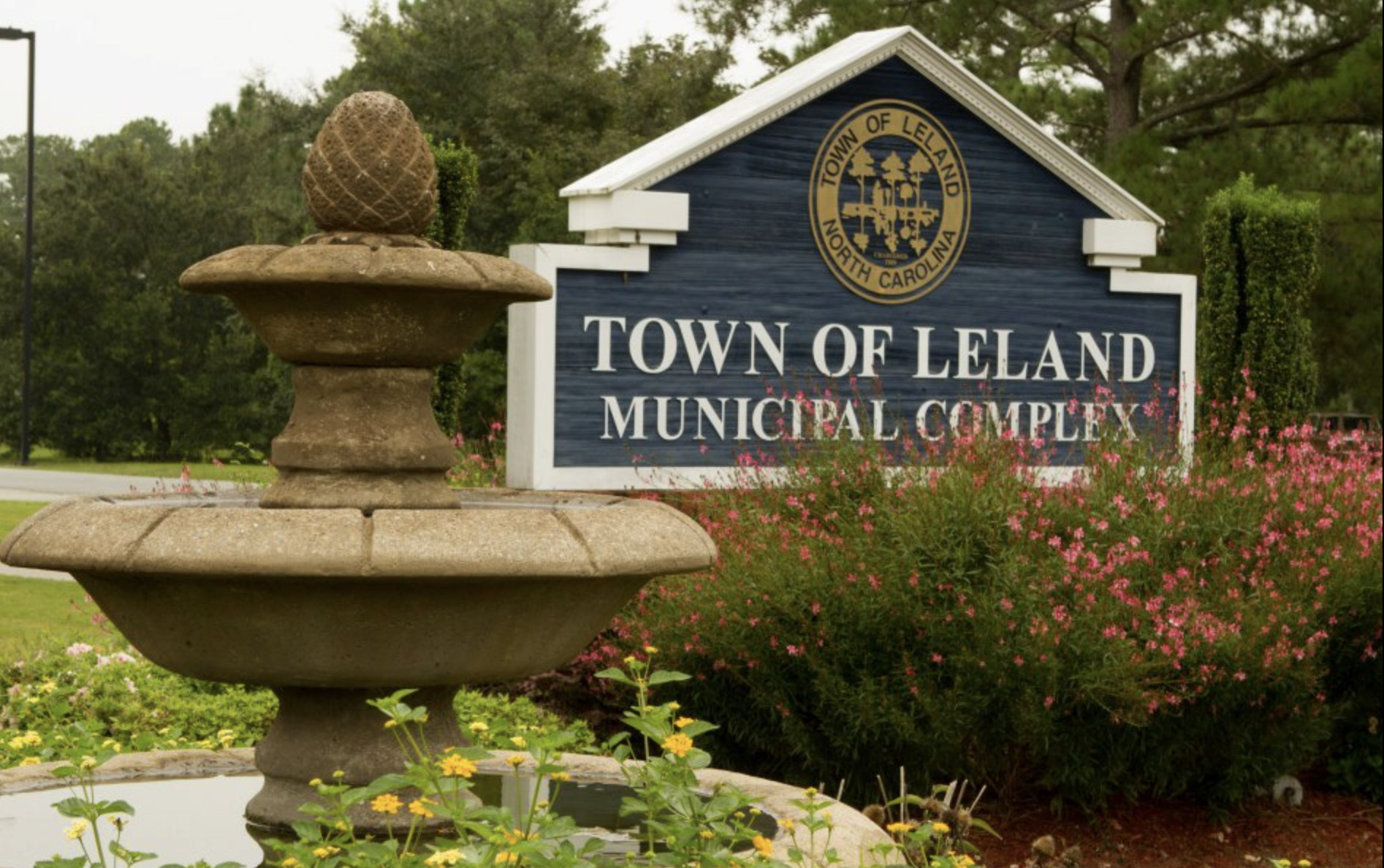
LELAND — As Leland continues to grow at one of the fastest rates in North Carolina, town officials are beginning the process of creating a unified development ordinance to replace decades of fragmented zoning and development rules. Ultimately, the goal is to streamline development regulations to give the town tools to manage growth.
The Leland Planning Board discussed the framework for the rewrite on Jan. 27, outlining a roughly year-long timeline and a process involving town staff, elected officials, and public stakeholders before a final ordinance is brought forward to the town council for adoption. No changes were proposed or approved at the meeting.
READ MORE: One path cleared for Novant Health hospital in 955-acre mixed-use project in Leland
ALSO: Growing Brunswick County region to get DMV office in new year
Unlike many municipalities, Leland does not currently operate under a single unified development ordinance — a rulebook governing zoning, land use, and development standards. In cities like Wilmington, for example, a UDO brings zoning districts, permitted uses, subdivision rules, development standards, and enforcement into a single code guiding how land can be developed and regulated.
Instead, Leland’s development rules are scattered across multiple chapters of its municipal code, including zoning, subdivisions, building regulations, stormwater, streets, and flood provisions.
Planning and Inspections Director Benjamin Andrea told the planning board earlier this week that Leland’s development regulations date back decades, first adopted in 1992. But he compared the town’s ordinance to an aging vehicle still in operation, starting to show signs of strain.
“When this thing rolled off a lot, man, it was shiny, it was reliable, pretty safe for the time, relatively simple, it got us where we needed to be,” Andrea said. “It’s been patched together … still getting us where we need to go, but probably not as efficiently as we would like.”
Staff proposed this January to begin consolidating Leland’s development regulations into a single UDO. Andrea explained the town’s current code contains conflicting provisions and regulatory gaps that have built up over time.
As an example, he pointed to residential density rules. The town code jumps from lower-density residential districts allowing roughly six units per acre, directly to multi-family zoning permitting up to 15 units per acre, leaving little middle ground between the two.
While the rewrite is largely structural, town officials said the UDO could also update multiple sections of the town code. As Andrea told Port City Daily Thursday, the UDO will “consolidate, organize, and update the zoning, subdivision, flood damage prevention, minimum housing, and FlexCode regulations” currently spread across the town’s ordinances.
He added a UDO is driven by the town’s long-term planning documents, including the Leland 2045 Comprehensive Plan and the town’s 2030 strategic plan. Both call for modernizing development regulations to address growth, infrastructure, and environmental risks.
The town’s overall goals for the rewrite include:
- Improving organization and clarity
- Making the code easier to understand
- Removing conflicts between regulations
- Filling gaps in zoning standards
- Updating development requirements
No changes to Leland’s zoning map are proposed as part of the process, though new zoning districts could be introduced and later requested by property owners through rezonings.
The rewrite is expected to primarily affect future development, though some changes could apply to existing neighborhoods.
“There will be discussions about changing regulations that could offer more flexibility for things like accessory dwelling units, accessory structures, and structure setbacks in existing neighborhoods,” Andrea told PCD.
He also clarified the town’s stormwater ordinance is not included in the UDO project. Separate from stormwater, flood damage prevention standards — which regulate where and how development can occur in flood-prone areas — are within the scope of the rewrite along with rules governing open space, buffers, and tree planting requirements.
Flooding has been a growing concern among Leland residents since Potential Tropical Cyclone 8 in 2024, which inundated neighborhoods and roads across the town and county. Last year, town council proposed updates to stormwater regulations intended to tighten rules for development in flood zones, but the measure was tabled by council amid pushback from developers and disagreement among elected officials.
Andrea said town staff — not outside consultants — will lead the drafting process. Over the next year, staff will develop the new ordinance chapter by chapter, with each section reviewed by the planning board and town council on a monthly basis before being compiled into a final document.
The full UDO is expected to be completed and presented for adoption in early 2027, though Andrea cautioned the timeline is ambitious.
“This is a doable timeline, although it is an optimistic timeline,” he said. “There’s not a hard and fast goal for when this needs to be completed.”
Planning board members at this week’s meeting raised questions about how the process will unfold and how much input the board and public will have.
Specifically, board members asked whether the planning board and town council might hold joint meetings on draft sections and whether developers and residents would have opportunities to weigh in. Andrea said joint meetings were possible and emphasized any stakeholder — including the development community — could participate as drafts are released.
Each draft section of the ordinance will be discussed monthly at both planning board and town council meetings, providing more than 20 opportunities for public comment throughout the process as well. At this time, the town does not plan to hold additional public workshops beyond regular meetings.
The two bodies are expected to begin reviewing draft sections of the UDO in February, starting with the framework and structure of the ordinance. More robust topics — including zoning districts, permitted uses, and development standards — will be scheduled for discussion later in the year.
Have tips or suggestions for Charlie Fossen? Email [email protected]
At Port City Daily, we aim to keep locals informed on top-of-mind news facing the tri-county region. To support our work and help us reach more people in 2026, please, consider helping one of two ways: Subscribe here or make a one-time contribution here.
We appreciate your ongoing support.
