


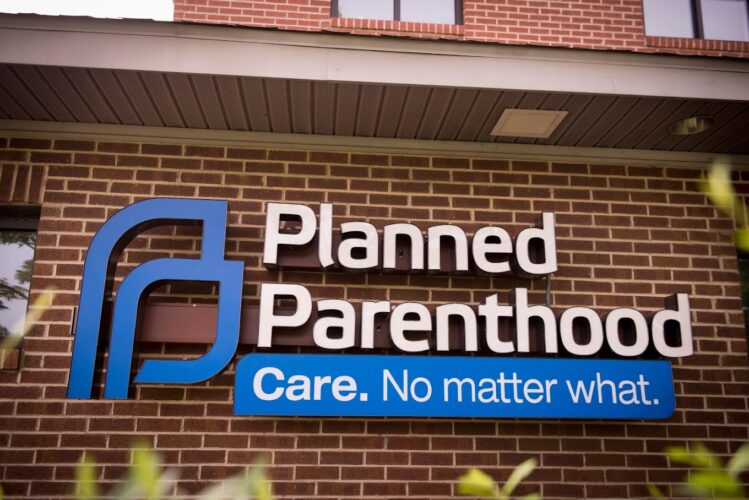
WILMINGTON — State legislators are seeking to make a federal temporary ban on Medicaid funding for Planned Parenthood permanent.
READ MORE: Providers grapple with future Medicaid cuts, face uncertainty amid government shutdown
ALSO: ‘Shutdown politics’: North Carolina AG sues Trump administration over pause in SNAP benefits
Both the North Carolina House and Senate passed individual bills in September and October to cut off Planned Parenthood patients from using Medicaid to cover any of its preventative care services. The bills have not been picked up by each other’s committee but they might be next spring, once session opens again.
“There’s been a block on Medicaid being used for abortion care on the federal level and at the state level for many years,” Jillian Riley, director of North Carolina Public Affairs for Planned Parenthood, explained. “This bill, in particular, is about preventative care. Medicaid being used for abortion has only been allowed in very rare circumstances.”
While the Trump administration already passed a spending bill that cut Planned Parenthood off from Medicaid on the federal level, that bill’s provision has a one-year expiration date and ends July 2026; though, originally, it was proposed to be 10 years but was reduced by nonpartisan Senate Parliamentarian Elizabeth MacDonough. The decision on the part of the North Carolina GOP would make the cut-off a permanent fixture in the state if the federal expiration passes.
While the North Carolina legislature moves forward to make the changes permanent, President Trump has a legal battle to fight with federal and state courts before he can propose making cuts to Planned Parenthood permanent, as lower state courts file injunctions to resume spending. Trump’s budget proposal for FY2026 includes completely cutting funding from Title X, a proponent of the federal budget and law that designated millions of dollars to Planned Parenthood, among other family planning clinics.
This would affect funding that helps with other services Planned Parenthood offers, such as birth control, STI testing, family planning appointments, cervical cancer screenings, and even primary care. An overwhelming majority of Planned Parenthood’s patients seek preventative care treatments, cancer screenings, and STI testing, according to Riley. All of these services would be stripped from Medicaid patients permanently should the state bills pass.
Planned Parenthood has nine healthcare facilities across the state and has served approximately 40,000 patients in the past year, totaling 70,000 appointments. Roughly 17.5%, or 7,000, are on Medicaid. In Wilmington the group has helped 5,000 patients — 900 of whom are Medicaid beneficiaries. None have been able to use Planned Parenthood’s services since July 2025.
Riley said should these latest rounds of bills come to pass, the burden of the cost wouldn’t land on Planned Parenthood. The group would not have to close any facilities and private funding would keep services offered. Medicaid patients, already feeling the consequences, would feel the pinch more permanently.
“What this means is that cancers will go undetected, STIs will go untreated, and people won’t be able to get the birth control they need to plan their families and their futures,” Riley said.
The House bill did not start off as a bill to cut Medicaid users from Planned Parenthood. Originally, it was a bill about educator and public employee compensation. However, state Republicans submitted a committee substitute and, according to Butler and RIley, could pass without public input.
“The fact that these [Republicans] are morphing bills within hours and expecting us to vote on them is bad governance,” Butler said.“I just don’t understand how you square the behavior with all these Christian values you espouse. Because if you want to talk about biblical references and caring for the least of these, you’re not doing it.”
The House bill was first introduced on March 20, 2025 to raise educator and public employee compensation but was amended on Oct. 22 to its current form, which included the Planned Parenthood exclusion on top of the compensation clauses. It passed the same day in a 61-47 vote.
“We had hours notice for both of these bills,” Riley said. “What that means is [legislators] weren’t interested in hearing from North Carolinians. They certainly weren’t interested in hearing from medical providers and healthcare professionals, or from patients on Medicaid, to share their feedback, their stories, or their expertise.”
New Hanover and Brunswick county representatives Ted Davis [R-20], Rep. Carson Smith [R-16], Rep. Frank Iler [R-17], and Rep. Charles Miller [R-19] voted to pass it. Port City Daily reached out to Davis and Miller but did not receive a response by press.
The bill sowed division amongst the Democrats, according to Butler.
“You’d get every Democrat saying our teachers and state employees need to see these [pay] increases,” Butler said. “So we’ll vote for that, of course. But then you put a Planned Parenthood exclusion anywhere near that and it divides us. We can’t get consensus.”
Exactly a month before the House passed its bill, the Senate passed its own bill, 28-20 in favor. Like the House, the Senate bill started off for educator and public employee compensation on Feb. 25, 2025, but was amended on Sept. 22 to include a ban on Planned Parenthood’s involvement with Medicaid. It passed the same day, with Sen. Michael Lee [R-7] and Sen. Bill Rabon [R-8] voting in favor. Pender County Sen. Brent Jackson [R-9] was absent.
Both the House and Senate passing identical bills is not uncommon. Known as “companion bills,” it’s a strategic move by legislators to expedite and streamline the legislative process. This could also mean increased likelihood for success.
According to Lee, though, the House passed its own Planned Parenthood bill after refusing to negotiate with the Senate over the budget.
“Instead of either considering an eligible bill or including a shared priority in a mini-budget,” Lee said, “the House decided to offer up a bill that is ineligible for consideration (SB 378).”
It was ineligible because it did not meet the agreed-upon adjournment resolution, which stated only vetoed bills, redistricting proposals, conference reports with appointed conferees returned for concurrence before or on Sept. 25, and joint adjournment resolutions could be considered. The Planned Parenthood bill did not meet any of these standards and was returned to the House.
In addition, the North Carolina legislature is on a voting pause because the session has closed for the year. Republican House Speaker Destin Hall, who represents Caldwell and Watauga, commented there would be no more voting sessions on any bill for 2025 and a representative for Republican Leader Senator Phil Berger, who represents Guilford and Rockingham, said the same was true for the state Senate.
Butler, who plans to run for re-election in 2026, commented the stall is a result of in-party feuds.
“I think they both support it,” Butler said, “but they’re so angry with each other, and they’re so dysfunctional that they can’t even pass the things they agree on because they’re fighting about other things, such as the budget.”
With the federal block on Medicaid for Planned Parenthood still in effect, there is no pressure on the state GOP to get the bill passed for the remainder of 2025. Legislators don’t pick up the 2026 session again until April, normally. With the federal expiration in July 2026 — and 2026 being an election year — NC GOP legislators could pick it up pass amidst election campaigning. Butler noted should the General Assembly choose to vote on the bills as soon as session opens, there is a high likelihood they will pass, given the GOP majority.
“I think if [the vote] would be post-election, Democrats will have sufficient numbers to sustain a gubernatorial veto, and I have every confidence that our governor would veto such a bill,” Butler said.
Because of additional cuts to Medicaid, there has already been a loss for beneficiaries over who would be willing to service them. Planned Parenthood never had a cap and took in all Medicaid patients that came through their doors. Now, Medicaid users have even fewer resources.
“We already exist in an area that does not invest in public health infrastructure,” Riley said. “Those Medicaid patients have to find alternative care, and there are many providers across the state that have a cap on the number of Medicaid patients that they’re willing to accept.”
Planned Parenthood currently is pushing its patient navigation system, which helps point individuals, including those on Medicaid, to affordable and accessible healthcare across North Carolina — not just within the PP health network.
Have tips or suggestions for Emily Sawaked? Email [email protected]
Want to read more from PCD? Subscribe now and then sign up for our morning newsletter, Wilmington Wire, and get the headlines delivered to your inbox every morning.
