


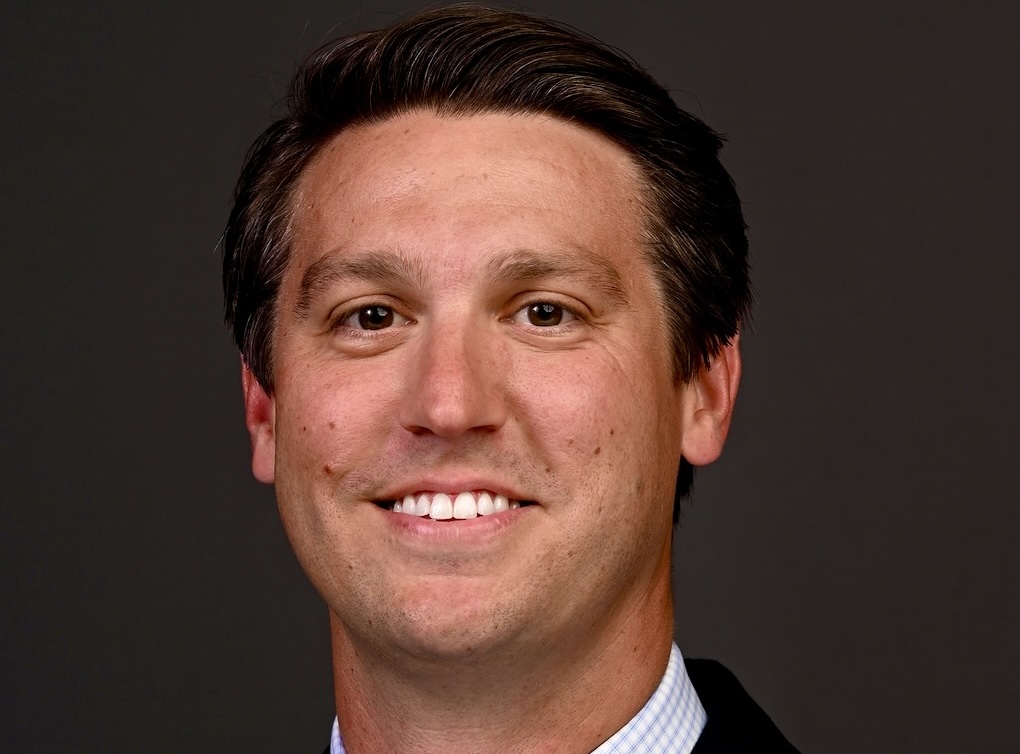
WILMINGTON — A small business owner of Cadence Realty, Luke Waddell is seeking another term on Wilmington City Council.
Waddell was first elected to the seven-member board in 2021 and announced his reelection bid over the summer.
“I’m running for reelection because I believe Wilmington deserves strong, principled leadership that is focused on the fundamentals: public safety, infrastructure, and fiscal responsibility,” Waddell wrote on Port City Daily’s questionnaire, sent to all candidates in the race.
The city council is a nonpartisan race, though Waddell is affiliated with the Republican party. He’s up for one of three seats and running against him are: incumbent Clifford Barnett (D), and newcomers Richard Collier (R), JC Lyle (D), Kelly Roberts (R), Cassidy Santaguida (D), and Chakema Clinton-Quintana (D). Sean Guerrero (R) will also appear on the 2025 municipal ballot, though he dropped out of the race earlier this month.
Waddell said he has “worked every day to deliver” on his core priorities while serving as a councilmember: “My record shows I’m willing to make tough calls, push for accountability and keep the focus on the needs of our citizens.”
Port City Daily asked all candidates a slate of questions about topics that are tracking high with voters and residents of Wilmington currently. The candidate’s answers have been edited for clarity, and their opinions and statements are not a reflection of Port City Daily.
A few things to consider ahead of going to the polls:
- A valid ID is required to cast ballot in North Carolina
- Election Day is Nov. 4, 2025, with voters required to go to their assigned precinct locations
- Early voting opens Oct. 16 and closes Nov. 1, and voters can cast a ballot at any of these four sites: Northeast Library (1241 Military Cutoff Road), Carolina Beach Town Hall’s Police Training Room (1121 N. Lake Park Blvd.), Cape Fear Community College’s McLeod Building, (411 N. Front St.), and New Hanover County Senior Resource Center’s Multipurpose Room, (2222 S. College Road). See all hours of operation here where you can also track the wait times at each early voting location.
- Anyone who wants to register to vote can do so here through Oct. 10 or register and vote during early voting
Port City Daily’s paywall has been dropped on candidate profiles to help voters make informed decisions ahead of the election. Below are Waddell’s answers:
Port City Daily: What makes you qualified for a seat on council and sets you apart from other candidates?
Luke Waddell: I’m a husband and father, a business owner and someone who has demonstrated accessibility, transparency, and action while serving on Council. I bring private-sector experience, common sense, fiscal discipline, and a proven ability to work collaboratively across boards like WMPO, CFPUA, and UNCW’s Board of Trustees. What sets me apart is that I don’t just talk about leadership; I’ve shown up and done the work.
PCD: Homelessness continues to be debated among area leaders; what isn’t being discussed about it, in your opinion, that you think could help better steer its direction? Do you support implementing the former joint strategy that the city and county devised in September 2024? If not, why and what strategies do you think should be implemented? How much money would you support the city dedicating to the effort?
LW: The missing piece in the discussion has continued to be accountability. Compassion and services are critical but without enforceable boundaries, we do a disservice to the entire community. That’s why I introduced Wilmington’s public camping ordinance, to balance safety in public spaces with connecting people to services. I did not support the joint city-county plan last year because it lacked clear accountability measures. I support investing in targeted solutions, but I strongly believe the focus should be on outcomes, not just funding levels.
PCD: In development conversations, the supply of housing and affordability are often at odds with residents’ desire to keep density low. How would you propose tackling these issues respectively? Do you think it’s possible for the city to satisfy both desires? Why or why not?
LW: We don’t have to build on every square inch of Wilmington. We need to respect property rights while ensuring growth doesn’t compromise quality of life. That means allowing density where infrastructure can support it (think northern portion of Downtown around Skyline), while protecting existing neighborhoods. Affordability and low density will always be in tension, but smart planning that incentivizes adaptive reuse and infill can ease that pressure. It’s not about satisfying both perfectly, but rather striking balance through pragmatic decision-making.
PCD: What does balancing green space with development needs look like in your view, such as when it comes to protecting wetlands or rebuilding the tree canopy? Do you have examples of cities or developments that have done this successfully?
LW: We’re running out of opportunities to preserve meaningful open space in Wilmington. Protecting wetlands, restoring tree canopy, and intentionally creating parks must be a priority and it is for me. My “Seeing Green” proposal imagines a plan for the New Hanover Community Endowment and local governments to partner on strategic land acquisition for parks and green space. Cities like Greenville, SC, and Charleston, SC, have shown how investing in green space enhances quality of life and property values long-term. Wilmington must act with urgency before our window closes.
PCD: With the Cape Fear Memorial Bridge price tag escalating to more than $1 billion, how to fund it also remains debated. Both a toll has been floated and a transit sales tax, which would need voter approval potentially in a tri-county referendum that could include multiple projects in New Hanover, Pender and Brunswick counties. Do you support either and/or is there another option you think should be considered to fund the bridge replacement?
LW: The bridge is critical to our economy and daily life. I do not support tolling and have been quite public in that stance. A tri-county sales tax referendum could be one option and I currently am a member of the alternative funding subcommittee looking into that option. As Vice Chair of WMPO, I’ve pushed for state and federal partnerships that recognize the bridge’s regional and national importance, not just a local burden.
PCD: Traffic is a main complaint for Wilmington residents — how do you envision the city’s role in addressing it? Do you think the city should promote public transportation or the expansion of it? How so? Do you think the city’s current plan to maintain and improve the roads it owns is/will be effective?
LW: Traffic is one of Wilmington’s top concerns. The city’s role is to invest in the roads we own, coordinate with NCDOT on state-owned roads, and encourage a balanced approach to transportation. Expanding public transit may help, but we have to be realistic about ridership and cost. The priority should be improving connectivity, synchronizing signals and not overburdening our roadways.
PCD: With a new police chief starting his post for the Wilmington Police Department this fall, what areas would you like to see him focus on to strengthen public safety and create a sustainable workforce? Explain.
LW: We currently have 205 sworn officers when we should have closer to 290. Getting back to full force must be the top priority. That means offering competitive pay and targeted recruitment and retention bonuses to both attract new officers and keep experienced ones here in Wilmington. I have consistently advocated for properly funding WPD because I believe public safety is the foundation of everything else we do as a city. Without the manpower, our officers are stretched too thin, and we cannot meet the needs of a growing community.
PCD: As the city continues to see an influx of residents, how do you think city council should ensure Wilmington’s economy keeps pace and opportunities remain varied across all ages and types of households? What can the city do to ensure its residents have a high enough wage to afford life in Wilmington?
LW: Wilmington’s economy needs to be diverse enough to support every household — from young families to retirees. City Council should focus on creating conditions where businesses can thrive: investing in infrastructure, cutting red tape, and supporting workforce development. Partnering with UNCW, Cape Fear Community College, and local employers is key. At the end of the day, a healthy business environment is what leads to higher wages and opportunity.
PCD: Some residents have accused the city council of only representing a select few in the community, rather than the needs of all. Do you agree with this sentiment? Explain. What would you do in a leadership position to represent more equitably?
LW: The responsibility of leadership is to represent the entire city, and I’ve worked hard to be direct, transparent, and accessible to all citizens — not just one group. That means returning calls, answering tough questions, and making decisions that balance the long-term good of Wilmington, even when it’s not politically easy.
PCD: What is one other issue not discussed above that you have a plan to address if elected and how would you do so?
LW: I want to prioritize selling surplus city-owned property and putting those funds directly toward capital infrastructure needs. This is a commonsense way to invest in the roads, stormwater, and facilities our residents rely on without turning back to taxpayers for more money. I’ve consistently pushed for fiscal responsibility on Council, and using assets we already own to fund long-term needs is the type of practical solution that helps keep Wilmington financially strong while meeting the demands of a growing city.
Have tips or comments? Email info@portcitydaily.com
Want to read more from PCD? Subscribe now and then sign up for our morning newsletter, Wilmington Wire, and get the headlines delivered to your inbox every morning.
