


WILMINGTON — A transportation sales tax across New Hanover, Brunswick and Pender counties is in the early stages of research at the Wilmington Urban Area Metropolitan Planning Organization, though elected leaders are looking for constituent feedback before moving forward.
READ MORE: WMPO subcommittee: Funding CFM Bridge could come with tri-county bond referendum
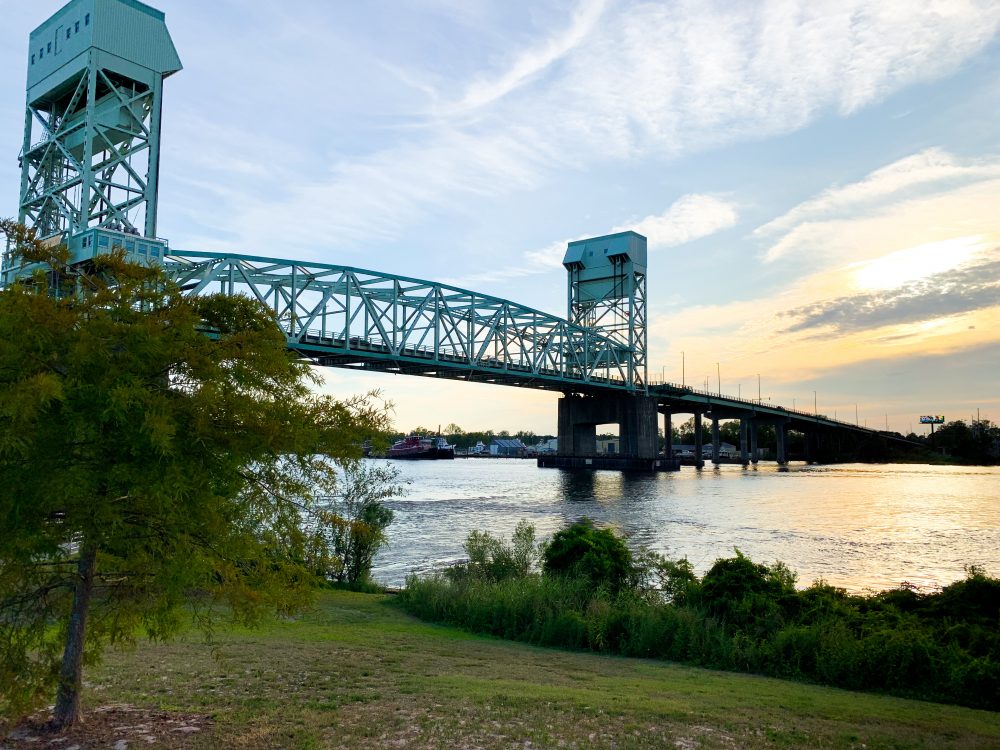
On Aug. 26, members of the WMPO’s Alternative Funding Subcommittee from each county and the City of Wilmington affirmed initial support to investigate issuing bonds for major transportation projects in the region, including the Cape Fear Memorial Bridge, the N.C. Highway 111 widening and the Burgaw Bypass.
The bonds would be paid for through an increased sales tax across the tri-county region, but only if voters chose to support the plan. It would also need WMPO approval, county commission resolutions in support, creation of its own transportation authority and acceptance from the state legislature before landing on a ballot.
“The people have got to agree to take on this mantle, and we’ve got to go ask them whether or not they’re willing to do it before I feel good about moving forward with this,” New Hanover County Commissioner Dane Scalise said at the meeting.
Scalise is on the subcommittee, created earlier in the summer to explore local funding mechanisms for transportation needs not reliant on state or federal awards. The board also consists of Pender County Commissioner Brad George, Wilmington City Councilman Luke Waddell, Brunswick County Commissioner Frank Williams, Executive Director Mike Kozlosky, North Carolina Department of Transportation Division 3 representative Landon Zimmer and Wrightsville Beach Alderman Hank Miller (ex-officio).
The subcommittee was formed largely as a result of the Cape Fear Memorial Bridge’s high price tag and lack of traditional money — both from the State Highway Fund and through federal grants — to cover the entire cost. A 135-foot fixed-span bridge, the presumed replacement option, has a price tag of $1.1 billion. Kozlosky described the tri-county as the only alternative option that would “move the needle” on Cape Fear Memorial Bridge funding.
“I think there’s your marketing pitch — you don’t want a toll, you have to vote for this,” Williams, the subcommittee’s chairman, said Wednesday.
Though, as clarified later Wednesday at a meeting of the full WMPO board, implementing the tax isn’t a shoe-in for avoiding the CFMB toll. Navassa Mayor Eulis Willis asked for that clarification. Kozlosky said he didn’t know the answer; the bond amount has yet to be determined and thus could be high enough to pay for it all or only a portion, which would still cut down on the toll amount or length of implementation.
However, for an increased sales tax to gain voter support, it would have to include projects besides the bridge to appeal to a large swath of people across the three counties. As Williams noted, the Cape Fear Memorial Bridge is a priority for both Brunswick and New Hanover residents, but not necessarily Pender County.
Pender Commissioner George agreed, saying the CFMB was the furthest thing from his constituents’ mind: “That being the main project, if that was the promotion for it, that would not help.”
The subcommittee’s discussion didn’t make it so far as project selection, though Koslosky had a list he wasn’t ready to release to the public. George mentioned the Burgaw Bypass, two-lane road from State Road 1508 west of I-40 to Malpass Corner Road, and U.S. Highway 117 widening.
Williams said his constituents would want to see the $217 million Highway 211 widening, from Midway Road to N.C. Highway 87, along with the $797 million Carolina Bays Parkway extension to South Carolina.
In New Hanover County, the only other project to come up was intersection improvements to Oleander Drive and College Road, which Miller said is fully funded in the State Transportation Improvement Plan and, with sarcasm, “evidently, not a bad intersection.” North Carolina Department of Transportation data shows the intersection is one of the worst in the state, operating at a level of E (one above the worst, F) in a 2022 traffic analysis.
If one county failed to pass the increased sales tax, the others could move forward without it.
“I’m not trying to suggest that this is going to be overly difficult, but I certainly can forecast some complications there,” Scalise said.
For example, he said both Brunswick and New Hanover counties residents directly benefit from the CFMB; Scalise posited, if one county didn’t pass the bond, how would both counties still share the burden of replacing the structure?
That question is one of many the elected leaders would be faced with should they move forward with the sales tax. On Aug. 26, the subcommittee heard a presentation from Maynard Nexsen consultants David Ferrell and Chase Horton on the infrastructure needed for the tax, based on Mecklenburg County’s recent establishment of a new transportation authority and implementation of a 1-cent sales tax for public transit.
The first step would be to create a regional transportation authority, governed by a board of trustees with its own ability to issue bonds and implement taxes. The authority would establish its own bond rating and debt capacity based on available revenues from the sales tax.
The three counties would need to pass resolutions in support of the authority, but then the North Carolina General Assembly would need to pass legislation allowing the new entity to proceed. The state would also need to raise the limit on how high the tax could be in these counties to 1 cent, as it did in Mecklenburg.
The three counties would also need to show the state how it plans to share revenue, which has yet to be determined. Horton and Ferrell presented annual revenue estimates that would be generated from each county based on a 1-cent sales tax — $72 million in New Hanover County, $40 million in Brunswick County and $11.2 million in Pender County.
The board could agree to pool all revenue together and distribute to projects based on amounts, or it could direct revenues generated by each county to relevant projects within the county. It could also choose a different model, though the consultants noted ensuring projects retain their scoring ability in NCDOT’s STIP was a deciding factor for Mecklenburg participants.
If approved, the bond projects and amounts would need to be put on the ballot. WMPO spokesperson was unable to estimate how soon this could occur, for example, if it was feasible to get the bonds placed on the 2026 ballot, also the target of a New Hanover County Schools bond.
At the subcommittee meeting, Scalise suggested elected leaders check with their colleagues and constituents on if the process was something they supported embarking on.
“I don’t want to waste all my time and energy on doing this if you guys aren’t going to be willing to do it,” Scalise said. “I’ll go talk to New Hanover County. And if I were to bet, I’d say we probably will do it. But will you guys do it?”
Scalise added a county’s support of the resolution isn’t necessarily an endorsement for the sales tax. The elected leaders agreed to bring the idea back to their constituency.
“This is allowing the people to decide,” Scalise said.
Want to read more from PCD? Subscribe now and then sign up for our morning newsletter, Wilmington Wire, and get the headlines delivered to your inbox every morning.
