


WILMINGTON — Sanfilippo Syndrome, or Mucopolysaccharidoses III (MPS III), is a lysosomal storage disease (LSD) likened to childhood Alzheimer’s disease. The disease is progressive and fatal, and currently there is no known cure.
The disease is hereditary, and affects roughly one in every 70,000 births.
According to the Cure Sanfilippo Foundation, individuals affected by MPS III lack an enzyme necessary to break down long chains of sugar molecules. As these molecules accumulate in the cells, they start causing cellular dysfunctions, particularly in the brain, causing affected children to lose memory and forget how to walk, talk, and feed themselves. The life expectancy of diagnosed children is 10-20 years.
Sadie Rae Haywood
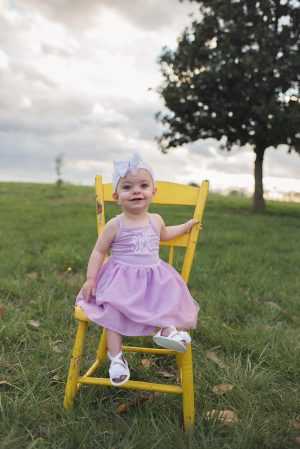
Ashley Haywood’s daughter, Sadie Rae, is one of the children who has this rare disease.
After a normal pregnancy and birth, Sadie Rae began suffering from respiratory complications and was sent to Levine Children’s Hospital in Charlotte.
Doctors in the ICU then placed Sadie on a ventilator. While on the ventilator, Sadie developed a serious brain hemorrhage, called IVH Grade III. Doctors then had to find a way to stop the bleeding, and after several failed attempts, they were forced surgically implanted a shunt to fix the problem.
After 73 days in the ICU, the Haywood’s were able to take their daughter home. Her problems dissipated, and it seemed all was well.
The Haywoods had some knowledge of MPS III, as a distant cousin of Ashley’s husband had the disease. After the confusing issues following a healthy pregnancy, the Haywood’s had decided to have Sadie Rae tested before leaving the hospital.
Three months later, the couple received the news: Sadie Rae did in fact have MPS III-A.
“So we do blame most of her initial issues on the Sanfilippo,” Haywood said. “Especially the breathing, a lot of other families have kids that wind up in the NICU with respiratory issues too. Not as long as us because they normally just have breathing issues, but she also had the hemorrhage and now she has the shunt.”
Despite this, Haywood counts her daughter lucky. Typically, parents aren’t aware that anything is wrong with their child until they begin to regress, usually around age three or four.
“Having her tested was definitely a saving grace, time is really the issue for these kids, because they start regressing and they need treatment and there’s not treatment for them,” Haywood said. “And we kind of have time, because she hasn’t started regressing. Most kids don’t get diagnosed until they already have lost something.”
Sadie Rae celebrated her 1st birthday in March. According to Haywood, you wouldn’t know that anything was wrong with Sadie when looking at her. She recently had her 12-month check up, and doctors determined her cognitive abilities to be similar to that of a 14-month-old.
“For a kid who had been in the NICU (Neonatal Intensive Care Unit) and having brain issues also, that was really good,” Haywood said.
“So shes doing really good, she lacks in other things, like gross motor and fine motor skills,” Haywood said. “But cognitive is what we were really focusing on, and she was ahead in that game.”
Unfortunately, once the disease begins to take it’s course, children like Sadie begin to lose everything they’ve learned.
Haywood says that different children have different pathways. But typically the children develop normally until about three or four.
And then they start slowly losing abilities.
“Most of the parents that I’ve talked to said they can’t remember as well, that’s kind of where it starts. And when their speaking, instead of gaining more words they start losing words,” Haywood said. “Then they lose the ability to eat and feed themselves, go to the bathroom … it literally is pretty much exactly like Alzheimer’s Disease.”
“Eventually they’re wheelchair bound, or bedridden, the average age these kids live to is about 15,” Haywood said.
What’s being done?
There is no cure, but there is hope.
Currently, there a promising strides being made to finding a cure. According to the Cure Sanfilippo Foundation, “The Sanfilippo community is pleased to see several potential therapies moving towards human trial. In addition to clinical stage programs, there are several early stage innovative approaches being developed.”
As of now, there is one clinical trial in progress, and another opening in the near future.
“The only possibility of getting any kind of treatment is to get into these clinical trials,” Haywood said. “That’s our only life line at this point.”
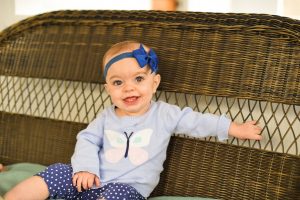
The Haywoods have teamed up with the Cure Sanfilippo Foundation, which is helping to fund some of these clinical trials and them get started.
According to Haywood, there is much to overcome before real progress can be made.
“There’s big issues,” she said. “Right now there’s only one clinical trial that’s open, and another coming up, and there’s so few kids that get selected, and there’s so many kids that need treatment, it’s hard to get in.”
“Our big thing is, we try to do any kind of fundraiser we can, raise any kind of money we can to get more of them (clinical trials) started,” Haywood said. “The drug is so expensive to make, that’s the biggest issue, it’s also very hard to make and it’s time consuming, but a lot of it is funding.”
She says they’d like to bring as much awareness as they can to these efforts, “We’re really trying to get these trials going, that’s the biggest thing we’re fighting for now.”
In addition to clinical trials, the Haywood’s are in touch with doctors from all over, seeking to get their daughter into studies, and give her a fighting chance to live a full life.
Wilmington restaurant Capt’n Bills teamed up with the Haywood’s for a Volleyball Tournament on Saturday. Proceeds from the event went towards getting Sadie Rae and other children like her into these clinical trials.
For more information on Sanfilippo Syndrome, and what’s being done, visit curessf.org.
To hear more of Sadie Rae’s story, and find out how you can help, visit savingsadierae.org, and follow the Facebook page for updates.
