


CAROLINA BEACH — U.S. Rep. Mike McIntyre in Washington, D.C. this month pushed for the reauthorization of federal funds for Carolina Beach’s soon-to-expire beach renourishment project—a goal officials say will involve some tough tides.
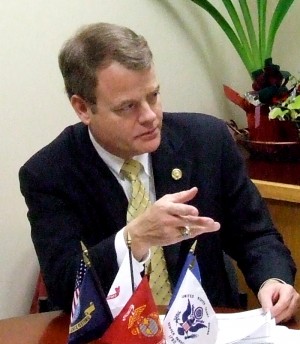
McIntyre, according to a press release from his office Tuesday, met with Assistant Secretary of the Army for Civil Works Jo-Ellen Darcy on Sept. 11 and pressed a number of broad coastal issues, including the importance of shallow draft inlets and associated dredging needs. He pushed specifically for Carolina Beach’s federally authorized beach renourishment because the project’s current permit is set to expire in 2014.
Reauthorization would keep the green light on for federal aid in the ongoing project, first authorized in 1962 for a 50-year period. The federal program, for as long as the permit is valid, generally sees that Carolina Beach receives some level of funding for sand replenishment every three years.
For the town’s renourishment on schedule this winter, for instance, Congress appropriated $4.4 million. The project’s estimated total was $7.7 million.
Carolina Beach Town Manager Tim Owens said he and fellow officials have spent the last five years or more on the push for reauthorization so Congress may continue the aid. He called the process “cumbersome” at best.
“Any time you look at reauthorization, you’re looking at a new start” for federal funding, Owens said. “And new starts are taboo.”
He added that all eyes in the beach renourishment community are on Carolina Beach as it will be the first of the existing federal 50-year projects to time out and, subsequently, the first to try for reauthorization. The ongoing congressional ban on earmarks, though, may be an obstacle; McIntyre has noted it affects federal participation in beach projects.
Congress in early 2011 dealt its ban on earmarks, in which funds are designated for specific and sometimes completely local uses, in an effort to prevent representatives from bringing home federal dollars for special-interest projects. McIntyre had noted a mentality in Washington that beach, inlet and waterway ventures fall under that category.
Owens said McIntyre has worked with the Town of Carolina Beach for strategy, and discussion has included a bill seeking another 50-year project for the town’s strand.
“With the first project expiring at the end of 2013 at Carolina Beach, a precedent must be established that allows communities—using 50 years of data that has been accrued—to reauthorize their projects to continue to protect the coast,” said Dean Mitchell, chief of staff for McIntyre.
But even if new authorization comes, it may not be with a promise.
“Just because you’re federally authorized for funding doesn’t mean you’re going to get funding,” Owens said.
As a fallback for renourishment needs when federal and state funding is limited or absent, New Hanover County’s beach towns have an agreement with the county’s government for the use of room occupancy tax (ROT) revenues.
Under that agreement, the county can provide up to 82.5 percent of a renourishment’s cost from the ROT fund, while the beach town or towns preparing for the project would cover the remaining 17.5 percent.
New Hanover County and its municipalities collect a 6-percent ROT on transactions for hotel rooms, inns, campgrounds and other short-term stays. The revenues pay for beach renourishment, tourism marketing and, for Wilmington, the city’s convention center downtown.
The county had estimated that for the current fiscal year it had more than $40 million in that fund, and over the year about $2.6 million would add to it.
For this winter’s renourishment project at Carolina Beach and Kure Beach—together worth $14 million—New Hanover County will pull $9.6 million from the ROT fund. That’s the project to which Congress appropriated $4.4 million for Carolina Beach’s portion—and nothing for Kure Beach’s, even though that town’s renourishment area is federally authorized as well.
To shore up for the future, the Town of Carolina Beach wants to explore methods of beach-project fundraising at the local level. Staff had recommended the town find some way to set aside roughly $635,000 a year for three years. Ideally, that would cover the Carolina Beach portion, and the Kure Beach project area that is within Carolina Beach’s limits, in the ROT sharing agreement with the county.
But the issue is how to raise that money. The same day McIntyre spoke with Assistant Secretary Darcy, the Carolina Beach Town Council agreed to write the local delegation in the N.C. General Assembly for ideas on new funding mechanisms dedicated to beach renourishment.
Otherwise, the town may have to rely on its property tax base.
