


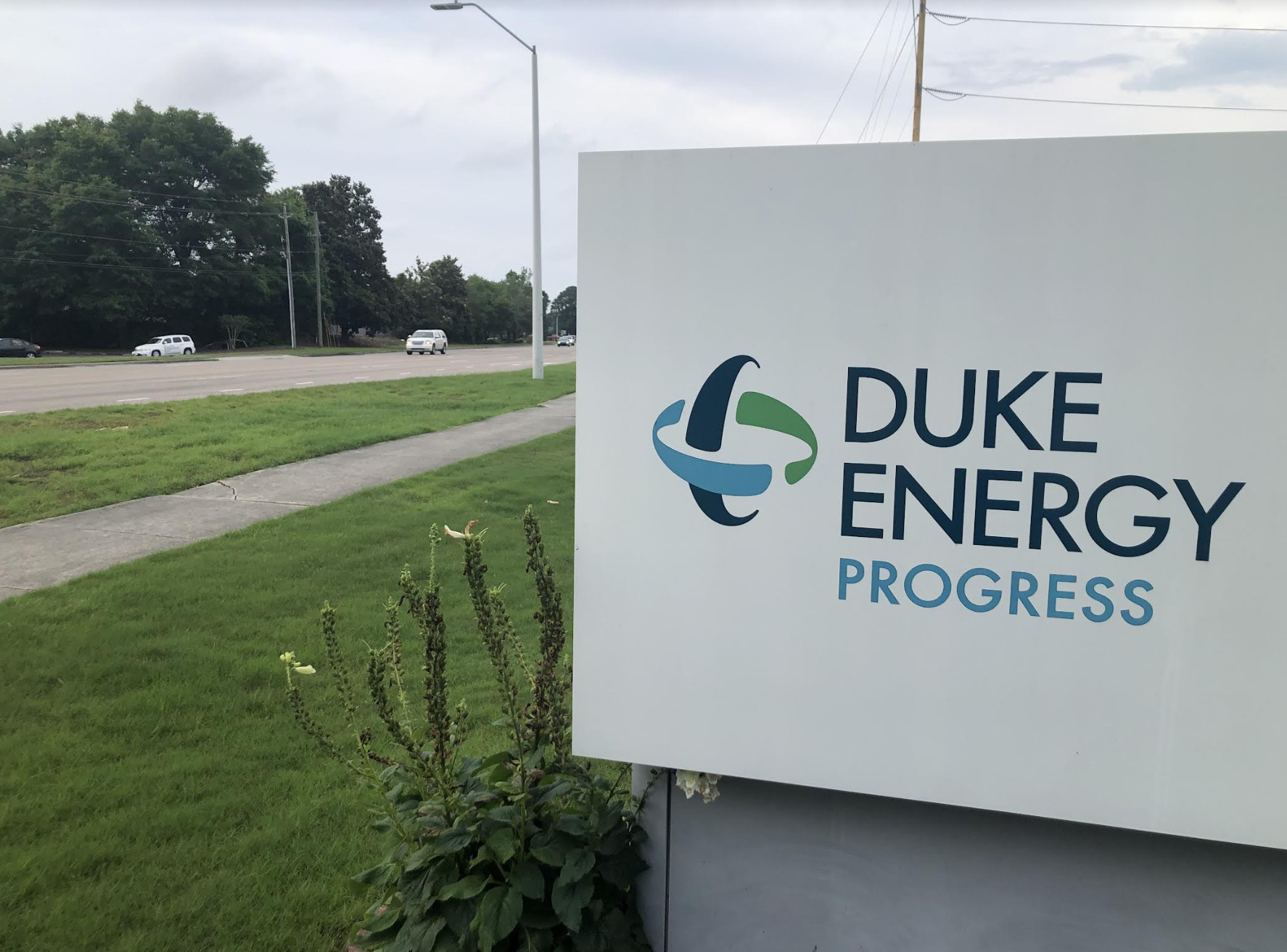
BRUNSWICK COUNTY — After paying out a French energy company $1 billion for its Carolina Long Bay wind lease in Brunswick County earlier this spring, the feds have settled on a similar agreement with one of the nation’s largest electric holding companies, central to North Carolina. Duke Energy is receiving more than a hundred-million dollars to terminate its wind lease in Carolina Long Bay as well.
“Under the agreement, Duke Energy will reinvest nearly $129 million in additional generating capacity, which may include advancing new nuclear and natural gas generation, and grid enhancements to strengthen reliability, support continued growth in the Carolinas and keep costs as low as possible,” Kodwo Ghartey-Tagoe, executive vice president and chief executive officer of Duke Energy Carolinas, said in a release from the Department of Interior.
The federal government’s $129-million reimbursement is less than Duke paid for the lease. In 2022, the company forked out $155 million in an Atlantic Outer Continental Shelf renewable energy auction held by the Bureau of Ocean Energy Management. The Duke wind lease was expected to generate around 1.6 GW of energy by 2032, to power roughly 375,000 homes.
READ MORE: Carolina Long Bay wind lease canceled, Trump admin steers $1B investment to gas production
Both Duke and TotalEnergies wind leases also were poised to support 37,000 jobs, $3 billion in annual wages, $233 million in tax revenue, and $44 billion in capital investment during construction. The wind leases would have been located roughly 20 miles off the shore of the Southport and Bald Head Island areas.
Last year Duke Energy Renewables halted its plans, citing excessive costs.
While clean energy was a target goal under the Biden administration, which wanted to deploy 30 gigawatts of offshore wind by 2030, the Trump administration has gone in the opposite direction, shifting investment to oil, natural gas, and coal. The president, who has called the turbines too expensive and an eye sore, has sheared wind farm tax credits and signed an executive order to pause federal wind permits. However, the move was taken up by the courts and dismissed as beyond the president’s authoritative scope.
So to thwart its decision, the administration began buying out wind leases instead — though this move is also finding its way into the judicial system. After signing a $1-billion deal with TotalEnergies in March to cancel its two leases in North Carolina and New York, a group of attorneys general filed a lawsuit against the Trump administration at the beginning of June. The AGs from Connecticut, Maine, Massachusetts, New Jersey, Rhode Island, Vermont and New York claim their states’ economies and climate goals are negatively impacted by the lease termination.
In Brunswick County beach towns, leaders from Bald Head Island, Ocean Isle Beach and Sunset Beach have expressed dismay over potential wind farms off their shorelines. Three years ago many spoke in opposition to unpleasant visuals of turbines in Carolina Long Bay and some wildlife groups also worried over protecting avian populations, particularly the Bald Head Eagle.
“President Trump’s vision of unleashing affordable, reliable American energy for our country’s communities and using common sense to put the American people first is being implemented,” Secretary of the Interior Doug Burgum said in the department’s settlement announcement Monday, June 29, calling Duke’s buy-out a “win-win.”
However, Pasha Feinberg, offshore wind strategist at Natural Resources Defense Council, a U.S.-based advocacy group, called it a “lose-lose.”
“We need more electricity, not less,” she said. “Canceling clean energy projects is self-defeating. Paying off companies so they will abandon them is just ludicrous. The Trump administration is wasting our money paying companies not to produce energy. It’s long past time for the Trump administration to end its war on new energy so that customers’ bills won’t keep rising and our nation can meet its growing electricity demands.”
It’s the fourth wind farm lease the Trump administration has bought out this year totaling around $2.7 billion. The fed agreed to pay Invenergy $765 million for four leases located in the New York Bight, the Central Coast of California, and the Gulf of Maine. Another $765 million will go to a division of BlackRock for a New Jersey lease and $120 million will be funneled to Ocean Winds for a California lease.
Duke Energy’s reimbursement comes as the company’s 2025 Resource Plan also indicates the utility will build half as much wind and solar over the next decade than previously projected. The change matches the a shift from North Carolina’s GOP-led legislature, which ditched plans for the state to reduce its carbon emissions by 70% between 2005 and 2030.
Duke’s 2025 Resource Plan — being evaluated by North Carolina Utilities Commission, with the final order expected by Dec. 31, 2026 — also includes delaying new nuclear generation into the next decade, developing more natural gas units and battery storage, and extending the lifespan of aging coal plants. It all comes as electricity demands increase and impact customers further by rising fuel costs.
Some of those costs are already being considered by the Utilities Commission: Duke wants to recover $800 million in fuel and power costs incurred during a winter cold snap, to be passed on to ratepayers. The move has been denounced by Governor Josh Stein.
Burgum claimed in Monday’s settlement that the Duke deal “will lower the costs for its customers in North Carolina and surrounding states.” This comes as Duke is in the midst of requesting the North Carolina Utilities Commission also approve additional rate increases.
Duke first requested an 18% rate increase over the next two years. After North Carolina Attorney General Jeff Jackson and customers at numerous public hearings brought a fury of complaints against the move, Duke has scaled back to an 11.6% increase; it is proposing a 7.5% increase in 2027 and 4.2% increase in 2028.
The Utilities Commission is scheduled to begin evidentiary hearings on the proposed rate changes on July 7, 2026. Regulators will decide to approve, reject, recommend modifications in the fall.
At Port City Daily, we aim to keep locals informed on top-of-mind news facing the tri-county region. To support our work and help us reach more people in 2026, please, consider helping one of two ways: Subscribe here or make a one-time contribution here.
We appreciate your ongoing support.
