


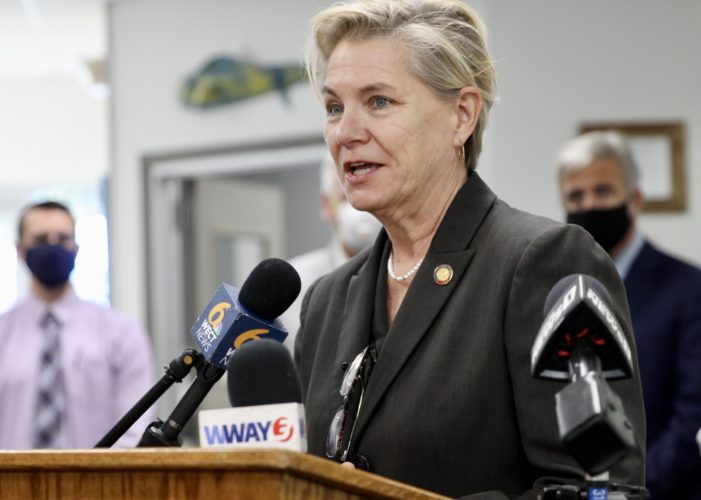
WILMINGTON — A local representative in the North Carolina General Assembly has introduced a bill punishing legislators should they fail to pass a budget by June 30. It is one of the many bills filed in the first days of the General Assembly’s short session, though the only so far presented by a representative from New Hanover, Pender or Brunswick counties.
Rep. Deb Butler (D-New Hanover) has put forth a constitutional amendment titled “No Budget No Pay” requiring state legislators to forfeit their salary compensation and expenditure allowances if a budget were not passed by June 30. The forfeiture would only conclude when a budget was passed or when the next legislative session started.
READ MORE: ‘No scenario where there isn’t a tax increase’: Wilmington council presented with 6.26-cent rate
Both the House speaker and Senate president pro tempore are dealt a salary of $38,151 and an additional monthly expense allowance of $1,413. Regular General Assembly members make $13,951 annually with an expense allowance of $559. These amounts haven’t been updated since 1997; it is typical for legislators to have other jobs or forms of income.
Butler wrote to Port City Daily Thursday that the bill was filed to “remind Republicans that our top priority is the budget and without it, they are guilty of fiscal malfeasance.”
The bill comes as the legislature, controlled by Republicans in both chambers, failed to pass a budget last year. North Carolina uses a biennium budget cycle, meaning there is also no budget for the new fiscal year starting July 1 as of yet; the legislature is using 2023 funding levels to keep government programs going.
“NC is the only state in the whole country without a budget. Why? It’s because of Republican infighting,” Butler wrote. “Their bickering is costing our people in a big way. No salary increases for our teacher, our state employees or our retirees? Is it any wonder we have dangerously high vacancies in our schools and prisons.”
School districts, which often receive around half of their budgets from the state, have been one of the most affected by the lack of a state spending plan. Inflationary pressures have put a strain on districts still paying out salaries and benefits based on 2023 calculations, while the lack of a timeline for a potential state budget passage makes planning their 2026-2027 spending plans much more difficult.
Senate President Pro Tempore Phil Berger, who has been lame-ducked after losing in the 2026 primary, and House Speaker Destin Hall have both confirmed budget negotiations have resumed, though it appears their prior sticking points remain.
The two chambers have disagreed on how much to raise state employee wages, including for teachers, and whether to continue lowering the income tax rate, which the House wants to reconsider. There’s also a deadlock on whether to fund a new children’s hospital in Apex.
In a Medium column published April 17, Berger wrote the legislature’s policy success is “largely grounded on the continuing exercise of discipline on two fronts — tax reduction and spending restraint.”
“Failure to adhere to fundamentals on either front will thwart sustaining progress in our never-ending competition with other states for economic growth, job creation, and a better future for our people,” Berger wrote.
However, the chambers have come to consensus on Medicaid funding, voting to initially approve a $3190-million package to fully fund the state’s program, which was on track to run out of money next month. The bill included stricter requirements for autism therapy providers; it also also included more funding to investigate Medicaid fraud. Typically the handler of these cases, the state’s Department of Justice, headed by Democratic Attorney General Jeff Jackson, requested more positions; instead, the bill allocates $500,000 to the Republican-controlled state auditor’s office for the investigations.
Had Butler’s bill been in effect during the budget stalemate, the lawmakers would have forfeited nine months of pay.
The bill does have some support in cosponsorships from nine other Democratic lawmakers, but is unlikely to receive Republican support — which it would need to pass.
Because the bill is for a constitutional amendment, both chambers of the General Assembly would need to pass it in a three-fifths vote — 72 votes in the House and 30 in the Senate. The House has 49 Democrats and 70 Republicans, and the Senate has 20 Democrats and 30 Republicans.
If passed by the General Assembly, the constitutional amendment would also need a majority vote from North Carolina citizens via a referendum.
A less severe bill, though also called the “No Budget No Pay Act,” has been filed in the Senate by Sen. Lisa Grafstein (D-Wake), Sen. Woodson Bradley (D-Mecklenburg) and Sen. Terrence Everitt (D-Granville, Wake). Senate Bill 806 would mandate legislator pay be held in escrow, rather than forfeited altogether. It is also specific to the passage 2026-2027 budget, mandating pay be docked if a budget wasn’t passed by June 30, 2026, but not making further restrictions on future years.
Both bills have been referred to their respective rules committees, where Rep. John Bell (R-Wayne) in the House and Sen. Bill Rabon (R-Brunswick) would need to elect to bring them to the committee floor for vote.
At Port City Daily, we aim to keep locals informed on top-of-mind news facing the tri-county region. To support our work and help us reach more people in 2026, please, consider helping one of two ways: Subscribe here or make a one-time contribution here.
We appreciate your ongoing support.
