


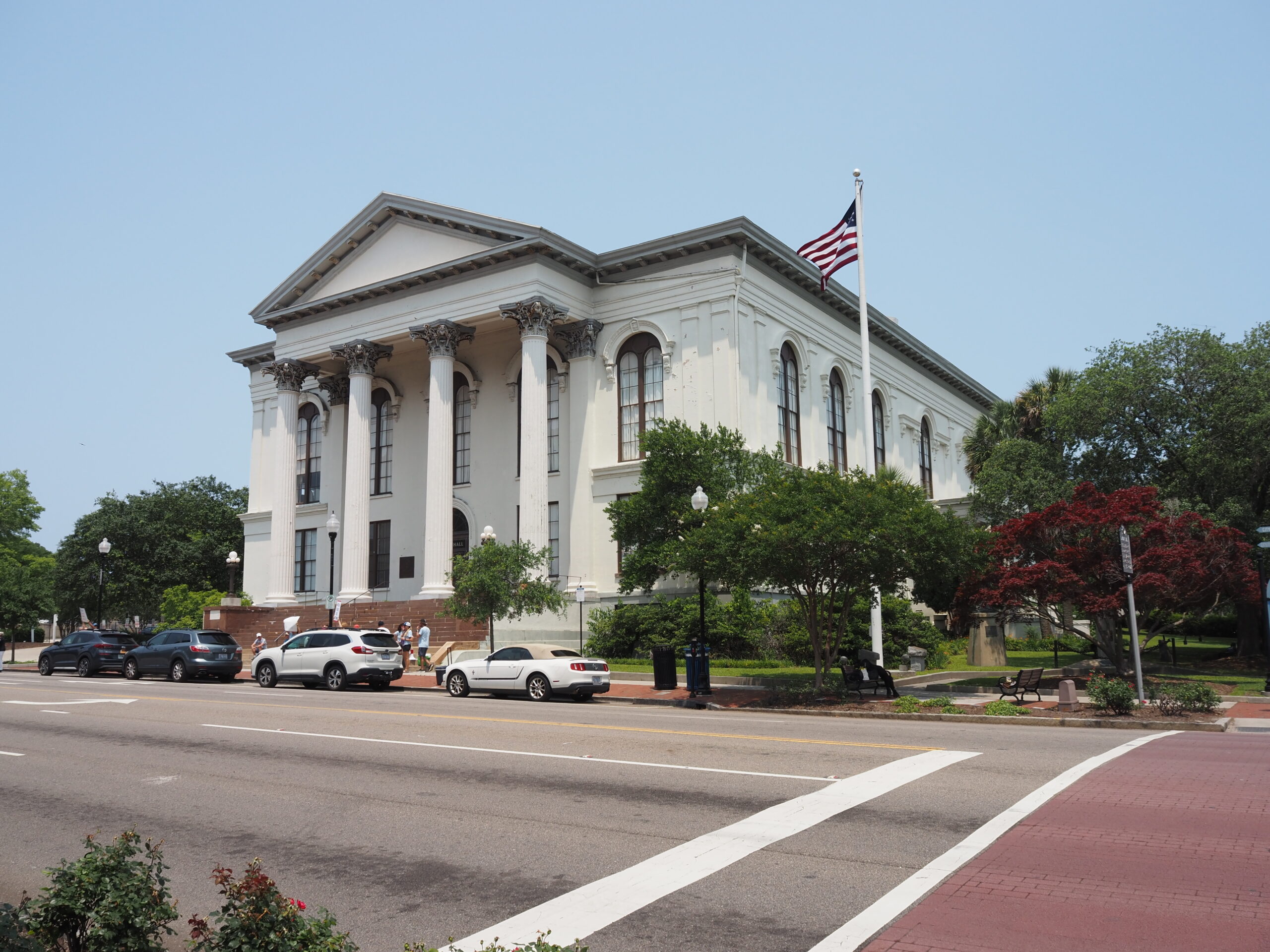
WILMINGTON — More than 400 cities nationwide have a curfew for youth and if one council member gets his way, Wilmington may be added to the list.
READ MORE: ‘First in flight, first in business’: Governor visits downtown as NC named top state for business
ALSO: Wilmington nonprofit fundraising for 10K-seat arena to lure pro ice hockey team
Councilman Luke Waddell is advocating for action against “lawlessness and severe public disorder” in downtown Wilmington, following the July 4 weekend. The council member has put forth a few measures he wants to see in place, one of which would include a juvenile curfew.
A juvenile curfew can be enacted by local governments to prohibit minors from being in public places during specified nighttime hours without adult supervision.
“The point is to ensure minors aren’t out causing or caught in chaos at 2 or 3 in the morning,” Waddell told Port City Daily. “It’s a basic step toward restoring a sense of order and, more importantly, protecting our kids.”
Waddell cited a fatal shooting in downtown Wilmington just before 2:30 a.m. on July 6; though it didn’t involve a minor, fire opened on the 100 block of Front Street, rife with bars closing and crowds spilling onto the streets. He was also concerned about escalated underage drinking and “bad actor bars” serving minors, as well as other disruptive activity over the Independence Day weekend. This included kids setting off fireworks on a downtown street. A 12-year-old was detained after Wilmington Police Department responded to calls, with multiple kids involved, WPD spokesperson Brandon Shope confirmed.
Waddell said he has received ongoing complaints from local business owners about increased disturbances, one of whom is Joe Apkarian. The owner and operator for The Pour House, Tacobaby and The Eagle’s Dare detailed the scene to Port City Daily.
“Kids [were] literally throwing and shooting fireworks at patrons, at people on the street and, you know, kids running away, but there were fireworks being shot at people,” Apkarian said. “For me, personally, seeing fireworks being shot at people last week, we’ve got to do something.”
Apkarian said from his perspective, juvenile delinquency downtown late at night has “increased significantly” in the past year.
“I think at a certain point it’s like: ‘Hey, why are you out downtown at midnight and you’re 16 years old?’” Apkarian stated.
According to Apkarian, the reckless behavior is threatening to public safety but also businesses. It causes patrons to potentially look elsewhere to shop, dine and find entertainment. He added accountability also extends to adults frequenting downtown bars, who he believes contribute to unsafe conditions.
“Like any growing city, in any arts and entertainment district, are there some issues to deal with? Absolutely. Should it completely keep you from wanting to come downtown? Absolutely not,” Apkarian said.
Waddell has served on the city council since 2021 and announced his reelection bid on June 27, with public safety listed as a top concern. This week he suggested Wilmington look to other cities that have juvenile curfews in place, to learn about their effectiveness and corresponding challenges with enforcement.
More than 10 cities in North Carolina have juvenile curfews including Durham and Wake Forest.
Charlotte’s Youth Protection Ordinance, enacted in 1994, was designed to protect juveniles from crime victimization. It was later updated in 2011 to a tiered system: those under 13 face a 10 p.m. curfew, and ages 13-15 are required to be in at 11 p.m., both lifting at 6 a.m. daily. Exceptions apply for supervised activities, work, or emergencies. Charlotte’s curfew was strengthened after a late-night shooting in May 2011, which resulted in the death of a 22-year-old man.
PCD reached out to the Charlotte-Mecklenburg Police Department to find out about its effectiveness, though didn’t receive a response by press. However, Myrtle Beach Mayor Brenda Bethune said the nearby beach town has also had a curfew in place for kids since 2017, due to an uptick in juvenile crime happening past 9 p.m.
As reported by WSOC-TV 9, according to Myrtle Beach Police Department spokesperson Allen Amick, on the first night of the ordinance’s implementation, there were decreased interactions with minors and no citations were issued to juveniles in the downtown area. Violations include fines up to $500 and/or 30 days in jail upon conviction.
Myrtle Beach first passed a curfew for kids ages 17 and under, required to be home by midnight, but in response to a series of violent incidents involving juveniles in high-traffic areas, the city temporarily restricted the scope of the policy for the Fourth of July weekend. There have been three juvenile shootings since late April and a June 27 shooting, when a 17-year-old at work killed an 18-year-old. Kids are now required to be out of the downtown area and Ocean Boulevard by 9 p.m. and council is considering making it permanent.
Bethune told PCD she didn’t have specific details on the impact of Myrtle Beach’s curfew as it is in its infancy, though it’s council has noted it’s not a “fix-all.” The mayor said she supported the decision to make the permanent changes.
“I’m assuming if Wilmington is having trouble, like many other areas across the nation with juvenile crime, I think a curfew is the first step in the right direction,” Bethune said.
Though not specific to downtown only, juvenile gun-related crimes have grown within Wilmington’s city limits, according to WPD 2024 stats. The WPD seized 65 firearms from minors alone, one being as young as 14 years old, according to prior PCD reporting. Property crimes — burglary, larceny, and motor vehicle theft — also have increased in the last few years, which WPD has noted runs parallel to increased gun theft, as often the breakings-and-enterings lead kids to easier access to weapons.
National Youth Rights Association advocates for the fair treatment of young people and has decried that juvenile curfews “violate freedom of movement and are ineffective at reducing crime.” In Texas, a state law banned curfews for minors in 2023, disallowing municipalities and counties to implement them. Texas Republican Gov. Greg Abbott signed it into law, with Rep. David Cook, a Republican who wrote the bill, advocating for “a better relationship between juveniles and law enforcement agencies” instead. Cook also was worried curfews could violate constitutional rights.
Wilmington City Council member Salette Andrews cited research from the U.S. Department of Justice and the Centers for Disease Control showing minor curfews don’t correlate with decreased crime. According to 2016 research from the U.S. DOJ, it assessed 12 cities across the country with juvenile curfews. The study indicated juvenile crime during curfew hours actually increased slightly (9.5%) from normal levels.
“They disproportionately lead to the over-policing of disadvantaged youth,” Andrews said. “The young people in our city need investment, not just restriction. Where are the proposals for youth jobs, mentorships, safe spaces, or trauma-informed care?”
PCD reached out to all council members and Mayor Bill Saffo. David Joyner responded he would need to hear from community stakeholders before he commits to a decision, while his colleague, Kevin Spears, “strongly opposed” a juvenile curfew.
“I do not believe that children should be in downtown Wilmington after certain hours unsupervised, but I also don’t want to open a can of worms, by introducing all kids to the risk of potential dangers because of a curfew,” Spears wrote in an email. “Should there be a curfew in Mayfaire? I see young kids hanging out there when it gets dark as well. I would have to hear more concerns before getting on board.”
Spears requested “supporting data” to show a curfew is needed first.
Despite repeated requests, WPD spokesperson Shope did not provide PCD specific data on downtown juvenile crime or the department’s detailed enforcement strategy for the area. Nor did the North Carolina Alcohol Law Enforcement respond, which PCD reached out to regarding increases in underage drinking downtown.
Waddell has called for a “full review” of police force readiness and deployment strategies with interim Wilmington Chief of Police Ralph Evangelous.
According to Apkarian, addressing juvenile disorder along Wilmington’s historic commercial district is multi-faceted. While he said he would leave the decision-making up to the elected officials, Apkarian suggested the creation of more recreational spaces for minors to safely enjoy, either downtown or elsewhere in the city.
Addressing juvenile disorder or a curfew downtown is not on the upcoming July 15 agenda, but Waddell anticipates a formal discussion will occur soon.
In addition to the curfew, he also has asked for council to re-address the public camping ordinance, intended to thwart homeless individuals from sleeping on public property in city limits. It’s not the first time Waddell has pitched the idea; it was brought forth last year as well.
Waddell acknowledged the camping ordinance, similar to what passed in New Hanover County, didn’t get majority support in 2024, but he has asked for it to be added to the August agenda.
“I believe circumstances have clearly shifted. The public’s tolerance for disorder is eroding, and I think many on Council now recognize that inaction is not an option,” he said. “I look forward to that discussion — but everyone knows something has to change.”
Have tips or suggestions for Charlie Fossen? Email charlie@localdailymedia.com
Want to read more from PCD? Subscribe now and then sign up for our morning newsletter, Wilmington Wire, and get the headlines delivered to your inbox every morning.
