


Video: The ‘Last Supper’ at CFCC’s Our Place restaurant.
WILMINGTON — Tucked away in an unassuming brick building by the river, about 40 people were served a four-course French meal at restaurant called Our Place. The diners paid relatively little for the meal – $15 per person – and when the meal was over, they each got up and left without tipping.
Oddly enough, the wait staff seemed quite pleased at the end of service.
That’s because they’d just passed their final exam for a course in Cape Fear Community College’s hospitality management department, directed by Diane Withrow.
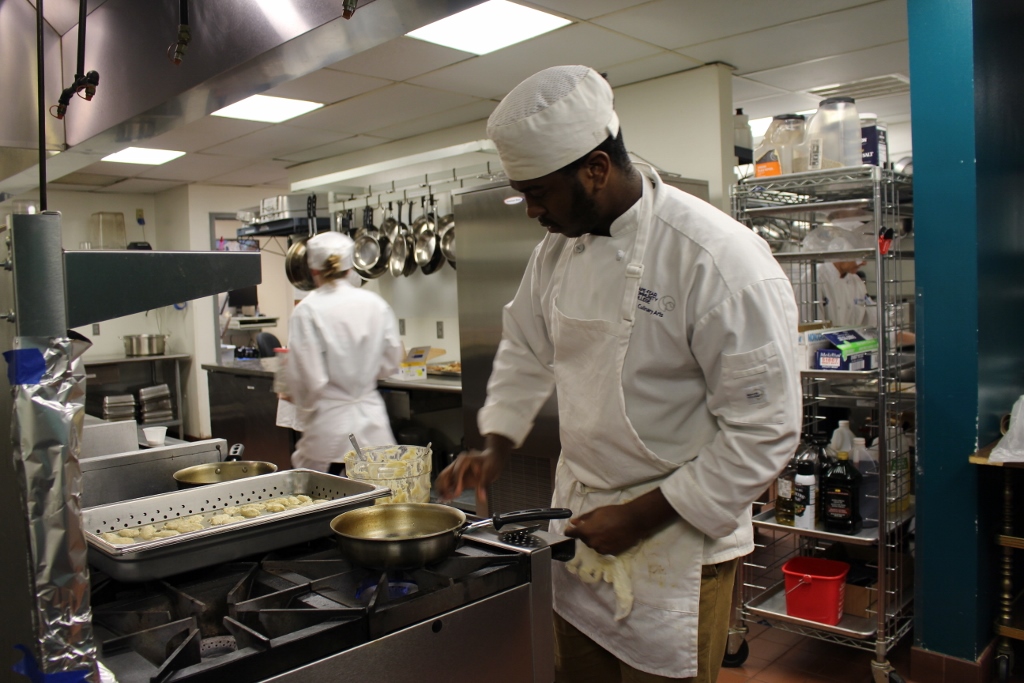
Behind the dining room in Our Place’s kitchen, five students were equally pleased. They’d just cooked some seriously complicate dishes, pulled from the recipe books of French culinary legends Madeleine Kamman and Alain Ducasse.
Wilmington’s ‘best kept secret’
Culinary Technology Program Director Valerie J. Mason has been running these dinners – and lunches – for 20 years, but the restaurant remains “Wilmington’s best kept secret,” Mason said.
“There’s 12 dinners, or lunches, and really, if you’re not in that world, then you don’t hear about it, it’s kind of a secret thing,” Mason said.
In spite of that, reservations book out pretty quickly.
Our Place serves dinners in the fall, and $10 three-course lunches in the spring, for 12 out of 16 weeks of the semester. The last meal of the semester tends to be the most complicated, demanding the students pull together what they’ve learned over three months, and put it on a plate.
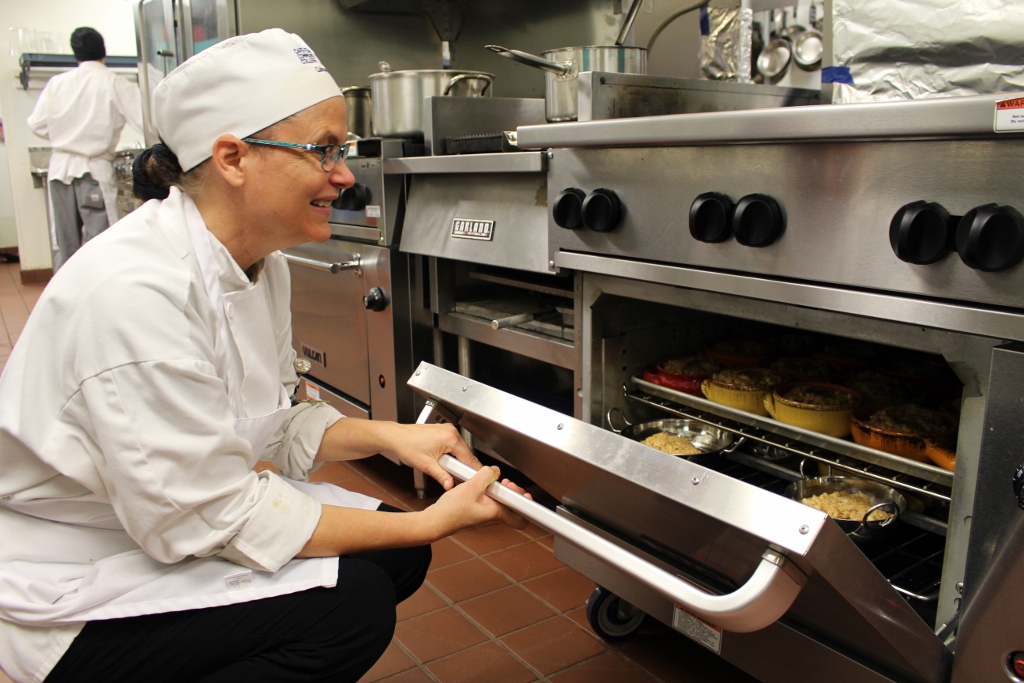
Instructor Gwen Gulliksen, a self-professed culinary Francophile, said the dinner series leans heavily on classic cuisine.
“I love French cuisine because, really, it’s the best,” Gulliksen said. “But as a course of study, it’s important. It demands technique – from knife skills to sauces and stocks – and it is really about understanding ingredients. It’s all good ingredients.”
A challenge for students, a deal for customers.
It’s a challenge for students, but a serious deal for restaurant customers, Gulliksen said.
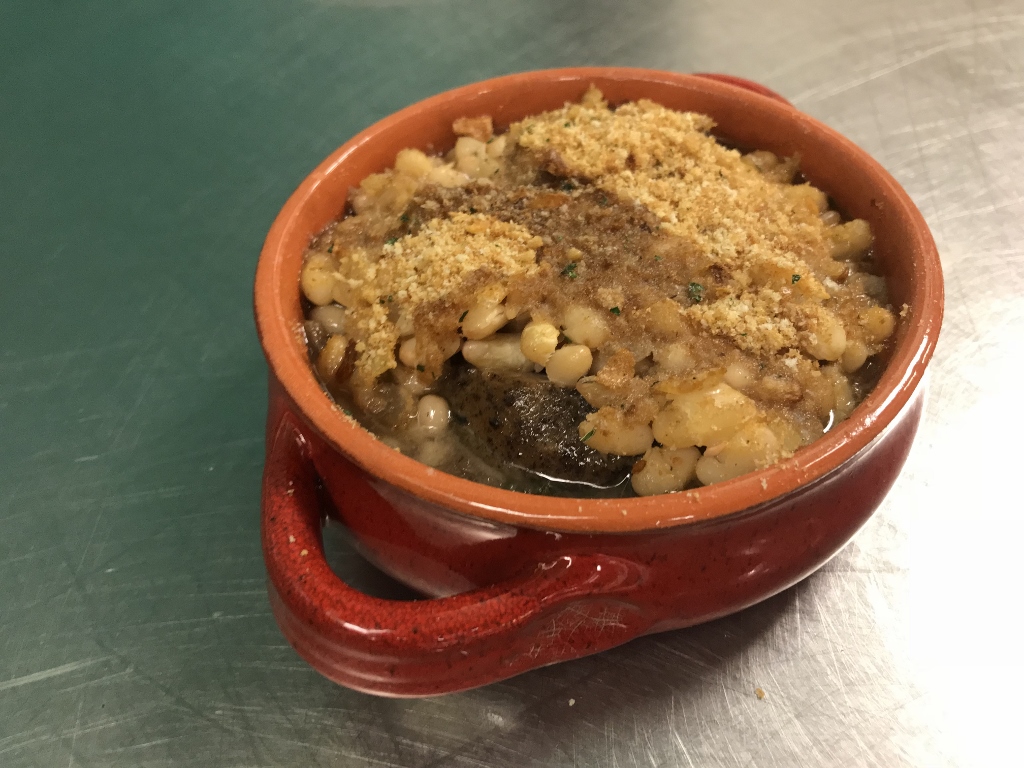
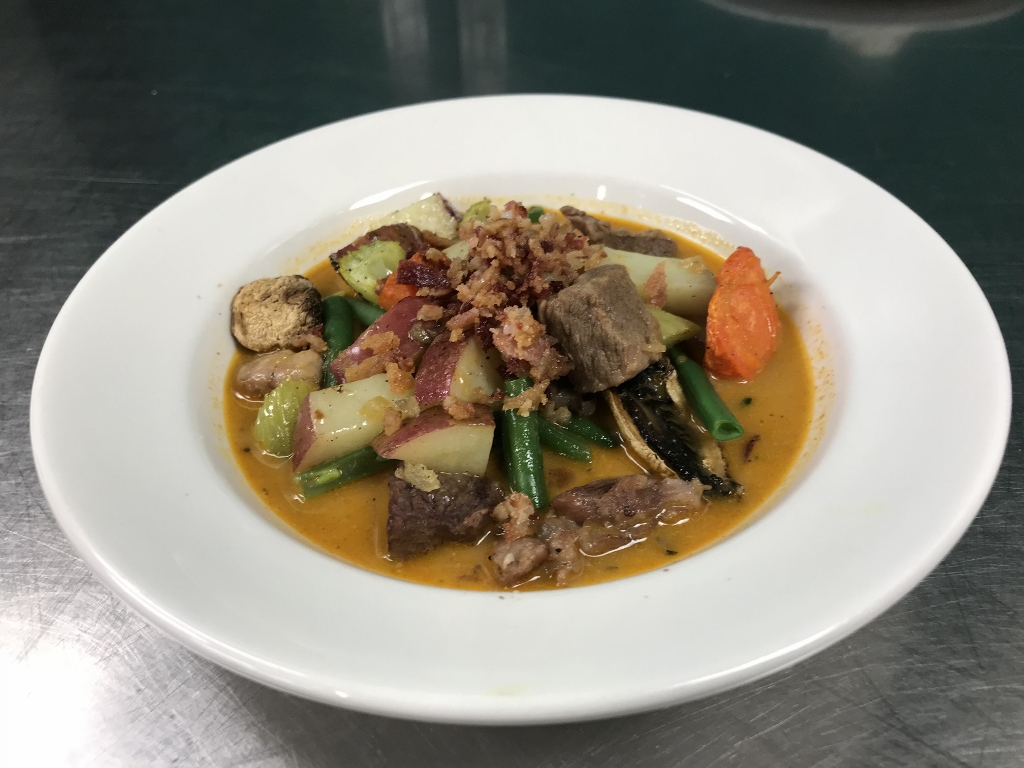
“Our cassoulet, that’s Madeliene Kamman’s recipe, we confit the duck for three weeks, and we’ve added some quail, which is an exciting touch. It’s as incredible food. Then there’s bisque, that’s a Ducasse recipe, with a trout quinelle, white on white, rich but balanced, very French. There’s a lot of tremendous food,” Gulliksen said. “To be able to walk in here, sit down to this kind of meal, for $15. It’s kind of mind blowing.”
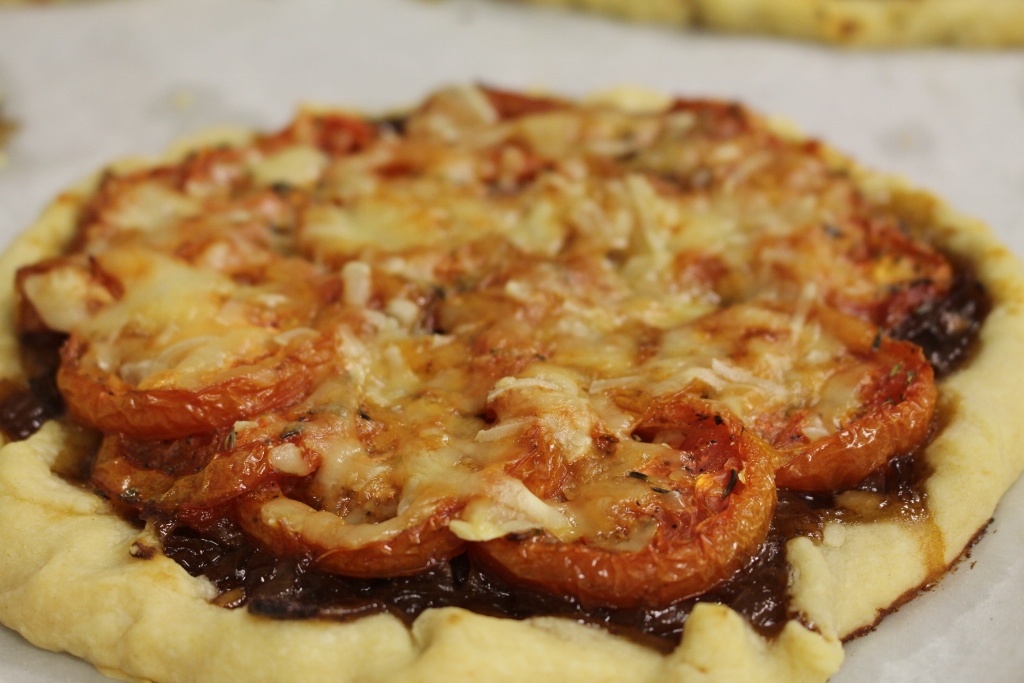
Mason agreed, saying that in her spring semester classes, she pushes students equally hard to handle global flavors – a counterpoint to Gulliksen’s French classics.
“I really try to push them hard, to be fast, to be efficient, to have a sense of urgency along with their work ethic,” Mason. “I’m really on their butts, pushing them, to see, how much can they do — because when they get out there, it’s going to be eye opening, the pace and demands of a real kitchen.”
Gulliksen, who paid her culinary dues on both coasts, agreed, saying the controlled pace of the school’s kitchen can “feel a little like playing house.”
This semester, however, Gulliksen had a small class – just a half-dozen students – who each worked their own station, as they would in a working restaurant. For the final meal of the semester – the “last supper,” as Gulliksen called it – that’s an appreciable challenge.
“Tonight, they’ll feel it, when the tickets come all at once, they’ll have a sense of the restaurant rush.”
As dishes left the kitchen, compliments made their way in. One guest called the cassoulet, prepared by Madison Smith, as “rapturously good.” Waitstaff relayed several compliments for the bisque, prepared by Rasheed Robinson, described by Gulliksen as the semester’s “soup master.”
In the kitchen
The kitchen is staffed by an “eclectic” group of students, Gulliksen said, from young students hoping to break into the restaurant industry, to working cooks looking to improve their skills, to “retired executives and former military who just want to take a course and then get hooked.”
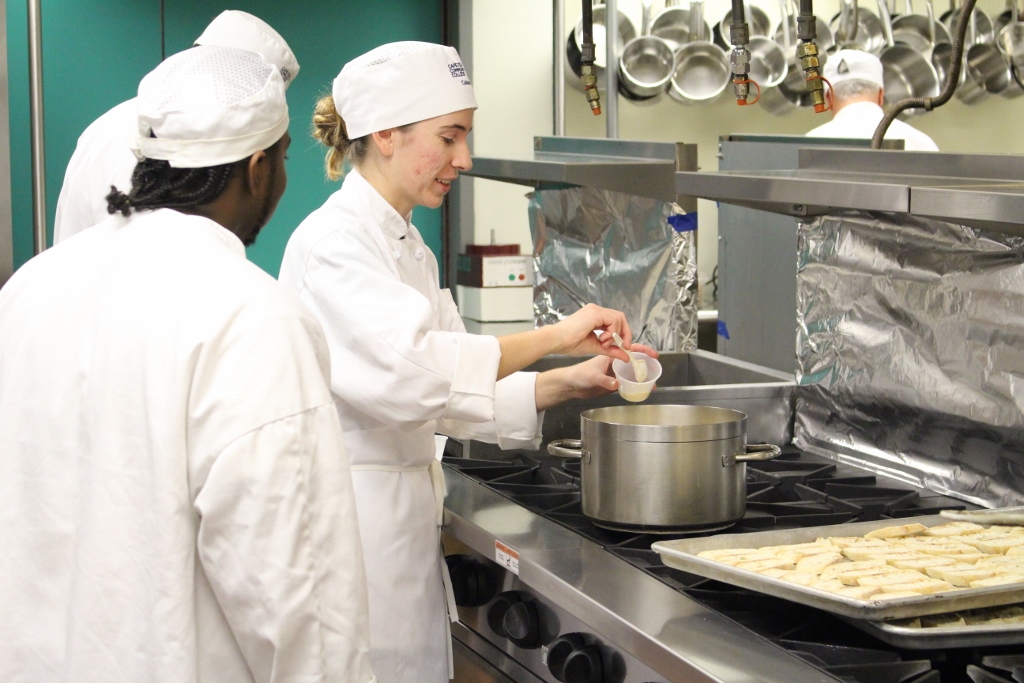
Mason said, “the training you get here, the experience you get here — and you, or your parents, don’t have to take out $30,000 or $40,000 — it’s pretty great. It’s pretty dynamite that this is available to the community.”
Mason’s colleague Winthrow summed up her dedication to cooking and teaching.
“I’ve been to a wedding and a funeral with this woman, and she wore a chef coat both times,” Winthrow said.
But Mason gives a lot of credit to the program to the students themselves.
“I think a lot of students come in with different expectations about what this is, that maybe we’ll just cook up a few things. But it’s very challenging right from the start – the technique, the vocabulary. But once the students get past that, they often really do impress me,” Mason said.
“I should say ‘don’t let anyone know about it,’” Mason joked. “But come on by, have a meal, you’ll see what I mean.”
Important note: reservations are not yet available. CFCC’s reservation system goes online about two weeks into the semester. Look for the updated spring semester lunch seatings on CFCC’s Our Place website during the second week in January. Our Place is located at Walnut and Water streets, in the Emmart building.
Send comments and tips to Benjamin Schachtman at ben@localvoicemedia.com, @pcdben on Twitter, and (910) 538-2001.
