


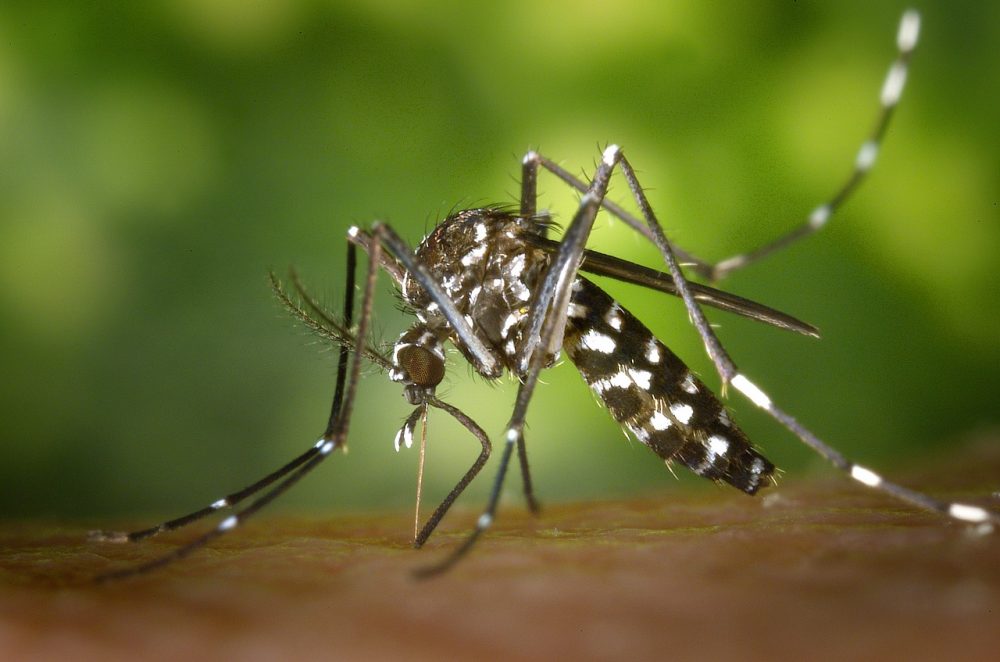
NEW HANOVER COUNTY — A month after the county revealed a case of West Nile Virus was detected in a person, recent results from four traps of mosquitoes tested positive in the county.
The state department of health — which does surveillance testing of samples — notified New Hanover County that West Nile Virus was present in the traps taken from Castle Hayne, near Greenfield and Front streets, the Middle Sound area, and near Snow’s Cut.
New Hanover County Public Health asks the public to not be alarmed, but remain careful to protect themselves from mosquito bites. Tips include emptying outdoor vessels of standing water, using EPA-approved insect repellant while outdoors, wearing long sleeves and pants when outdoors, and limiting outdoor activity, especially at dawn and dusk when mosquitoes are most active.
“Human incidence of West Nile Virus is rare, but it is a dangerous disease,” David Howard, public health director, said in a press release. “So with the knowledge that the virus has been found locally in several mosquitoes, it is important for our community to be aware and protect themselves by preventing mosquito bites.
Public health has a mosquito control team that consistently monitors activity and sprays areas with larvicide to kill mosquito larvae before they hatch. It controls the mosquito population “through active trapping, testing and treating known breeding environments.”
Two of the positive-tested areas (Sunset/Greenfield and Snow’s Cut) are scheduled to be sprayed this week and one is scheduled for next week (Middle Sound). The fourth trap (Castle Hayne) is in a heavily wooded area far from human population.
West Nile is transferred from birds to mosquitoes to humans. In rare instances it is spread through exposure in labs, blood transfusion and organ transplants, or from breast feeding, during pregnancy or delivery from mother to child.
It cannot be spread through coughing, sneezing or touching, by touching animals, dead or alive, or eating infected animals.
There is not a vaccine or medications available to treat West Nile in patients.
According to the Centers for Disease Control and Prevention, 80 percent of individuals that contract West Nile won’t have symptoms. Twenty percent of people infected may have mild symptoms: fever, headache, body aches, nausea, vomiting and sometimes swollen lymph glands or a skin rash on the chest, stomach or back.
Severe symptoms affect 1 in 150 people, according to the CDC, and could include high fever, headache, neck stiffness, stupor, disorientation, coma, tremors, convulsions, muscle weakness, vision loss, numbness and paralysis. If experiencing severe symptoms, it’s important to seek medical treatment, as neurological effects could become permanent.
To report mosquito activity or concerns, click here.
Tips or comments? Email [email protected].
Want to read more from PCD? Subscribe now and then sign up for our morning newsletter, Wilmington Wire, and get the headlines delivered to your inbox every morning.
