


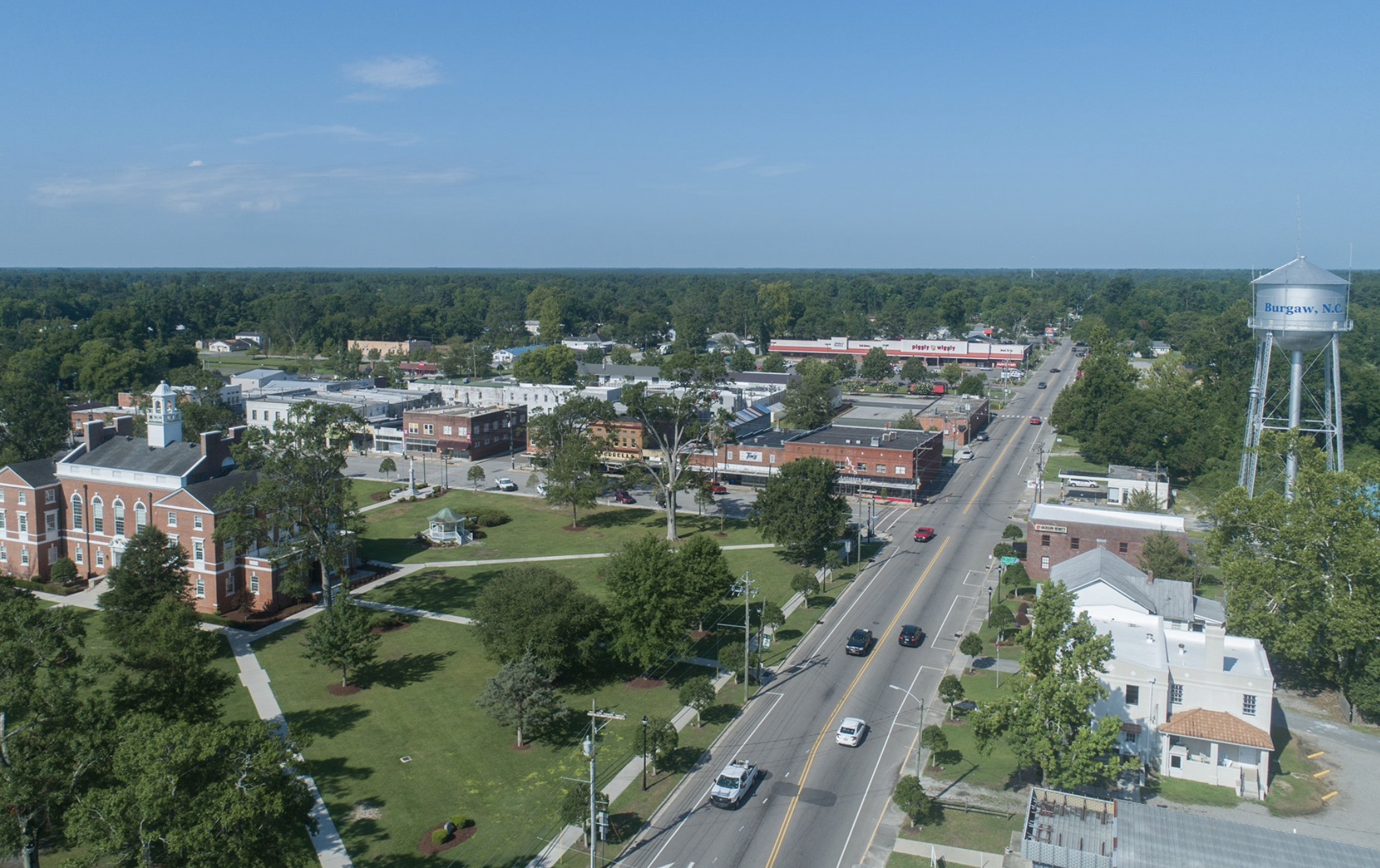
PENDER COUNTY — As development accelerates across the region, Pender County leaders have adopted a five-year strategic plan aimed at ensuring infrastructure, public safety and spending keep pace with the county’s growth.
During its Feb. 16 meeting, the Pender County Board of Commissioners unanimously approved the 2030 Strategic Plan. The plan acts as a long-range operational manual, establishing clear objectives for every county department to ensure resources are used efficiently as the region expands. The adoption marks the conclusion of a 13-month development phase that began in January 2025, intended to guide every department and budget decision through 2030.
“It’s a framework for us to have a path forward so that we can actually be proactive instead of reactive,” County Strategic Director Sarah Fulton clarified.
ALSO: With financial safeguards in place, $10.8M Hampstead library contract inked
Fulton, who led the project, gave commissioners on Feb. 16 an overview of the plan and the work completed by staff to finish the project. She told the board the development phase required a level of honest self-evaluation from the county departments that proved at times difficult but necessary for progress.
“It’s important to look in the mirror when you’re making plans to move forward and sometimes that look in the mirror can be a little tough, but it’s important to do,” Fulton said. “There’s been a lot of conversations throughout the last year that have been very productive.”
The plan identifies 65 specific action items or goals for the county, ranging from expanding the school resource officer program to auditing county employee pay scales and large capital improvement projects, such as the construction of new fire stations. Fulton emphasized the adoption of the plan does not authorize any immediate spending. It instead provides the roadmap for how the county will prioritize its funding during future budget cycles from now until 2030.
“It’s a framework for us to have a path forward so that we can actually be proactive instead of reactive,” Fulton clarified.
Of the 65 items, only three are currently flagged as “high budget” impacts requiring significant investment from the county, though the 2030 plan does not list specific estimated costs. Top-tier priorities include expanding EMS services following the formal merger of Pender EMS and Fire into a county-run department, which involves adding new units and staff to maintain response times. The county has already committed about $12.7 million to acquire the assets and debts of Pender EMS and Fire for the transition, with an additional $1.8 million expected in recurring annual personnel costs.
Developing a comprehensive water and sewer master plan to serve as the technical foundation for utility expansion is also included. Pender County Utilities is currently managing the $110 million Hampstead Membrane Water Treatment Plant project, expected to double the county’s water production capacity when it opens in fall 2028.
Additionally, the county plans to conduct a total overhaul of its Unified Development Ordinance to establish modern guidelines for developers regarding housing density, flooding, and infrastructure requirements. The UDO was first adopted in 2010 when the county population was about 52,000. About 15 years later, with explosive growth along the Highway 17 corridor, the population is over 70,000, necessitating a change from more rural-focused standards to regulations capable of managing urban development.
Chair Randy Burton told Port City Daily Tuesday the UDO rewrite is one of his top priorities, to ensure infrastructure keeps pace with construction and growth. He specifically pointed to the county’s tree ordinance as an area for improvement.
“I think we need to look at the tree ordinance a little more in depth, to have a better way for developers, like for commercial and larger retail, to save and to have the best green space possible in the county that we can,” Burton said.
Currently, Pender’s UDO requires developers to preserve a percentage of existing “significant” trees — defined by species and trunk diameter — or mitigate their removal by planting new ones. However, the current rules allow developers to clear-cut large swaths of land if they pay into a mitigation fund or plant smaller saplings which can take decades to reach the maturity of trees lost.
Speaking of the trees, Burton expressed a clear vision for expanding the county’s green space through land preservation and increased recreational areas. Pender County currently funds and operates six primary parks — including the 78-acre Hampstead Kiwanis Park and Pender Memorial Park in Burgaw. Burton noted the board is looking to follow the lead of neighboring counties by proactively identifying land for parks and conservancy, while the opportunity exists, though he didn’t provide a specific property under county consideration.
The 2030 plan arrives as the county navigates its 2026 property revaluation. While the exact percentage of increase for 2026 has not yet been finalized, property values in the region have historically spiked; New Hanover County, for example, saw values jump roughly 67% in its 2025 revaluation. Commissioners are now facing pressure to fund the new strategic goals without spiking tax bills. Burton was clear the current tax rate of 73.75 cents per $100 must be adjusted once the new property values are settled. The revaluation numbers are expected to be mailed to property owners on March 26.
“My biggest goal for this coming year is the revaluation and working on the tax rate,” Burton said. “The current tax rate is going to be a non-starter for me. It’s going to have to be lower.”
Essentially, Burton is pushing for a revenue-neutral approach — adjusting the tax rate downward so the county isn’t collecting massive amounts of funds just because property values went up. He expects the county to find funding for outlined goals through natural revenue growth from new industry, like the upcoming Amazon delivery station and robotics fulfillment center in the Pender Commerce Park.
Once operational, these facilities generate revenue primarily through commercial property taxes on the buildings. According to a November 2025 presentation to commissioners from Wilmington Business Development, Pender County’s share of revenue from the Amazon projects could reach roughly $2 million in annual tax revenue. While the robotics center straddles the New Hanover County line, the majority of the facility sits in Pender, providing a significant boost to the local tax base without increasing the burden on residential homeowners.The delivery station is expected to be fully operational this spring, with the robotics center scheduled to open in fall 2026.
Another cornerstone of the strategic plan is stabilizing the county workforce currently stretched thin by regional competition. Pender has historically struggled to retain talent, often losing deputies and paramedics to neighbors like New Hanover or Onslow counties, where pay and benefits have been higher. A starting deputy in Pender makes roughly $47,000 to $49,000, while New Hanover and Onslow counties offer starting salaries closer to $53,000, depending on experience.
The retention crisis was most visible within Pender EMS and Fire. In the year leading up to the county’s take over of the service, dozens of personnel departed, some headed for neighboring agencies.
The ongoing transition under county supervision will bring over 200 employees directly onto the Pender County payroll on July 1, 2026 — when the merger will be made effective. Burton noted the high headcount actually gives Pender more buying power. By having a larger pool of employees, the county can negotiate lower premiums and better coverage for group health insurance and retirement benefits, making the overall compensation package more attractive to prospective hires.
“We want to remain competitive at the salary and benefit level,” Burton said, adding he wants Pender to “be setting the standard” rather than “catching up” to county neighbors.
The final strategic plan centers on five prioritized pillars, narrowed down based on public input:
- Support schools and education
- Enhance public safety
- Strategic growth and infrastructure
- Enhance public communication
- Internal development and retention
The plan’s development over the past year included workshops and multiple surveys, garnering responses from more than 600 residents. Many surveyed residents expressed fear the board of commissioners would not follow through on the milestones, some specifically asking for better “two-way” communication between commissioners and the public to ensure they aren’t just being talked at by the county, but listened to.
Burton committed to holding himself accountable to hitting the plan’s benchmarks, noting Fulton and county staff will come back before the board during public meetings quarterly to provide updates on benchmark progress.
With the unanimous vote, the 2030 plan is now the standing policy for Pender County and will serve as the guide for the upcoming 2026-2027 fiscal year budget. Commissioners will begin their budget workshops and planning meetings in March.
Have tips or suggestions for Charlie Fossen? Email charlie@localdailymedia.com
At Port City Daily, we aim to keep locals informed on top-of-mind news facing the tri-county region. To support our work and help us reach more people in 2026, please, consider helping one of two ways: Subscribe here or make a one-time contribution here.
We appreciate your ongoing support.
