


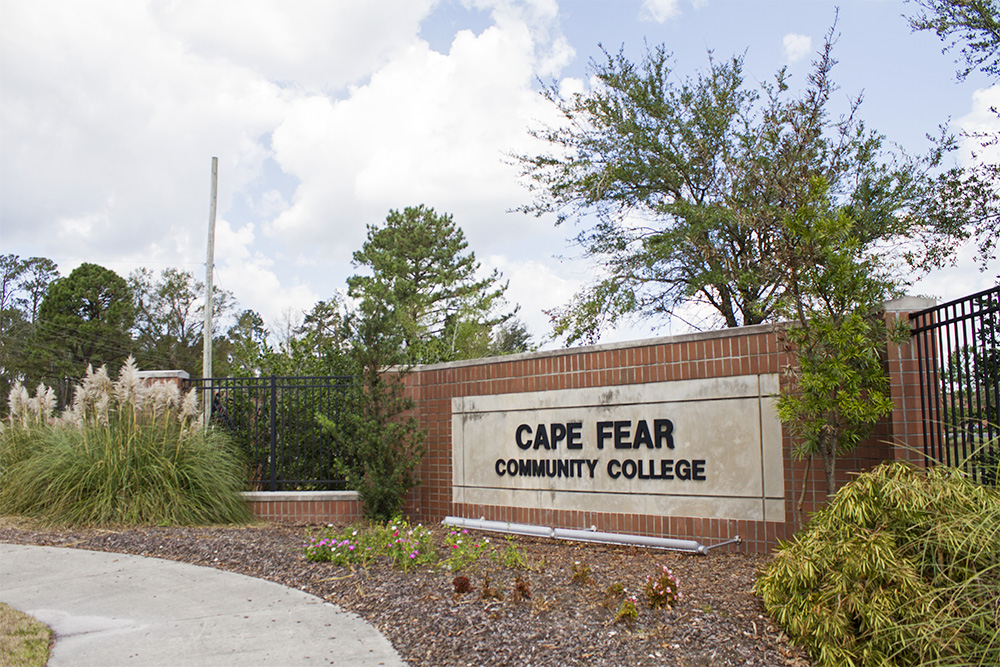
WILMINGTON — Cape Fear Community College was not alone in 2020 when the Covid-19 pandemic tanked its enrollment by about 20%.
The entire North Carolina Community College System languished at the time. Yet, two years later, while total community college enrollment in the state sat 14% below its 2018 to 2019 total, CFCC’s climbed 1.4% higher.
READ MORE: Gaming and simulations among four programs CFCC hopes to add by fall
Brunswick Community College — the only other two-year institution in the region though a quarter of the size of CFCC — was down from 5,929 students in 2018 and 2019 to 5,418 in 2021 and 2022.
CFCC President Jim Morton said the spring enrollment numbers are up by 4% in the past year. When he discussed the numbers with the college’s board of trustees in January, he said fall enrollment leveled off. Yet, he credited “thousands” of calls to encourage class enrollment for the increase.
When Morton spoke to Port City Daily about the issue this week, he attributed the recovery to the college promoting itself more since he took over in 2018.
The communications department focused more on digital marketing and social media. The department now has a dozen people, has built a new website and is active on a litany of social media channels.
“It’s really making an impact in exposing everyone to the programs,” Morton said.
He also attributed interest to new programs, pointing to partnerships with local industry and public schools to inform some of those choices. Morton about roughly 30% of the college’s students come from outside its service area in New Hanover and Pender counties.
“For our electrical lineworker program, we have students that come from as far away as California,” Morton said, adding the truck driving programs and law enforcement training sessions are also major draws for outside the Cape Fear.
The rapid growth in the area also is “not hurting” enrollment, he said.
“A lot of times you hear that it’s the older population and retirees moving here, but I’d also say all of North Carolina is growing,” he said.
State data ranks North Carolina third in population growth behind Florida and Texas.
Simultaneously, the college has made a gain of 8.5% in the full-time equivalence, credits that dictate the amount of funding it receives per student. The state has declined by 6%.
When students take courses, the hours eventually add up to one FTE. For each FTE the college creates it gets funding from the state. The college’s budget has increased by 19.94% since 2018 because of FTE increases, but why and what that means on paper is somewhat complicated.
For starters, as Morton discussed in January, there are various FTEs for different programs and they pay out differently: 1A tier FTE carries the most funding, for example, and represents programs like nursing and auto body repair. Last fiscal year, each credit was worth $4,634.23.
Meanwhile, tier 3 FTE sits at the bottom rung of funding worth only $2,245.61 last year. Less expensive courses to run like English and business fall in the lower categories.
“It’s not always about making money, but it’s also about fulfilling the needs of the community, so it’s a balance there,” he said.
He was critical of the college’s past behavior, claiming it was not responding to the needs of the community and local industry. For instance, workforce development programs have doubled revenue since he started as president.
Morton said the line-worker course of study is the product of conversations with Duke Energy about its needs. As well, the plan to add a geomatics program this fall was the result of requests for a handful of local surveying companies.
“Right now we’re focused on expanding nursing,” Morton said, “That’s a higher FTE and it’s going to be expensive to run too.”
ALSO: County’s building purchase for CFCC is aimed at the nursing shortage. Here’s how it could help.
That nursing expansion will be housed in 319 N. Front Street, if a county bid to purchase it goes through. The college has said, repeatedly, it wants to address the local nursing shortage.
The reason the college’s budget increased more than its enrollment is It’s high-value FTE programs increased by more than 22%. Also, the college was facing a low point in its budget in 2018, the same starting fiscal year Morton showed the trustees.
The college was facing a significant cut of about $1.5 million because of enrollment decline going into Morton’s first fiscal year as president. Morton, a graduate from UNCW with a bachelor’s in marketing, has faced public criticism for the push to expand enrollment and state auditors have pointed to issues with CFCC’s FTE reporting in the past.
Have comments or tips? Email [email protected]
Want to read more from PCD? Subscribe now and then sign up for our newsletter, Wilmington Wire, and get the headlines delivered to your inbox every morning
