



WILMINGTON — Rusty Barr is an emotional man, at least when it comes to his holiday trade. Every November and December he sells around 50,000 Christmas trees throughout North Carolina and roughly 20 other states across the Midwest and the South.
After Hurricane Florence broadsided the people of Wilmington last year, Barr said sales in the region actually increased.
RELATED: Does North Carolina owe you money? Gift yourself ahead of the holidays
“I think they lost so much that they thought, ‘We’ll get the pumpkins, we’ll get the Christmas spirit,'” he said. “It probably helped them overcome a lot of their adversity.”
Barr and his son run Barr Evergreens, a third-generation farm in western North Carolina that grows Christmas trees and pumpkins in the fall. When asked if he viewed himself as some sort of commercial farmer version of Santa Claus, Barr looked out over families walking through rows of trees as his eyes watered.
“It’s emotional,” he said. “We have the centerpiece of their holiday.”
A shortage in the market
The trees — Douglas firs, conifers, eastern white pines — are grown on a sprawling 500-acre farm in the Blue Ridge Mountains of western North Carolina. After large tree producers in the Midwest scaled back after a period of overproduction, Barr said he and other growers like himself began cultivating their own seedlings (trees younger than 3 years old not ready for planting in the fields) to be more self-sufficient.
There is a slight shortage in the market this year due to supply issues dating back to the 2007-2008 recession, according to Barr.
Farms grew too much inventory before the slowdown, tying up some of the land, and are now playing catch-up. For Barr Evergreens, this was compounded by root rot and deer eating buds off young trees, slowing their growth.
“In 2008 we only planted 20,000 trees,” Barr said. “In 2009 we planted 55,000, and the deer ate about 25,000. They ate them so much that the trees were probably two to three years behind. It was two years before we could replant the trees that were damaged.”
North Carolina-grown
The industry has consolidated in recent years and some of the old tree growers have aged out, according to Barr, unable to maintain production in a labor-intensive and seasonal industry.
Barr estimates roughly 300 to 400 growers cut and sell 4 million trees annually in North Carolina, with slightly more planted every year to make up for a 10-percent portion of each crop unharvested. Trees on Barr’s farm average around 9 years from when the seed is planted to when a fully grown tree is cut.
He then sells just under 10 percent of the annual harvest at the Wilmington retail lot, located on the corner of Shipyard and Independence Boulevard. A majority is sold at wholesale to garden centers and independent retailers across the Midwest.
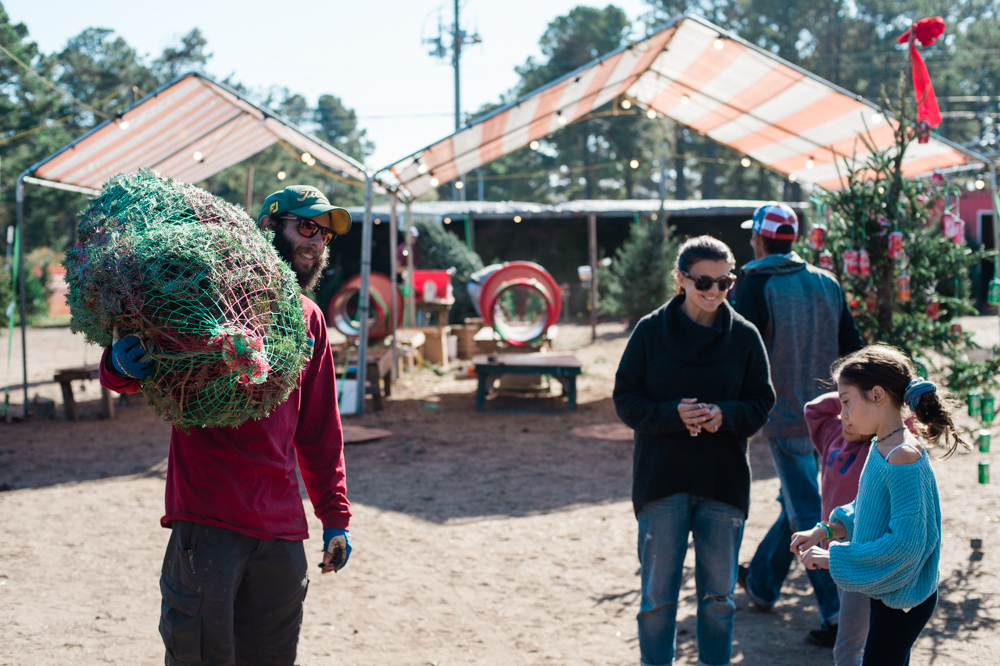
Jason Madero was walking through one of the rows of trees with his family.
“It’s good to buy North Carolina-grown trees,” Madero said. “It’s always good to support your local area.”
Barr doesn’t export any of his own trees but says many in the state are shipped globally, to places like Russia, Japan, and the Caribbean.
An intensive process
Barr said other growers are now palletizing production so that trees can be loaded and unloaded using forklifts. But his land’s geography presents a challenge.
“It’s a labor intensive process,” Barr said. “We’re on the sides of slopes and hills, so we can’t mechanize a lot of the production.”
Like many other crops, he plants the trees in rows and constantly fights weeds and bugs while trimming each frequently throughout its growth cycle.
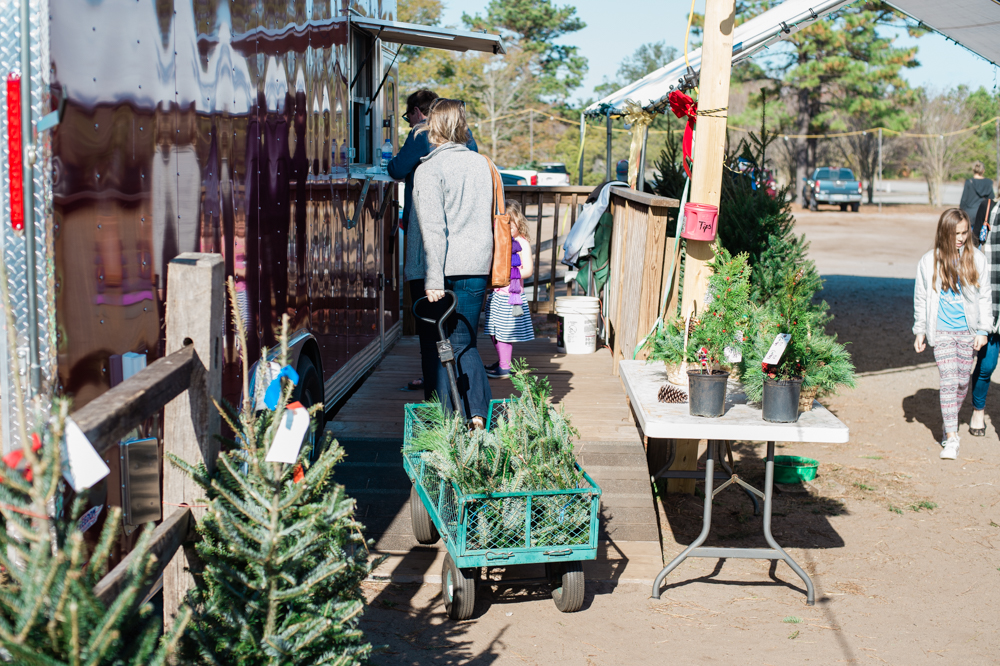
As the industry catches up to match demand, side products like wreaths, garlands, and ‘table-top’ trees are increasing in popularity, according to Barr.
Ultimately, the challenges presented by the market are not enough to prevent Barr from doing what he loves.
“If we had a crystal ball we might not be in the tree business, we’d be doing something else,” Barr said. “But we love it, and we’re using the land that we have.”
Mark Darrough can be reached at [email protected] or (970) 413-3815
