


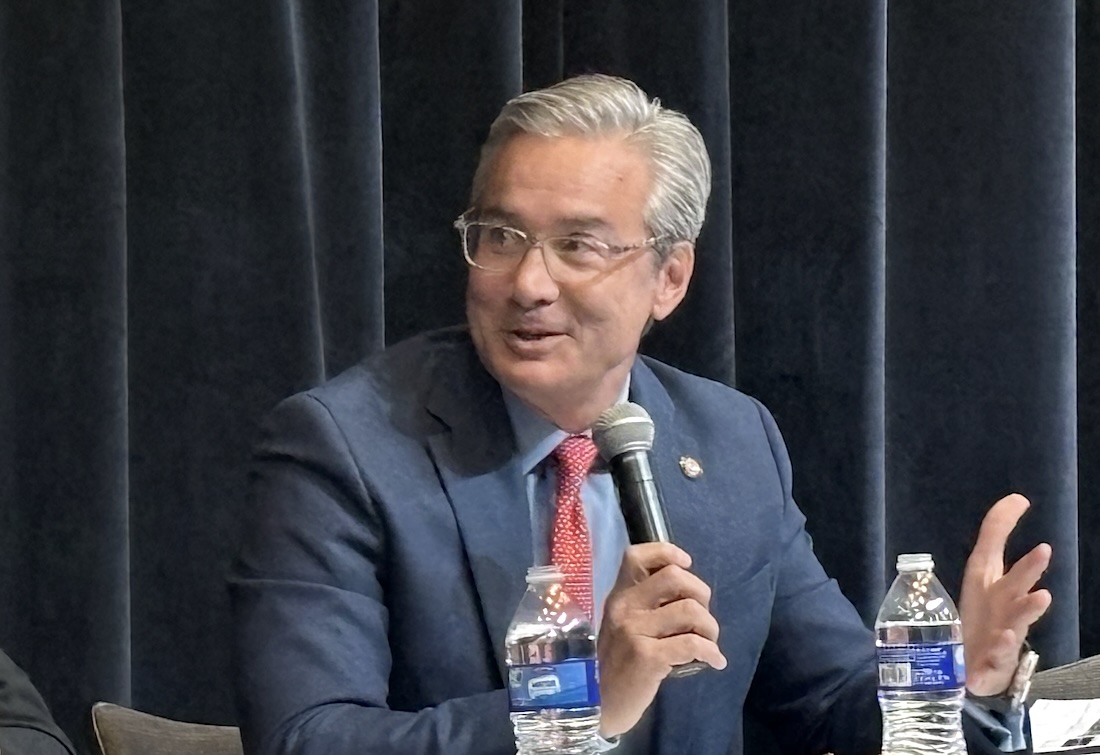
NEW HANOVER COUNTY — A New Hanover County politician recently ousted from his state Senate seat has been appointed to a new board he initiated.
Senate President Pro Tempore Phil Berger has named Michael Lee, who is finishing his term as New Hanover County’s state senator after losing reelection to Democrat Jessica Bichler, as a member of the North Carolina High School Redesign Commission. The entity was created at Lee’s behest earlier this year through legislation in the technical corrections bill to the state budget.
The commission is intended to recommend changes to policies and systems governing high schools, to better prepare North Carolina students for success in either higher education or the workforce.
ALSO: Ousted Pender, New Hanover judge promoted to superior court position by GA
Lee said he was grateful for the chance to keep serving the state.
“For most of my career, I’ve pushed for education to work better for students, particularly in high school,” Lee wrote in a statement to Port City Daily. “That means blurring the line between high school, community college and the workforce so students can move ahead as soon as they’re ready. It also means credit for what students can actually do instead of just time in a seat, and funding that follows the student wherever they learn.”
The commission’s goal, according to the senator, isn’t just to “tinker at the edges” but rather rethink what high school looks like. It is charged with considering a host of practices, including flexible requirements for high school diplomas, personalized pathways to graduation or course credits, and strategies for learning beyond the school walls.
Another component is for the commission to find ways artificial intelligence can help students engage in career exploration and work-based learning experiences.
It also will explore “alternative funding models to enable the development of a statewide learning ecosystem.” Critics of the current model say the model does not fully address the range of student needs, particularly for higher-need populations, such as exceptional children or those from low-income families.
The legislature has already set aside money this year for the North Carolina Collaboratory, a research and grant-making center housed at UNC-Chapel Hill, to explore shifting the state’s K–12 public school funding to a weighted student funding formula, where per-pupil amounts are determined based on student need. Sen. Lee has also introduced legislation in the past to examine the state’s funding model, though it has failed to gain traction.
Lee was the only appointee to the North Carolina High School Redesign Commission included in an appointments bill passed earlier this week; the commission, in all, will have 15 members.
The president pro tempore, whether Berger or his replacement in the new year, will have another appointment aside from Lee. The speaker of the House — currently Destin Hall, set to be replaced by Robert Reives (D-Chatham, Randolph) in the new year — also has two appointments. The governor will make one appointment.
Other members of the committee will be the following people, or their designees:
- State superintendent of public instruction
- President of the UNC System
- President of North Carolina Independent Colleges and Universities
- President of the North Carolina Community College System
- The chief executive officers of each of the following organizations:
- MyFutureNC
- North Carolina Chamber of Commerce
- BEST NC
- SparkNC
- One chief administrative officer or president of a community college participating in a program, project, or initiative developed pursuant to this act (to be appointed by the commission chair)
- One superintendent of a local school administrative unit participating in a program, project, or initiative developed pursuant to this act (to be appointed by the commission chair)
Port City Daily asked Lee, Senate majority leader until the end of his term, when the other appointments would be made.
“Several are set by state statute and the rest are up to the appointing authorities, so I’ll leave the timing to them,” he said. “The commission has a lot of work ahead, and I look forward to getting started.”
Per the technical corrections bill, the commission shall submit a report to the Joint Legislative Education Oversight Committee by April 30, 2027, and annually thereafter. The report is required to include recommendations approved by a majority of the commission and a summary of any evaluations of the efficacy of any competency-based education programs and high school redesign efforts implemented during the current school year.
At Port City Daily, we aim to keep locals informed on top-of-mind news facing the tri-county region. To support our work and help us reach more people in 2026, please, consider helping one of two ways: Subscribe here or make a one-time contribution here.
We appreciate your ongoing support.
