


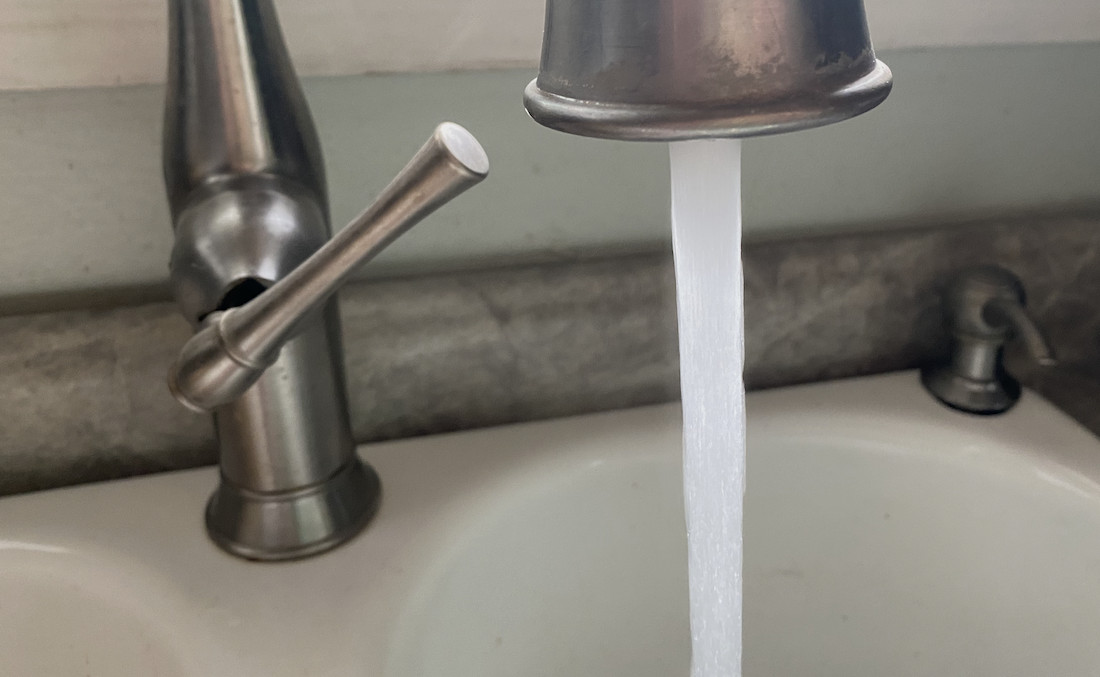
NEW HANOVER COUNTY — Some of the region’s population with high levels of PFAS-contaminated well water will have an opportunity to connect to Cape Fear Public Utility Authority for free in 2027. A new program is being funded in New Hanover County with part of the $17-million Chemours settlement.
The money for the water connection project will be disbursed over three years, at a total of $5 million, to potentially connect 508 properties to New Hanover County’s clean water supply. Monday, commissioners voted 5-0 to approve the program and a $1.7-million investment in the first year.
It’s being paid for from the September settlement and a yearslong lawsuit over statewide environmental PFAS contamination. Multiple southeastern North Carolina municipalities and the state are receiving $455 million in total from chemical manufacturing companies Chemours, DuPont and Corteva. New Hanover County is set to receive $22.8 million over the next 10 years; however, when accounting for the 25% in fees paid to Dallas-based law firm Baron & Budd, which handled the settlement, it comes out to $17 million.
READ MORE: Chemours, DuPont, Corteva settle multi-million PFAS lawsuit with NC localities
Commissioner Chair LeAnn Pierce told Port City Daily when the settlement funding was announced a few months ago, New Hanover County likely would put it toward well-water mitigation. County staff and CFPUA team members immediately went to work, Assistant County Manager Jessica Loeper explained to commissioners at their agenda review and regular meetings in the last week. She explained the water connection program could bring new or existing waterlines to half-a-grand residential and non-residential properties.
A map Loeper showed commissioners indicated property areas would be located in both the northern and southern parts of the county. Regardless of the PFAS levels measured or income of property owners, approved properties in will be able to connect to CFPUA without paying a tap fee.
Commissioner Rob Zapple put it further into perspective, explaining if the county wasn’t covering costs, self-paying customers would fork out $7,000 or more.
The county’s program could connect 47 properties to the existing water mains. These projects tend to be more costly — $16,000 to $25,000 — due to distance of some homes to the lines, as well as right-of-way easement requirements to add a connection. The county is capping the cost for existing waterline connections at $25,000.
“We may have individual cases that we have to analyze,” Loeper said, referring to price escalation beyond the cap. “We want to try to be equitable as possible and help as many people as we can with the funds we have.”
She said the existing line extensions also target some of the most vulnerable areas of PFAS contamination and have low- to moderate-income communities. There are already 15 projects planned by CFPUA to add new water main extensions that can link multiple properties, including in areas of Rockhill Road, Wrightsboro Acres and Chadwick Acres in Castle Hayne to Ogden’s Bayshore. The new water extensions would be around $10,000 per connection.
Loeper added any property owner agreeing to connect to a new or existing line would also have a CFPUA bill to pay for service and clean drinking water thereafter.
Rates vary by meter size, though due to rising costs for PFAS litigation and mitigation at CFPUA, rates have escalated in recent years by 8.46% in 2023, 4.6% in both 2024 and 2025, and 6.65% in 2026. CFPUA has sued Chemours to recover costs spent on abating contamination to the drinking water supply, after it was discovered the company was dumping PFAS in the Cape Fear River for four decades.
In 2022, CFPUA installed at its Sweeney Treatment Plant a granular activated-carbon filtration system for $43 million to extract PFAS and other chemicals; in 2020, it paid more than $1 million to upgrade its Richardson plant with reverse osmosis treatment. An Oct. 20 reading from the authority showed GenX at 0.99 parts per trillion — anything below 10 ppt is considered safe — with PFOS and PFOA at zero at Sweeney and zero across the board for the same chemicals at Richardson.
However, Chemours’ PFAS pollution has since been found permeating the air, making its way into seafoam and seeping into ground water, hence affecting wells.
As part of a 2019 consent order between the Cape Fear River Watch, North Carolina Department of Environmental Equality and Chemours, anyone can have their well water tested for free (learn more here), which the county is encouraging everyone to do to see if they qualify for the water connection program. While the consent order mandates Chemours provide clean water only to properties with wells testing 10 parts per trillion and above for GenX or an individual PFAS compound, and 70 ppt for combined levels of PFAS compounds, the county’s program will not set limitations.
“So if someone has 4 ppt and isn’t covered by Chemours, the county will,” Loeper said, as long as the property lies within this first batch of approved areas.
The county will not duplicate properties covered by Chemours’ current consent, nor will it overlap with grant funding CFPUA has attained to help property owners connect to the clean water supply. When accounting for homes in the vicinity covered by either option, it amounts to 461 properties that fall in the gap for county support.
Vice Chair Dane Scalise made it clear the $5 million the county was disbursing for the water connection program was only part of what’s to come.
“We are not done,” he said. “CFPUA has an ongoing lawsuit against polluters. And it is my belief that we are going to see a significantly greater result out of that lawsuit. … This money gets us started on the work.”
His colleagues were in support as well. Zapple stated the move “cuts through” bureaucracy to make sure citizens can access uncontaminated water.
“For those who are skeptical or cynical about local government, we are pushing aside the clutter to get your house connected,” he said.
Chair Pierce asked if county staff had considered settlement money going to people who purchased individual “expensive home systems” that filter PFAS. Upon the news spreading of forever chemicals in the Cape Fear River almost a decade ago, many residents began purchasing reverse osmosis (RO) systems that can be installed under a sink or filter a whole home; this was before CFPUA updated its plants.
“We did discuss this as a part of what to do with money, but we thought starting with water connections was the best direction,” Loeper answered, to which Pierce asked to keep it in mind for future consideration.
Commissioner Stephanie Walker asked about people who may not want to tap into the CFPUA system but prefer individual reverse osmosis treatment in their homes.
Scalise thought it would complicate matters, particularly with financing since those systems also require changing filters once or twice a year. Connecting to the water supply, in his opinion, would be a more permanent improvement, helpful to more people, to which Walker agreed but was just weighing the “what-ifs.”
“But I don’t think we should exclude it from further consideration,” Scalise added.
Loeper informed commissioners the team discussed individual home systems and are open to exploring it in the future, if it’s the will of the board. However, County Manager Chris Coudriet didn’t think the county staff could currently manage both projects simultaneously, citing capacity as an issue.
“The smart thing to do would be to say yes now and get the money to pay for those tap fees,” Zapple said, noting if someone were against connecting to CFPUA, in two years they’d be on the hook for costs if they changed their minds.
Commissioner Bill Rivenbark asked what would happen if someone initially on the map didn’t want to connect to the utility authority but sold their home and the incoming buyer did. Loeper encouraged realtors to tell their buyers to contact the county for further discussions.
According to the county, teams are on the ground, hosting community meetings with eligible property owners and knocking on doors. While the connection program is starting small, Loeper said it could grow and the number of properties may fluctuate.
The commissioners’ vote Monday solidified an interlocal agreement with CFPUA to manage the entire project. How much New Hanover will pay the authority is unknown currently and will be finalized in coming months, according to a county spokesperson.
CFPUA is overseeing property owner coordination, directing outreach, construction, and contracting, with county support including communication needs for the program and determining eligibility for property owners. A website will be launched as well with eligibility details and an application for property owners to access.
Each year of the project, county staff and CFPUA will provide updates, data and analyze its outreach before commissioners as well.
At Port City Daily, we aim to keep locals informed on top-of-mind news facing the tri-county region. To support our work and help us reach more people in 2026, please, consider helping one of two ways: Subscribe here or make a one-time contribution here.
We appreciate your ongoing support.
