


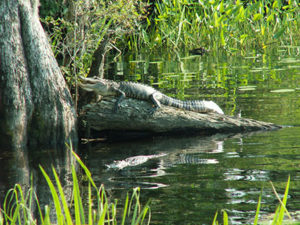
HAMPSTEAD — The North Carolina Wildlife Resources Commission, in conjunction with the North Carolina Alligator Task Force, will be holding a series of public forums this June to receive input on the new NC Alligator Management Plan.
The first forum will be held on June 5, in Hampstead, at the Hampstead (Pender County) Annex Auditorium, located at 15060 US-17. Another is being held in Bolivia at the Brunswick County Complex on June 14. All forums will be held at 7 p.m., for a full list visit the North Carolina Wildlife Resource Commission website.
The draft of the Alligator Management Plan was designed by the Alligator Task Force out of a 2016 resolution by the Wildlife Resource Commission.
According to the Resource Commission, the plan aims to “provide biological information on alligators in North Carolina, identifies knowledge gaps and additional research needed on alligators, identifies areas where alligators may be overpopulated, and recommends biological and social strategies to address alligator management issues.”
The plan also explores options under existing laws to allow North Carolina sportsmen and women “to aid in the removal of alligators under nuisance or depredation situations.”
A full draft of the Alligator Management Plan can be found online.
According to the WRC, “each sentence of the plan is numbered to make commenting on specific portions of the plan easier. Reviewers can refer to the line number when providing comments.”
The commission plans to accept comments on the plan until June 25, and will also be offering an online comment form. Interested people can offer input by mailing or emailing their comments to: Allen Boynton, Wildlife Diversity Program Coordinator, at [email protected] or 1722 Mail Service Center, Raleigh, NC 27699-1700.
The ‘NC Alligator Project’
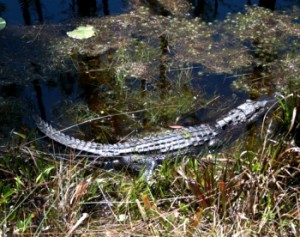
Alligators are widely distributed across the Southeastern US, with populations extending from the Gulf of Mexico to North Carolina.
According to the NCWRC American Alligator profile page, in North Carolina, Alligators inhabit freshwater areas, mostly east of Robeson County northward to Gates County. The largest populations live in the coastal counties of Brunswick, New Hanover, Craven, Onslow and Pender. Alligators are also seen in other areas of eastern North Carolina and have even been found on area beaches.
In addition to the new management plan, the WRC has been operating the ‘NC Alligator Project,’ a citizen science project aimed at mapping North Carolina’s resident alligator population.
Boynton said there are three goals for the project: To identify and cultivate a better idea of alligator population and their nesting sites in North Carolina; to find out where people and alligators are interacting; and to answer questions people may have about the animals.
Residents and visitors alike are encouraged to participate in the alligator program, by taking photos of alligators they come across in NC. Photos can be uploaded at iNaturalist.org, or on the iNaturalist app, available on both iOS and Android.
According to Boynton, these programs are designed to help “teach people to live safely with these animals.”
For more information on the programs, and to find out how to get involved, visit its website at ncwildlife.org.
