


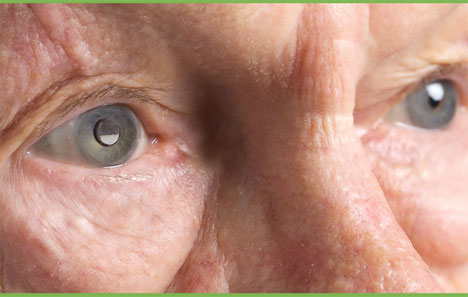
When Robert Harris stopped being able to spot familiar faces on the street–or even in his own living room–he decided it was time for a change.
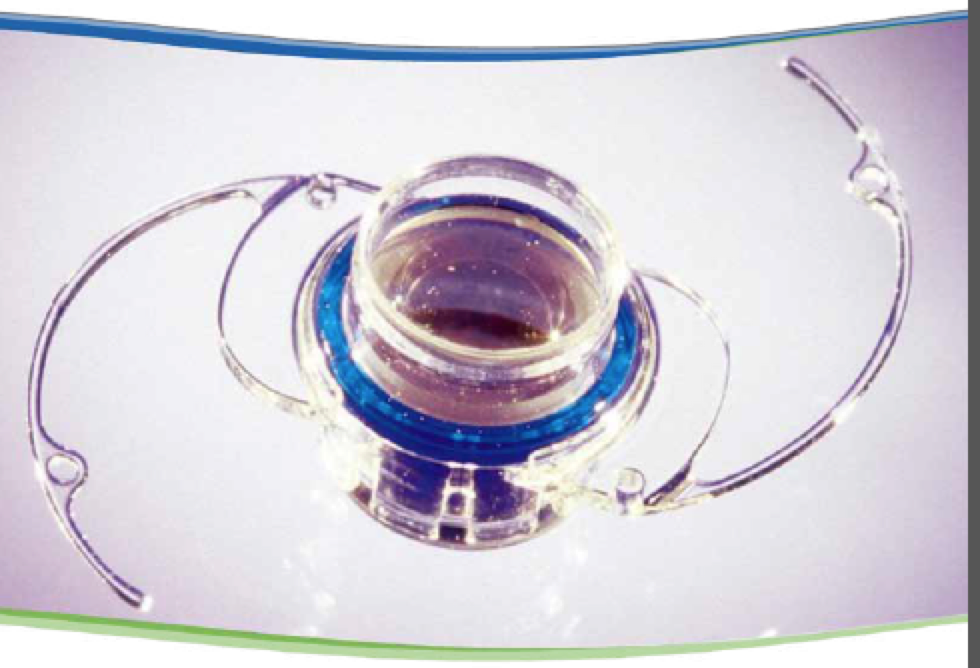
After years of suffering from macular degeneration–chronic, age-related vision loss–the Southport resident is now seeing things much more clearly thanks to a small telescope that was implanted in his right eye.
He was the first patient in North Carolina to undergo the innovative surgery.
Dr. Laura Harris, a Wilmington-based cataract surgeon, performed the surgery in April at Novant Health Brunswick Medical Center. She is currently the only surgeon in the state performing the operation. Dr. Harris hopes to eventually offer the surgery at New Hanover Regional Medical Center.
When Robert Harris first read–with strong reading glasses and under a bright lamp–about a CentraSight procedure in California last year, it piqued his interest. He was diagnosed with dry macular degeneration in 2009.
CentraSight is the name of the FDA-approved treatment program, which includes the implantable telescope and rehabilitation to retrain the eye. There is no cure for macular degeneration, which is the leading cause of blindness in the United States for people over the age of 66. Approximately 2 million Americans suffer from the debilitating condition.
Dry macular degeneration is marked by deterioration of the macula, which is in the center of the retina. Those who suffer from the condition tend to experience a large black spot in the center field of vision and can only see peripherally, Dr. Laura Harris noted.
“Things become distorted,” Robert Harris said of macular degeneration. “When you’re driving, things like electric poles look fuzzy. Things get a little bit cloudy. It becomes increasingly difficult to read. You need more magnification and light.”
As his sight worsened, his interest in CentraSight turned to action.
“In 2011, I had to renew my driver’s license. I barely passed the test; I couldn’t see the little road signs on the computer. It got to the point that I couldn’t even recognize people in the same room with me if they were some distance away. I found it increasingly difficult to shop because I had to stand so close to the shelves to read anything. I wanted to be able to do things like that again,” he recalled.
He had to sit just a few feet away from the television in order to see it, reading became increasingly difficult and he was unable to play golf or drive.
So, he spoke with his opthalmologist, Dr. Robert Brownlow, about the surgery and discovered there were two local medical professionals championing the revolutionary procedure.
After evaluating Robert Harris to ensure he qualified for the surgery, Brownlow referred him to macular degeneration and low vision specialist Dr. Ed Paul, who then referred him to Dr. Harris.
In order to be considered for CentraSight, patients must have dry, as opposed to wet, macular degeneration. Wet macular degeneration is characterized by the growth of abnormal blood vessels underneath the macula. They also must be at least 75 years old and not have had cataract surgery in the target eye.
Dr. Harris said the shape and size is also a factor, since the 4-millimeter telescope–about the size of a pea–is larger than the lens that is removed.
For Robert Harris, the decision to undergo major eye surgery was a no-brainer.
“I just thought, ‘What have you got to lose?'” he said. “I had a lot of confidence in my team of doctors. I still do. They bottom-lined everything to me and told me what the expectations would be. I wasn’t too worried. When you’re at a certain point, you are willing to try anything.”
Dr. Harris’ decision to perform such a new and highly technical operation was similarly easy. She was trained last year in the CentraSight procedure at the Johns Hopkins Wilmer Eye Institute.
“I felt compelled to help,” she said. “I feel like I am pioneering this whole new avenue for people who did not have any avenue before. It is exciting for me.”
Dr. Harris has performed a total of two CentraSight surgeries and has several more lined up for the near future.
Even though the surgery cannot cure macular degeneration, she said CentraSight can offer vast improvements in vision and quality of life.
“There is not a ‘wow’ factor immediately. But they will be able to see so much more than if they never did it. It’s about doing the work and gaining in exponential amounts,” she noted.
Robert Harris would agree. The results, he said, are certainly not immediate.
“When I came out of surgery, it was like I was looking through brown cellophane,” he said. “If you want to wake up from surgery and see better two days later, this isn’t for you. You have to be willing to work with your therapist; the therapist comes once a week. You have to be in it for the long haul…It’s one of those things you have to hang with. You take little baby steps. Every week it is getting a little better.”
It took about a month for him to notice any significant changes. A major turning point, he said, came recently while watching television.
“Prior to the surgery, if I was watching TV, it was all black and white to me. I couldn’t distinguish color. After the surgery, colors became vivid again,” he said.
As more surgical sutures are removed through the healing process, Robert Harris’ vision improves. The first stitches came out about a month after the surgery.
“It went from brown cellophane to clear cellophane,” he said.
It takes almost a year to see full results, but Robert Harris is pleased with the outcome so far.
“I have played golf since this operation. I have no trouble hitting the ball but I have to take a friend with me to see where it goes,” he joked.
All kidding aside, he said he is able to read and check email on his Kindle, use the computer without difficulty and shop without his nose pressed against the shelves.
And, most importantly, he is able to look upon some familiar faces once again.
Hilary Snow is a news reporter at Port City Daily. Reach her at (910) 772-6341 or [email protected].
