


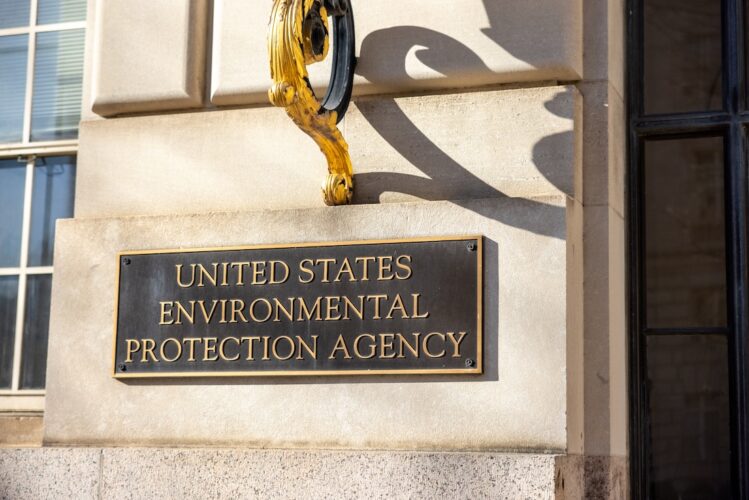
SOUTHEASTERN N.C. — The Environmental Protection Agency has rolled back precautions related to PFAS and water pollution, according to an August memo signed by Assistant Administrator for the Office of Water Jessica Kramer. Environmental advocates fear the rescission will open up more pathways for drinking-water supply contamination.
The memo repealed five guidelines the EPA published between 2022 and early 2025 as a part of its review to ensure all standards and regulations were in line with the Trump administration’s policies and transparency procedures, according to the document’s language.
The five guidelines covered topics such as global climate change, environmental justice as it relates to potential carbon dioxide water pollution, PFAS discharge in wastewater permits and industrial pretreatment programs, pollution-control limits for emerging contaminants, and permits issued under the Clean Water Act. The act is what gives the EPA the regulatory framework and legal ground to stand on, as it relates to the permitting and guidelines.
READ MORE: Chemours, DuPont, Corteva settle multi-million PFAS lawsuit with NC localities
ALSO: ‘Industry is winning’: State budget funds PFAS research, but some balk at lack of regulatory teeth
CATCH UP: ‘EPA has abandoned NC’: Local stakeholders dismayed by Chemours, feds’ settlement
The EPA’s water quality guidelines serve two purposes. The first is to have information readily available for state legislators and environmental agencies to access and use for water quality and chemical discharge standards. A second purpose is to encourage states to implement practices and standards as approved by the EPA.
While not legally-binding, the guidelines aid and influence environmental regulations. Without them, states may be less inclined to implement rules using the EPA’s framework.
Since the guidelines were removed from the EPA’s website and agency material in August, the EPA does not propose how states should address PFAS discharge in wastewater and industrial pretreatment programs, implement pollution standards in permits for emerging contaminants beyond PFAS, set maximum daily contamination levels for surface water bodies, or ask industries to consider impacts on nearby communities when permitting underground carbon dioxide storage.
The latter refers to companies drilling holes into the ground to bury sediment created from its carbon dioxide emissions. This can sometimes leak — either due to historic wells or holes already present at the storage site or if the container breaks or degrades — and pollutes the groundwater.
The EPA’s Office of Water said the guidelines were retracted due to misalignment with President Trump’s executive orders or updated policies. Trump’s second-term EOs have centered on reducing state oversight for energy infrastructure and clean energy, enforcing limitations on the number of protected wetlands — due to a 2023 court ruling — and lowering standards for PFAS. In May 2026 the EPA extended the deadline for when wastewater treatment systems had to be in compliance with PFOA and PFOS standards at 4 parts per trillion, and proposed rolling back standards for PFHxS, PFNA, GenX and combined mixtures containing PFHxS, PFNA, HFPO-DA, and PFBS.
“The reality is that what the EPA says matters, and they are withdrawing this guidance and saying states shouldn’t be using some of these tools,” Jean Zhuang, senior attorney at the Southern Environmental Law Center, told Port City Daily. “For instance, they say that the state shouldn’t be using the drinking water standards in order to control industrial sources of this pollution, and that’s absolutely wrong.”
Port City Daily reached out to the North Carolina Department of Environmental Quality to ask if the rescission would impact permitting in the state, if agency programming, policies or practices may change, and what impacts residents could see. A response was not received by press.
NCDEQ has permitting tools at its disposal, based on the Clean Water Act’s regulations. The act allows states to issue National Pollutant Discharge Elimination System (NPDES) permits governing any discharge of pollutants into surface waters to protect downstream water quality.
In 2022, NCDEQ used the permit to establish discharge regulations in Chemours’ permits for its outfalls at the Fayetteville Works plant, where PFAS is released into the Cape Fear River. It regulated three PFAS compounds: GenX, PFMOAA and PMPA, found in the river following a pilot study by Chemours.
Chemours attempted to repeal the permit’s rules but was denied; North Carolina’s case with Chemours helped create the framework for the EPA’s now-repealed guideline on inclusion of discharge limits in permitting.
The NCDEQ issued Chemours permits for four outfalls at Fayetteville Works; only three of the exit points are monitored under the 2019 Consent Order, a court-enforceable agreement for Chemours to stop and mitigate PFAS discharge, conduct well-testing, cut air emissions and create a barrier between the Fayetteville plant and Cape Fear River.
While the state implemented PFAS standards for Chemours in its permit, NCDEQ has not done the same for other companies and industries, according to Zhuang; a search of permits on the NCDEQ map database confirms as much.
Though in 2024, NCDEQ also used the NPDES permits to establish discharge limits for emerging contaminants like 1,4-dioxane for a wastewater treatment facility servicing Asheboro, Greensboro and Reidsville. A judge overruled the state agency’s authority that same year noting it overstepped by not going through the Environmental Management Commission. The EMC sets and reviews regulations, directs NCDEQ policy and manages state environmental resources, including PFAS; however, it has not put forth discharge limits for PFAS or emerging contaminant 1,4-dioxane.
In January 2025, the EPA released a guideline about implementing discharge limits for emerging contaminants like 1,4-dioxane. Shortly thereafter, NCDEQ appealed the case to the state Superior Court, and the discharge limits were reinstated in the permits in February 2026. The judge cited compliance with EMC rules and EPA guidance.
Zhuang said NCDEQ legally does not need to wait for the EMC to set PFAS discharge standards to implement them on permits. Though only issued as a direction, the EPA’s guideline rescission concerns Zhuang, particularly in how it affects processes moving forward.
“[Contaminated water] is going to be a continuing problem if regulators like the state and the EPA — if they don’t step up and stop this pollution at the source, drinking water utilities like CFPUA are going to be forever trying to play catch-up,” Zhuang explained.
Cape Fear Public Utility Authority spokesperson Cammie Bellamy told Port City Daily if pollution did increase upstream, the agency’s treatment facility would feel the pressure.
“CFPUA’s raw water intake is the last on the Cape Fear River. Everything that is discharged upstream has the potential to impact our source water,” Bellamy said. “While our granular activated carbon (GAC) filters at Sweeney Water Treatment Plant will continue to remove PFAS from customers’ water, any failure to regulate PFAS at the source means our facilities must work harder and at greater expense to remove those contaminants.”
When asked how ratepayers would be impacted if water treatment became more expensive, Bellamy said it was too early to tell.
Currently, CFPUA is in a lawsuit against Chemours and DuPont over the pollution of PFAS compounds in the Cape Fear River. The CFPUA is fighting to make the two companies pay the price of treatment; the GAC system cost $43 million to install in 2022. Ever since, ratepayers have experienced increases; 8.46% in 2023, 4.6% in both 2024 and 2025, and 6.85% in fiscal year 2026.
Though the county will receive $22.8 million in its settlement with Chemours, DuPont, and Corteva as part of a recently settled lawsuit involving the state and multiple municipalities, the money won’t be spent toward water treatment. It will go toward further de-contamination efforts and cleaning private wells.
Port City Daily reached out to Chemours to ask if the EPA guideline rescission would change anything for the company’s future operations, but did not receive a response by press.
Ultimately, Zhuang believes the EPA dropped the ball and the state needs to still pursue implementing regulations and limits, even without EPA guidance.
The EPA sent Port City Daily the following statement about the removals:
“In a memorandum to the Agency’s Regional Offices, EPA’s Office of Water rescinded five guidance documents issued under the Biden Administration. Following a comprehensive review of the Office’s existing guidance, EPA determined that these documents did not reflect current law, regulations, Executive Orders, Administration policy, or meaningful public engagement. Although guidance documents are not legally binding, they play an important role in informing the decisions and actions of states, Tribes, landowners, businesses, and the public. Rescinding these documents will help align the work of EPA, states, and Tribes and promote greater consistency across regions.”
Have tips or suggestions for Emily Sawaked? Email [email protected]
At Port City Daily, we aim to keep locals informed on top-of-mind news facing the tri-county region. To support our work and help us reach more people in 2026, please, consider helping one of two ways: Subscribe here or make a one-time contribution here.
We appreciate your ongoing support.
